DISTRIBUTOR-FIRST SUPPLY PARTNER · SINCE 1999 Live · Compressed Air System

SPC Company
Compressed Air / Treatment / Air Dryers / Desiccant Dryer — Regenerative
Layer 02 · Treatment Industry Leader · Walker Filtration Emerging · Great Lakes Air
01What it is

Desiccant Dryer — Regenerative

A regenerative desiccant dryer is the deep-drying primary dryer on a compressed air system — the dryer the customer specifies when a refrigerated dryer (+35°F PDP floor) cannot deliver the dew point the application needs. It sits in the air-treatment layer downstream of the compressor, aftercooler, and wet receiver, with mandatory coalescing pre-filtration immediately upstream, and conditions the full air stream before distribution. It is the right tool for outdoor pipe runs, sub-freezing service, instrument air, and ISO 8573-1 Class 1-2 applications — and a 2-4× capital premium over refrigerated, so over-specifying it on indoor warm-pipe service is a costly miss.
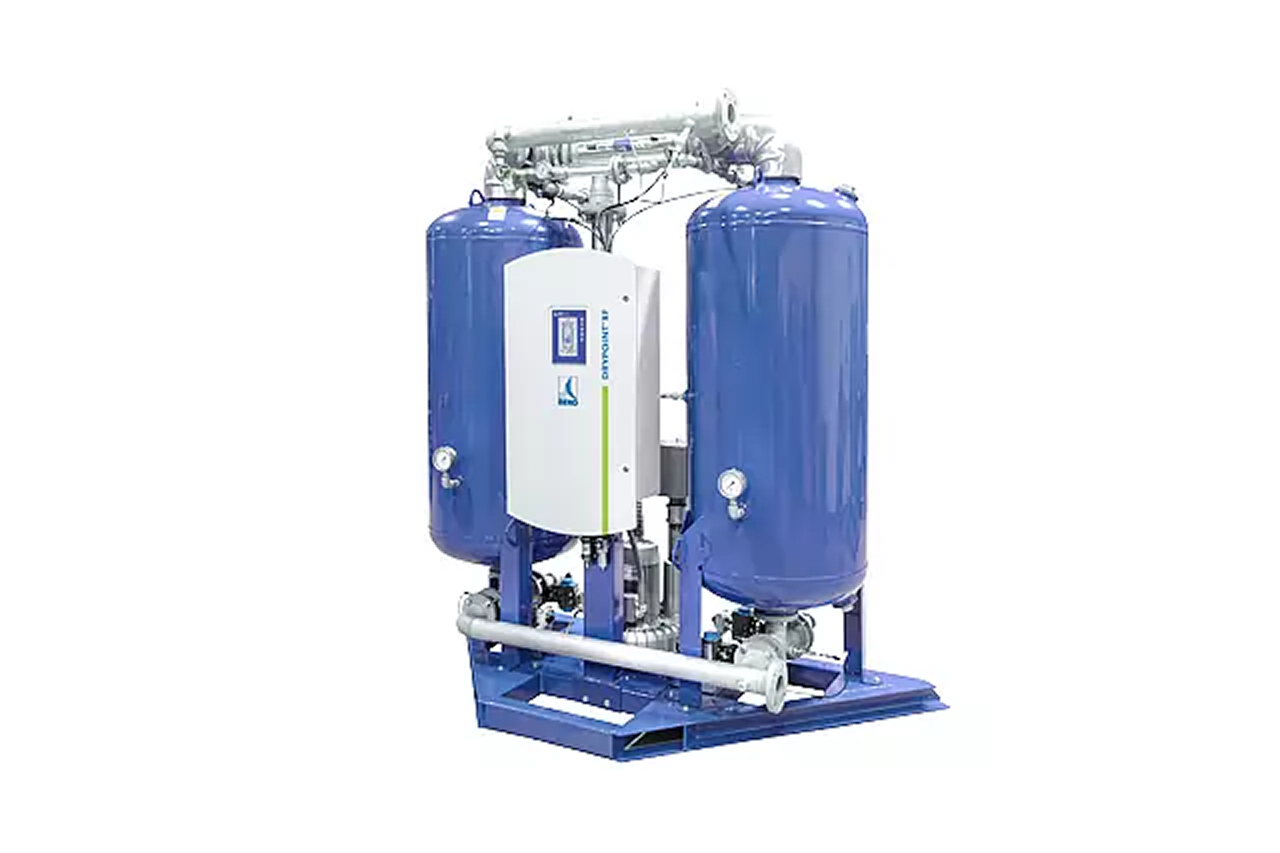
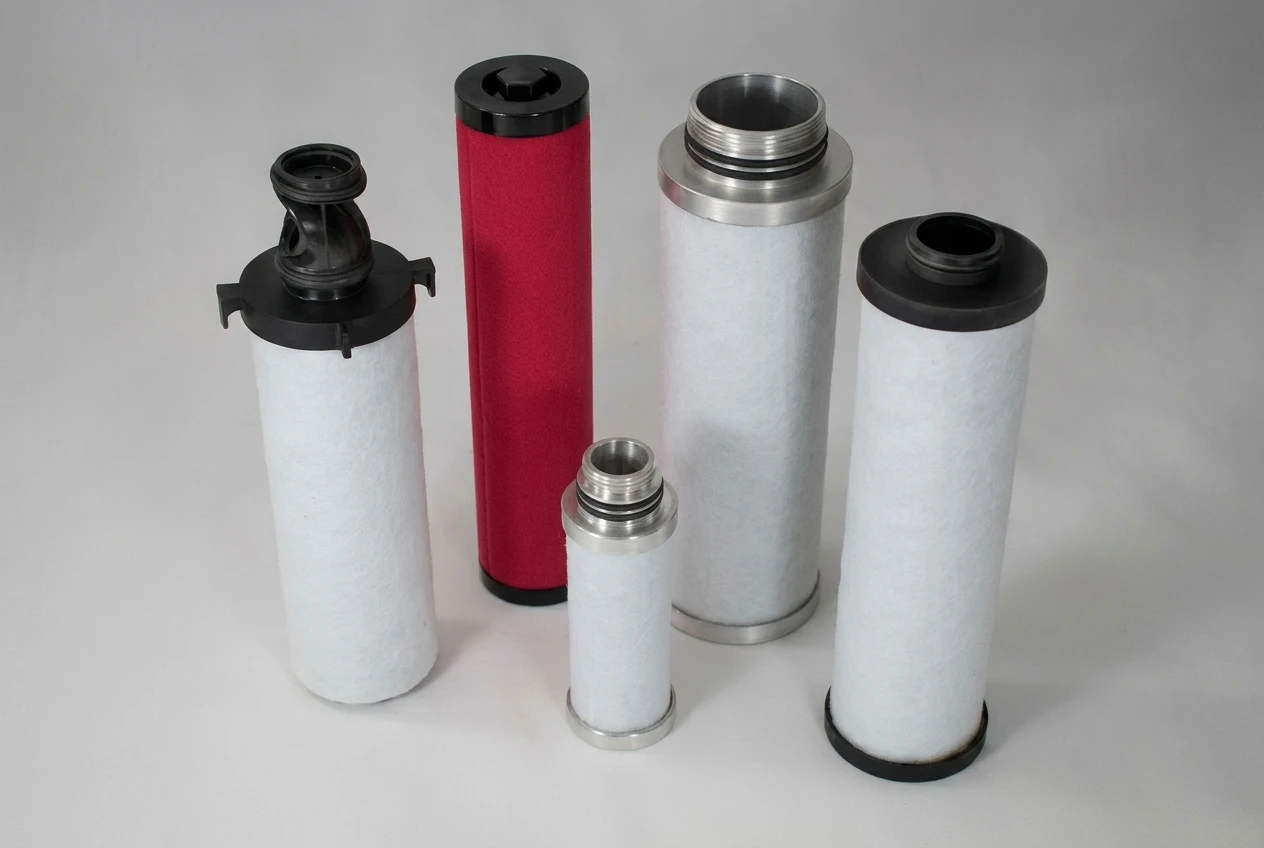
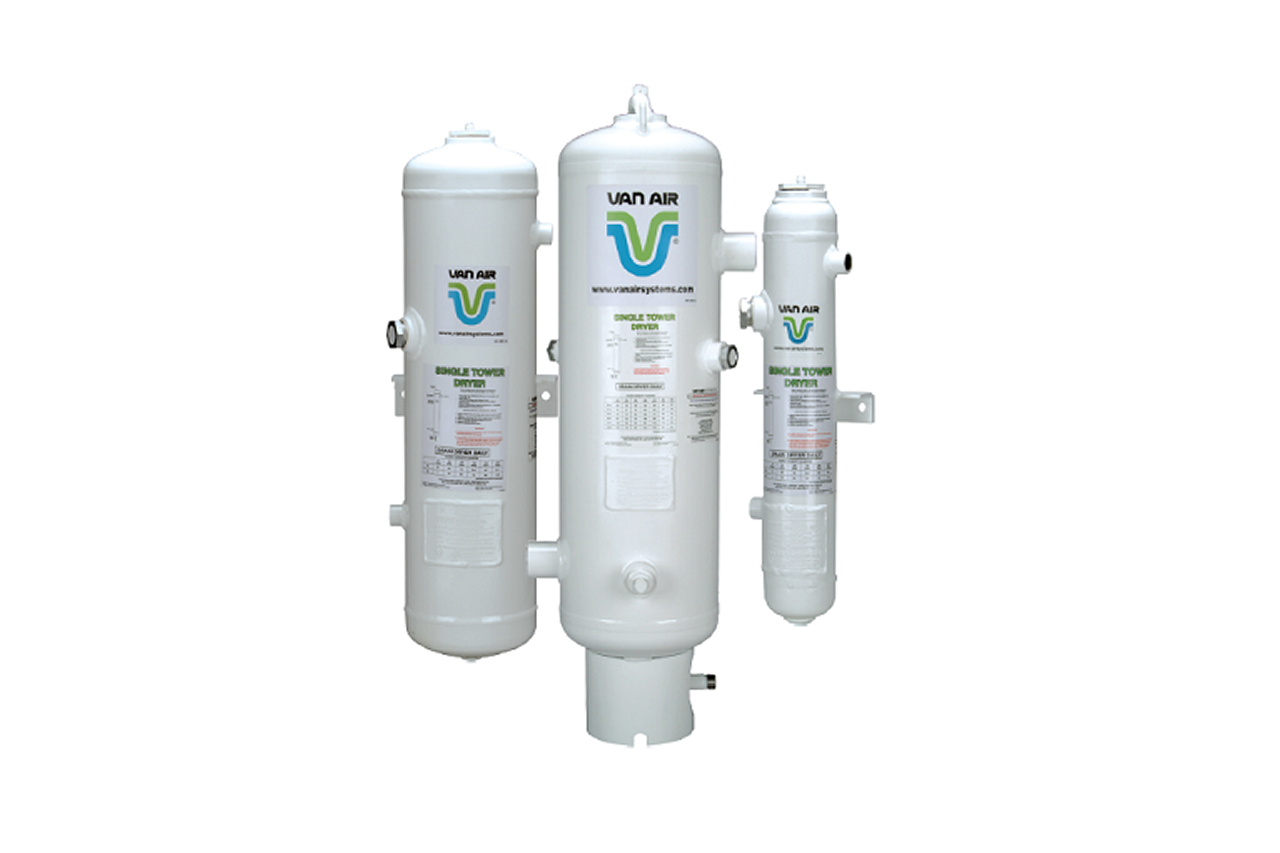
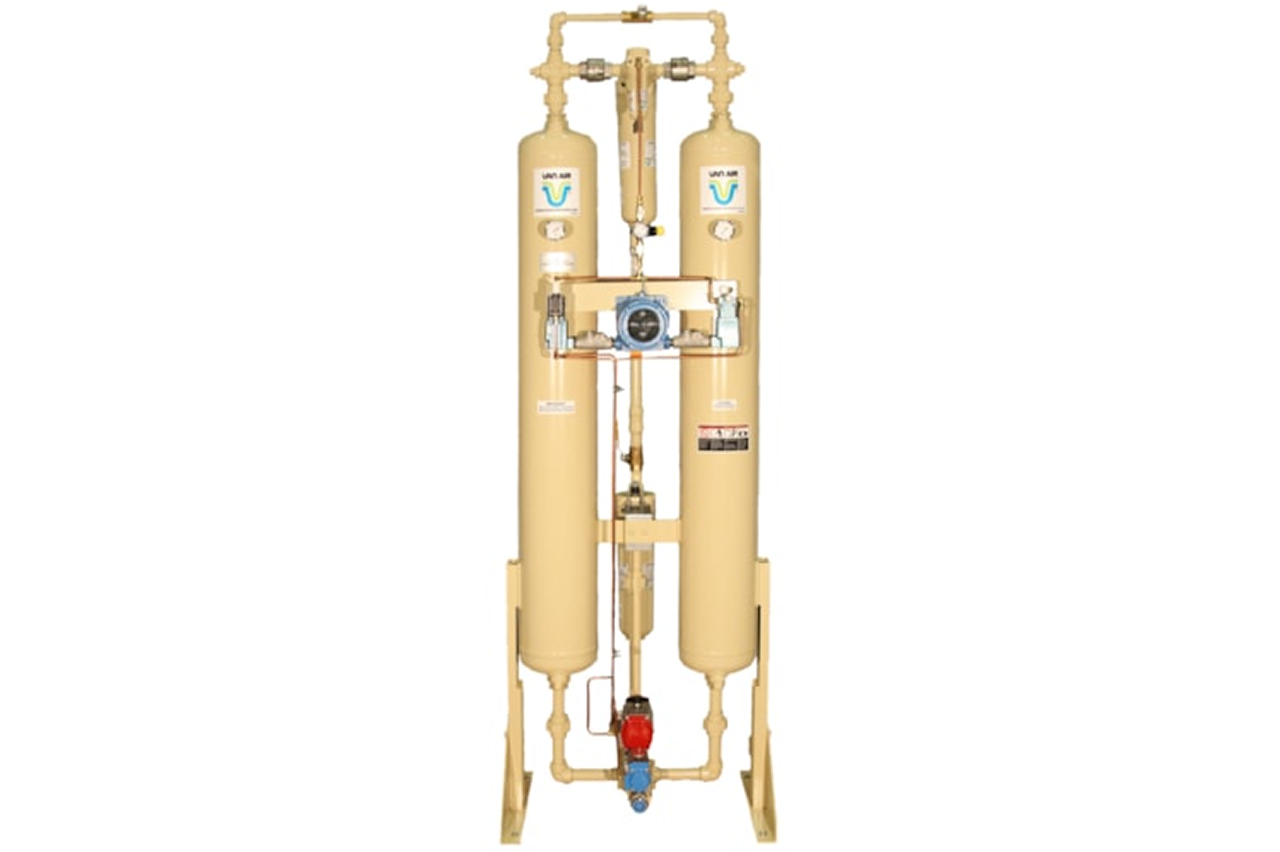
Real-world reference Representative desiccant dryer — regenerative
Desiccant Dryer — Regenerative — representative product photo
02Why it's needed

Why this matters.

Tips and pointers on when regenerative desiccant is the right call — and when to spec something else. Scroll the strip →

01 · Key point
It beats the freezing-point wall.

Adsorbs vapor onto activated alumina, silica gel, or molecular sieve instead of condensing it — bypasses the +35°F refrigerated floor entirely. Reaches -40°F, -70°F, or -100°F PDP so nothing condenses in outdoor pipe, freezers, or sub-freezing service.

02 · Key point
Twin towers = continuous supply.

One tower dries while the other regenerates on a timed switching cycle, so output never stops. Mature, robust architecture — 10+ year service life with proper pre-filtration and a 3-5 year desiccant refill.

03 · Key point
It''s the only path to Class 1-2 air.

ISO 8573-1 Class 2 and below is desiccant territory — refrigerated cannot get there at any price. Mandatory for instrument air (ISA-S7.0.01), pharma, semiconductor, automotive Class A paint, and aseptic food/beverage.

04 · Pro tip
Match regen type to flow and duty.

Heatless under ~500 SCFM intermittent (15-25% purge loss, low capital). Heated purge for medium continuous (2-10% purge). Blower purge at 500+ SCFM continuous (~0% purge — pays back capital in 18-30 months at that scale).

05 · Where not to use
Skipping the coalescing pre-filter.

Liquid water or oil carryover coats the media, collapses adsorptive surface, and the bed channels — PDP spikes within months. → Mandatory 0.01µ coalescing pre-filter immediately upstream, plus activated carbon on any oil-lubricated upstream compressor. Not an upgrade.

06 · Where not to use
Indoor warm pipe at Class 3 or higher.

Desiccant is a 2-4× capital premium over refrigerated plus a 15-25% ongoing purge penalty. Over-specced on warm indoor pipe it''s a costly miss. → Switch to refrigerated with post-coalescing for ISO Class 3-6 indoor service.

07 · Where not to use
Inside a classified hazardous area.

Standard desiccant electrical packages are not certified for Class 1 Division 1/2 or ATEX zones — an AHJ red-tags the install. → Switch to an explosion-proof desiccant for refinery / petrochem / oil-and-gas inside classified areas, or relocate the dryer to a non-classified utility room.

03Key selection criteria

What we need to spec it right.

From the machine spec sheet → to the part number. Answer what you know — leave the rest blank — and send.

01 · Input
Pull from the compressor nameplate. Size dryer to at least 110% of compressor SCFM, and confirm the compressor also covers the 15-25% purge loss on heatless units — undersized compressor can't supply both demand and purge.
Under 100 SCFM · 100-500 SCFM · 500-1000 SCFM · 1000-2500 SCFM · 2500+ SCFM
02 · Input
Spec drives media selection. Activated alumina = standard -40°F PDP; silica gel = faster adsorption but liquid-sensitive; molecular sieve = required for -100°F PDP.
-40°F PDP / Class 2 (activated alumina) · -70°F PDP (alumina or sieve) · -100°F PDP / Class 1 (molecular sieve)
03 · Input
Match to flow and duty. At 500+ SCFM continuous, run the heatless-vs-blower-purge energy math — blower purge typically pays back capital premium in 18-30 months.
Heatless (≤500 SCFM intermittent, 15-25% purge) · Heated purge (medium continuous, 2-10% purge) · Blower purge (500+ SCFM continuous, ~0% purge)
04 · Input
Pull from the customer's production schedule. 24/7 continuous rewards heated or blower purge; intermittent favors heatless. Drives regen-type selection along with flow.
Intermittent / single-shift · Multi-shift / 60-80% · 24/7 continuous
05 · Input
Confirm from the system gauge on the running line. Dryer pressure rating must cover operating pressure with margin for the relief setting.
100 PSI · 125 PSI · 150 PSI · 175+ PSI (high-pressure)
06 · Input
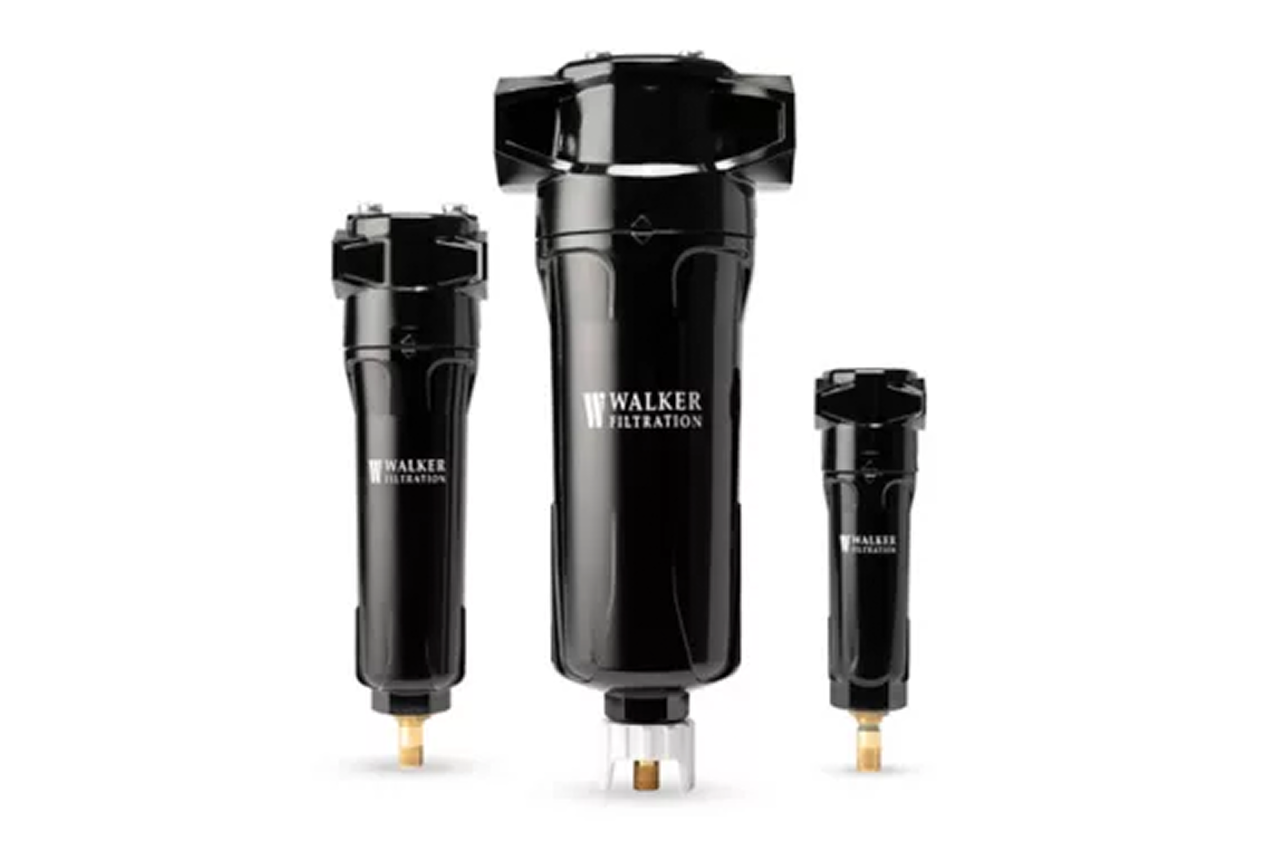
Coalescing pre-filter is MANDATORY — without it, oil/water carryover collapses the desiccant within months. Particulate after-filter catches desiccant dust before it scores solenoid seats downstream. Add activated carbon on any oil-lubricated upstream compressor.
Coalescing pre-filter 0.01µ (mandatory) · Particulate after-filter 1µ (strongly recommended) · Activated carbon (oil-lubricated upstream)
07 · Input
Number of dryer units for this configuration. Need a different size class? Add a separate quote line.
1 unit · 2-3 units (redundancy / staged) · 4+ units (multi-line plant)

Need different sizes, colors, or quantities? Fill the form, add to quote, then fill again — each click is one quote line.

04Choose your solution tier  ·  core differentiator

Whatever your lever — spec, value, or price — SPC has the right brand.

Most distributors sell one brand per product type. SPC's 60-brand portfolio means every Product Type page surfaces three real options matched to how your customer is buying today. Pick the tier; the quote desk handles the cross-reference.

05How to sell this  ·  distributor talk track

The tier conversation closes the deal. The cross-reference catalog wins the next one.

Refrigerated handles the 80%. Desiccant is the answer for the 20% where refrigerated doesn't work — and the customer needs to know which side of that line they're on before they buy.
The SPC difference · how distributors actually buy

The 30-second positioning

Desiccant is a specification-driven sale, not an upgrade sale. Customer who genuinely needs -40°F PDP cannot use refrigerated; customer running indoor pipe at 70°F should not be quoted desiccant. The job is to qualify accurately, route to the right product, and not over-spec — over-specced desiccant is a 2-4× capital premium and a 15-25% ongoing purge-air penalty for dew point the customer didn't need.

The conversation has three pieces. First, qualify the dew point requirement — outdoor pipe, freezer, walk-in cooler, sub-freezing service? Instrument loops, lab, pharma, paint, food, semiconductor? If yes, refrigerated is off the table. Second, pick the regeneration type — heatless under ~500 SCFM intermittent, heated purge for medium continuous, blower purge at 500+ SCFM continuous. Third, spec the pre-filtration train — coalescing pre-filter is mandatory; a 1-micron particulate after-filter catches desiccant dust; an activated carbon filter is required on oil-lubricated upstream compressors to catch oil vapor that coalescing alone can't remove.

Tier: Industry Leader tier for spec-driven Fortune-500 accounts, lab/pharma/semiconductor where the dryer is on a critical-process loop — domestic manufacturing, full service network, integrated alarm/monitoring. Emerging tier for industrial value tier — full-feature regenerative designs at materially lower price. Economical tier for cost-driven industrial workhorses — simpler control packages, solid mechanical fundamentals.

The recurring revenue is meaningful. Desiccant media has a 3-5 year service life (significant re-fill ticket); coalescing and particulate filter elements are quarterly-to-annual; condensate drains and OWS service round it out. A properly-quoted desiccant install generates 3-5× the consumable revenue of refrigerated at the same flow — and the customer who specced desiccant in the first place is the customer who actually values the maintenance.

Customer cue → talk move

"We have an outdoor compressor / outdoor pipe / outdoor instruments"
Desiccant. Refrigerated freezes moisture into the outdoor pipe. -40°F PDP minimum.
"ISO 8573-1 Class 2 or Class 1 air quality required"
Desiccant territory. Class 3 is the boundary — refrigerated can hit Class 3 with post-coalescing; Class 2 and below requires desiccant.
"Pharmaceutical / semiconductor / lab / instrument air"
Desiccant + activated carbon + dew-point monitor. -40°F minimum, often -70°F or -100°F. Spec the full treatment train.
"Compressor room is fine but the air goes to a walk-in freezer"
Desiccant. The cold space is where moisture drops out; refrigerated PDP is well above freezer temperature so condensate and ice are guaranteed.
"I just want better air than refrigerated"
Push back honestly. Quote refrigerated with post-coalescing first. Desiccant for "better air" alone is a 2-4× cost premium for marginal real-world improvement on warm indoor pipe.
"Replace our existing desiccant dryer"
Diagnostic first. Dew-point trips and short cycling = desiccant contaminated by upstream oil/water carryover — quote replacement WITH proper pre-filtration, and warn that without fixing upstream the new dryer fails the same way. Towers switching but PDP high = desiccant exhausted; quote replacement or media-only re-fill if the dryer body is in good condition.
"Our flow is 800+ SCFM continuous"
Run the heatless-vs-blower-purge math. At 800 SCFM continuous, blower purge typically pays back capital premium in 18-30 months — customer no longer pays to compress 15-25% of output just to throw it away.
"We already have a refrigerated, but PDP isn't holding"
Diagnostic before quoting desiccant. Refrigerated PDP drift is usually fouled condenser, fouled coalescing pre-filter, or operating above rated inlet temperature — fix that first.
06Where it's used

Industries served.

Each industry below uses this product across the listed areas. Open an industry to see how it fits the rest of its system.
Also applies to Outdoor compressed air systems · Instrument air systems · Cold-storage & freezer warehouse · Paint & finishing requiring Class 1 air · Cryogenic and ultra-low PDP

09Install · 8 critical steps

The things that matter on the first install.

Step 01
Place AFTER the wet receiver, BEFORE distribution, WITH coalescing pre-filtration immediately upstream
Standard order: compressor → aftercooler → wet receiver → coalescing pre-filter (0.01µ, sized to peak flow + 25%) → regenerative desiccant dryer → 1µ particulate after-filter → distribution. Skipping the coalescing pre-filter is the single biggest install mistake in desiccant and the leading cause of premature media failure.
Step 02
Install a three-valve bypass around the dryer
Inlet, outlet, bypass — lets the customer service or replace the dryer without shutting down the air system. Spec NPT or flanged valves matched to the dryer port size, with a manual purge between bypass and dryer outlet so trapped pressure can be vented before service.
Step 03
Size for combined demand + purge loss
Heatless dryers consume 15-25% of dried air for purge. A dryer specced for 500 SCFM of demand needs a compressor delivering 575-625 SCFM, not 500. Heated purge cuts this to 2-10%; blower purge near zero. Verify combined supply against demand-plus-purge before acceptance.
Step 04
Verify three-phase power on heated and blower-purge units
Heatless dryers run on simple control voltage. Heated purge and blower purge need three-phase service to the heater and (on blower-purge) the regen blower motor. Confirm panel capacity and circuit sizing before commissioning — single-phase or wrong-voltage installs are non-starters.
Step 05
Install a 1-micron particulate after-filter downstream
Over time, desiccant media abrades and produces fine dust that travels with the air stream. Without the after-filter, dust reaches downstream solenoids, regulators, FRLs, and pneumatic instruments — where it scores seal seats and shortens equipment life.
Step 06
Plumb purge discharge and condensate drain correctly
The dryer's purge port discharges air-plus-water as the offline tower depressurizes — route to a quiet vent (silencer typically included) and a drain to an oil-water separator. The coalescing pre-filter drain also routes to the OWS. Every drain point in the dryer skid goes to OWS, not directly to sewer.
Step 07
Commission and verify dew point
Run at full load for at least one hour, then measure PDP at the dryer outlet with a calibrated meter. Verify against the dryer rating (-40°F, -70°F, -100°F). High PDP means undersized, contaminated media (inadequate pre-filtration), or wrong switching cycle. Document the commissioning PDP for future drift comparison.
Step 08
Set the service cadence
Coalescing pre-filter elements every 6-12 months (more frequent on oil-lubricated upstream compressors). Particulate after-filter elements annually. Desiccant media replacement every 3-5 years. Drain valves every 6-12 months. Desiccant systems reward disciplined PM and punish neglect.
10Troubleshoot · top failures

Most returns trace to one of these causes.

Symptom
Most likely cause
Fix
Pressure dew point climbing above the dryer's rated PDP
Desiccant media is contaminated (most common — liquid water or oil from inadequate pre-filtration), OR desiccant is exhausted at end of service life, OR the switching cycle is too long for the actual flow, OR demand exceeds dryer capacity.
Verify the coalescing pre-filter is installed, correctly sized, and its drain is functional. Inspect the desiccant media — wet, soft, or color-lost (indicator media) means contaminated and replace. If demand has grown beyond rated flow, upsize the dryer. Premature media failure with proper pre-filtration almost always traces to oil carryover — quote an activated carbon filter as the long-term fix.
Pressure drop across the dryer over 5 PSI
Desiccant media has fragmented and packed down (end of life or mechanical damage from rapid switching), OR coalescing pre-filter is fouled and pushing drop into the dryer, OR particulate after-filter is plugged with desiccant dust.
Measure drop across each component separately to isolate. Drop across the desiccant beds → replace media. Drop across the pre-filter → replace element. Drop across the after-filter → replace element AND inspect desiccant (heavy dust loading indicates the desiccant is fragmenting prematurely, usually contamination-driven).
Towers not switching on the timed cycle
Solenoid switching valve has failed (most common — these cycle constantly and have a finite life), OR controller has lost programming, OR the pneumatic actuator on the switching valves has lost air supply.
Listen at switching time — proper switch produces an audible thunk and a brief purge discharge. Silent = switching valve failed, replace per OEM. Dark controller display = check control voltage and reload programming. Failing actuator stroke = verify pilot air supply to the actuator.
Audible purge is continuous instead of intermittent (heatless units)
Purge orifice has failed open (most common), purge valve is stuck open, or the switching cycle is set to constant-purge mode (rare — usually a controller fault).
Isolate the purge line — if purge stops, the orifice or valve is the problem; replace the purge valve assembly. Continuous purge can waste 30-50% of compressor output and presents as "the compressor runs constantly but pressure is low" — customer may complain about the compressor before connecting it to the dryer.
Heater not coming on during regeneration (heated-purge units)
Heater element has failed (very common after 3-5 years), heater contactor has welded open, thermostat is out of calibration, or upstream electrical supply is wrong voltage / wrong phase.
Measure heater current with an amp clamp during regen — zero current with the contactor energized means a failed element. Replace per OEM. If the contactor doesn't energize, check controller output and thermostat. Wrong voltage / wrong phase at install can also burn out heaters early.
Desiccant dust appearing in downstream equipment
After-filter is missing, undersized, or its element has failed. Less commonly, desiccant is fragmenting prematurely (oil/water contamination, or switching cycle too fast).
Verify a 1-micron particulate after-filter is installed; add if missing. If installed, inspect the element — collapsed elements pass dust. Heavy dust loading indicates premature desiccant breakdown — pull a desiccant sample. Replace media if fragmented; address upstream contamination to prevent recurrence.

Get the right desiccant dryer — regenerative on quote in 24 hours.

Send us the application — a specialist routes you to the correct tier with a configured part. Lead-times and pricing returned within one business day.

Request a quote