DISTRIBUTOR-FIRST SUPPLY PARTNER · SINCE 1999 Live · Compressed Air System

SPC Company
Compressed Air / Monitoring / Air Quality / Dew Point Monitor
Layer 07 · Monitoring Emerging · CS Instruments
01What it is

Dew Point Monitor

A dew point monitor measures the pressure dew point (PDP — the temperature at which moisture still in the compressed air would condense back to liquid water at line pressure) of air leaving a dryer. It is the proof that the dryer is performing to spec — installed downstream of the dryer in the monitoring layer, it either reads continuously to a control system (fixed inline transmitter, typically wired to an alarm) or moves point-to-point as a portable handheld for commissioning, audits, and wet-air troubleshooting. The monitor must cover the range the installed dryer is meant to produce — a refrigerated dryer holds PDP at +35 to +50°F; a desiccant dryer pushes it to -40°F PDP and below.
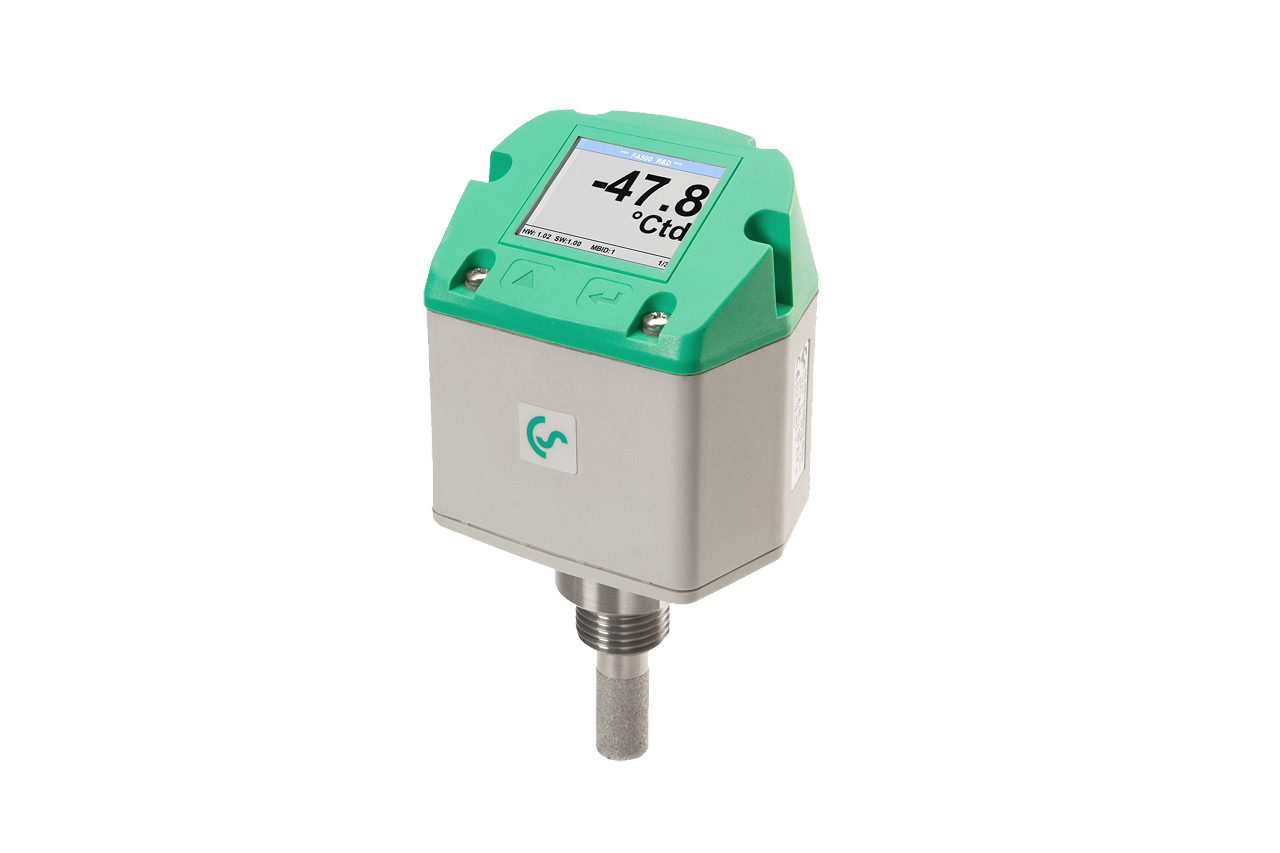
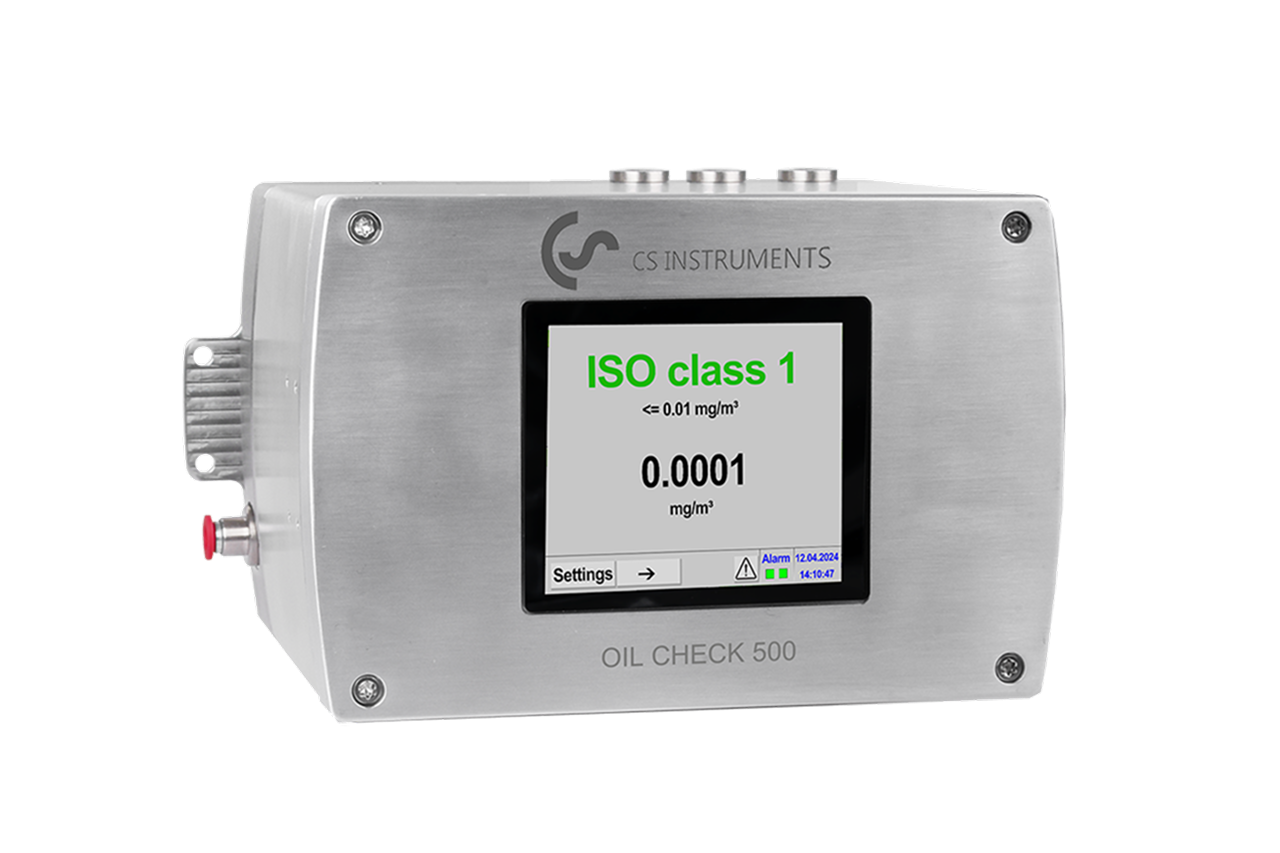
Real-world reference Representative dew point monitor
Dew Point Monitor — representative product photo
02Why it's needed

Why this matters.

Tips and pointers on when a dew point monitor is the right call — and when to spec something else. Scroll the strip →

01 · Key point
It catches the silent failure.

Filters announce themselves through differential pressure; dryers fail silently. The monitor is the only early-warning instrument between a failing dryer and liquid water at the point of use hours later.

02 · Key point
It proves the dryer spec.

A $1,500 monitor verifies a $15,000+ dryer for its full service life. ±1°C accuracy near ambient PDP — trust the engineering, verify the performance with measurement.

03 · Key point
It survives wet-air events.

Modern polymer-capacitive sensors are condensation-insensitive — they recover accuracy after bulk liquid water hits the element. The sensor earns its keep precisely during the upset it's installed to catch.

04 · Pro tip
Match range to dryer type.

Refrigerated dryer needs +35 to +50°F PDP range. Desiccant dryer needs accurate reading at -40°F PDP and below. Service-grade portable for commissioning reaches -80°Ctd — wrong range = useless readings at the sensor floor.

05 · Where not to use
Refrigerated-grade on desiccant dryers.

A refrigerated-grade sensor on a desiccant dryer reads at its range floor with degraded accuracy and no useful trend. → Re-spec to deep-PDP transmitter rated to -80°Ctd for any desiccant install.

06 · Where not to use
Common-header install on multi-dryer systems.

A single monitor on a shared header can't tell which dryer is degrading. → One transmitter per dryer at each discharge — only way to isolate the failing unit on a redundant install.

07 · Where not to use
Without upstream coalescing filtration.

Oil aerosol and particulates contaminate the sensing element — service life drops to months instead of years. → Verify high-efficiency coalescing filter upstream of the sample tap; cheap insurance on a $1,500 sensor.

03Key selection criteria

What we need to spec it right.

From the machine spec sheet → to the part number. Answer what you know — leave the rest blank — and send.

01 · Input
Pull from the dryer nameplate. Sets the required measurement range — a refrigerated-grade meter on a desiccant dryer produces useless readings at the sensor's range floor.
Refrigerated (+35 to +50°F PDP) · Desiccant (-40°F PDP and below) · Deep-desiccant / service-grade (down to -80°Ctd)
02 · Input
Continuous monitoring with alarm (fixed transmitter wired to PLC/logger) or audit/troubleshooting across multiple points (portable handheld)? Wet-air complaint = portable; dryer-spec compliance = fixed.
Fixed transmitter (continuous, single point) · Portable handheld (audit, multi-point) · Both (commissioning portable + permanent fixed)
03 · Input
Confirm piping downstream of the dryer — process connection (typically G1/2 BSP or 1/2 NPT) and line pressure. Bypass sample loops are preferred so the sensor can be pulled for calibration without depressurizing.
G1/2 BSP · 1/2 NPT · Up to 16 bar / 232 PSI (standard) · 40 bar / 580 PSI (HP variant)
04 · Input
Local display only or feeds a PLC/SCADA loop? Modbus-RTU carries calibration data alongside the reading — preferred for audit-grade installs.
Local display only · 4-20 mA analog (2-wire or 3-wire — confirm PLC card) · Modbus-RTU / RS-485 (plant historian, audit-grade)
05 · Input
Most installs need 1 unit per dryer (one transmitter per dryer discharge — never on a common header for multi-dryer systems). Multi-dryer plants? Add a separate quote line per dryer.
1 unit (single dryer) · 2-3 units (redundant or multi-dryer plant) · 4+ units (multi-building / staged calibration program)

Need different sizes, colors, or quantities? Fill the form, add to quote, then fill again — each click is one quote line.

04Choose your solution tier  ·  core differentiator

Whatever your lever — spec, value, or price — SPC has the right brand.

Most distributors sell one brand per product type. SPC's 60-brand portfolio means every Product Type page surfaces three real options matched to how your customer is buying today. Pick the tier; the quote desk handles the cross-reference.

05How to sell this  ·  distributor talk track

The tier conversation closes the deal. The cross-reference catalog wins the next one.

Whoever sold the dryer should be selling the monitor. A dryer without a PDP reading is equipment the customer is hoping works — the monitor turns hope into proof.
The SPC difference · how distributors actually buy

The 30-second positioning

Three drivers: dryer commissioning, audit documentation, and wet-air troubleshooting. Each maps to a different product configuration — a fixed install for the wrong reason is overscope; a portable for a continuous-monitoring requirement is undersized.
Tier: The SPC reference is an Industry Leader tier dew point monitor with polymer-capacitive sensor, condensation-insensitive recovery, 4-20 mA and Modbus integration, and audit-grade calibration documentation — available as fixed transmitters and a portable handheld.

Customer cue → talk move

""We had a wet-air event""
Portable handheld first — walk the plant, find the failure points. Once diagnosed, pivot to fixed transmitters at the critical points to catch the next event before the complaint.
""We're commissioning a new desiccant dryer""
Portable handheld with range to -80°C (service-grade for deep desiccant). Travels with the install for verification, stays as the plant's ongoing reference.
""We need to prove dryer spec for our auditor""
Fixed transmitter wired to logger with documented calibration program. If audit scope is dew-point-only.
""My customer keeps getting moisture at the paint booth""
Portable + temporary install at dryer outlet AND paint booth. The difference between the two readings tells whether the dryer is failing or the piping run is the problem (cold uninsulated outdoor pipe re-condensing).
""How often does this need calibration?""
Annually baseline; every 6 months for some audited applications. Calibration is swap-out or factory return — quote the program at the same time as the instrument.
""The dryer manufacturer says it's fine""
A $1,500 monitor verifies a $15,000+ dryer for its full service life. Trust the engineering; verify the performance with measurement.
""We have a stuck condensate drain — can the monitor tell us?""
Yes, indirectly. A failed drain upstream of the dryer pushes humidity beyond design loading, raising downstream PDP. The monitor is the leading indicator that upstream condensate management is failing.
06Where it's used

Industries served.

Each industry below uses this product across the listed areas. Open an industry to see how it fits the rest of its system.

Also applies to Refrigerated-dryer installs (target +35 to +50°F PDP) · Desiccant-dryer installs (target -40°F PDP and below) · A desiccant dryer without a dew-point monitor is functionally unverified equipment · ISO 8573-1 (international compressed air purity standard) · Compressed air audits and engineering assessments · New dryer commissioning across SPC's install base · Wet-air complaint troubleshooting (customer service driver) · Multi-dryer redundant installs · Essential instrumentation for any redundant configuration

09Install · 6 critical steps

The things that matter on the first install.

Step 01
Confirm install point is downstream of the dryer being verified
The monitor reads air leaving the dryer; an upstream install reads inlet humidity, which is not the measurement the customer wants. For multi-dryer systems, install one monitor per dryer at each dryer's discharge — a single monitor at a common header confuses which dryer is the source of any reading change.
Step 02
Verify the measurement range against the dryer's rated output
Refrigerated monitor needs to cover +35 to +50°F PDP comfortably; desiccant monitor needs to read accurately at -40°F PDP and below. Installing a refrigerated-grade meter on a desiccant dryer produces a reading at the sensor's range floor with poor accuracy and no useful trend.
Step 03
Plumb a bypass sample loop, not an inline install
Bypass sample loops are preferred — they isolate the sensor from main-line transients and let the sensor be removed for calibration without depressurizing the production line. Confirm the install orientation matches the sensor's probe-direction marking; polymer-capacitive elements have a preferred orientation.
Step 04
Wire the output to display, PLC, or logger
4-20 mA is the baseline two-wire or three-wire output. Modbus-RTU (RS-485) is preferred for integration with plant historians or PLC-based alarm logic. Confirm wire configuration matches the customer's control input.
Step 05
Configure the alarm setpoint inside the dryer's rated PDP, with safety margin
The monitor is most valuable when it warns before moisture actually condenses at the downstream piping. For a refrigerated dryer rated +38°F PDP feeding piping at minimum +50°F, set the alarm at +45°F — gives the operator hours of warning before liquid water arrives at the point of use.
Step 06
Run a baseline reading, document calibration, set the next calibration date
Polymer-capacitive sensors need a stabilization period — minutes for a fresh sensor on dry air, longer if exposed to humid ambient during the install. Do not interpret the first hour as baseline. Every audit-grade sensor ships with a factory calibration certificate; file it, and schedule the next calibration on the service calendar (12 months out for most installs, 6 months for pharma-audited).
10Troubleshoot · top failures

Most returns trace to one of these causes.

Symptom
Most likely cause
Fix
PDP reading drifts upward over time but the dryer appears to be working.
Polymer-capacitive sensor exposed to a wet-air upset and not fully recovered; sensor approaching end of calibration interval; upstream condensate drain stuck and pushing high humidity into the dryer beyond design loading; or the dryer's control logic genuinely losing performance.
First check the upstream condensate drains — a stuck drain pushes loading onto the dryer that the dryer cannot keep up with. If drains are healthy, check the dryer (refrigerant pressures, desiccant tower differential pressure, regeneration cycle timing). If dryer is verified healthy, the sensor is suspect — pull for calibration verification.
Sensor pegged at high end of its range after a wet-air event.
Sensor element saturated with bulk liquid water during the upset, sensor element damaged beyond recovery by repeated wet-air events, or sensor protective filter is now wet and continuously feeding the element high humidity.
For condensation-insensitive sensors, give the manufacturer-specified recovery period (hours to 24 hours after a severe event). If recovery is incomplete, swap the protective filter element. If readings still don't recover, the sensor needs replacement — repeated wet-air events eventually damage even condensation-insensitive elements.
Reading is stable but doesn't match the dryer manufacturer's rated output.
Sensor past calibration interval and drifted; sensor range doesn't span the dryer's output (reading near range floor with degraded accuracy); or the dryer itself is not delivering rated PDP (the instrument is correct, the dryer is the problem).
Verify calibration date and range coverage. If both check out, the dryer is genuinely not hitting spec — pivot the conversation from "the monitor is reading wrong" to "the monitor caught the dryer underperforming," which is exactly what the monitor is for.
4-20 mA reading at the PLC does not match the local transmitter display.
Loop scaling at the PLC does not match the transmitter's scaling (transmitter set for -80 to +20°C, PLC scaled for 0 to 100°C), loop wiring inverted, or transmitter output mode (current source vs. sink) does not match the PLC input card.
Verify scaling on both ends. Confirm wire polarity. For Modbus-equipped transmitters, prefer the Modbus reading over 4-20 mA — it carries the calibrated reading without scaling errors.
Alarm fires repeatedly overnight or weekends when the plant is idle.
Compressor cycles less during idle hours, dryer regeneration still runs on less air flow causing momentary PDP excursions; or condensate accumulation in idle piping is being measured as wet air on first morning startup.
Review the 24-hour trend; if excursions correlate with idle periods and resolve at production startup, they are real but not actionable. Configure the logger to suppress alarms during scheduled idle windows, or set a longer alarm-confirmation delay. Do not desensitize beyond the point where a real upset would be missed.
Sensor service life ending earlier than manufacturer states.
Upstream filtration not adequate — particulates or oil aerosol contaminating the sensing element; sample line corroded; or sensor exposed to acidic/chlorinated chemicals in the customer's process air.
Verify upstream coalescing and particulate filtration is sized for the dryer's output flow. Inspect the sample line for corrosion (stainless or copper preferred over carbon steel). For chemical-exposure applications, confirm sensor is rated for the contaminants present.

Get the right dew point monitor on quote in 24 hours.

Send us the application — a specialist routes you to the correct tier with a configured part. Lead-times and pricing returned within one business day.

Request a quote