DISTRIBUTOR-FIRST SUPPLY PARTNER · SINCE 1999 Live · Compressed Air System

SPC Company
Compressed Air / Treatment / Compressed Air Filtration / Coalescing Filter
Layer 02 · Treatment Industry Leader · KELTEC Emerging · Arrow Pneumatics
01What it is

Coalescing Filter

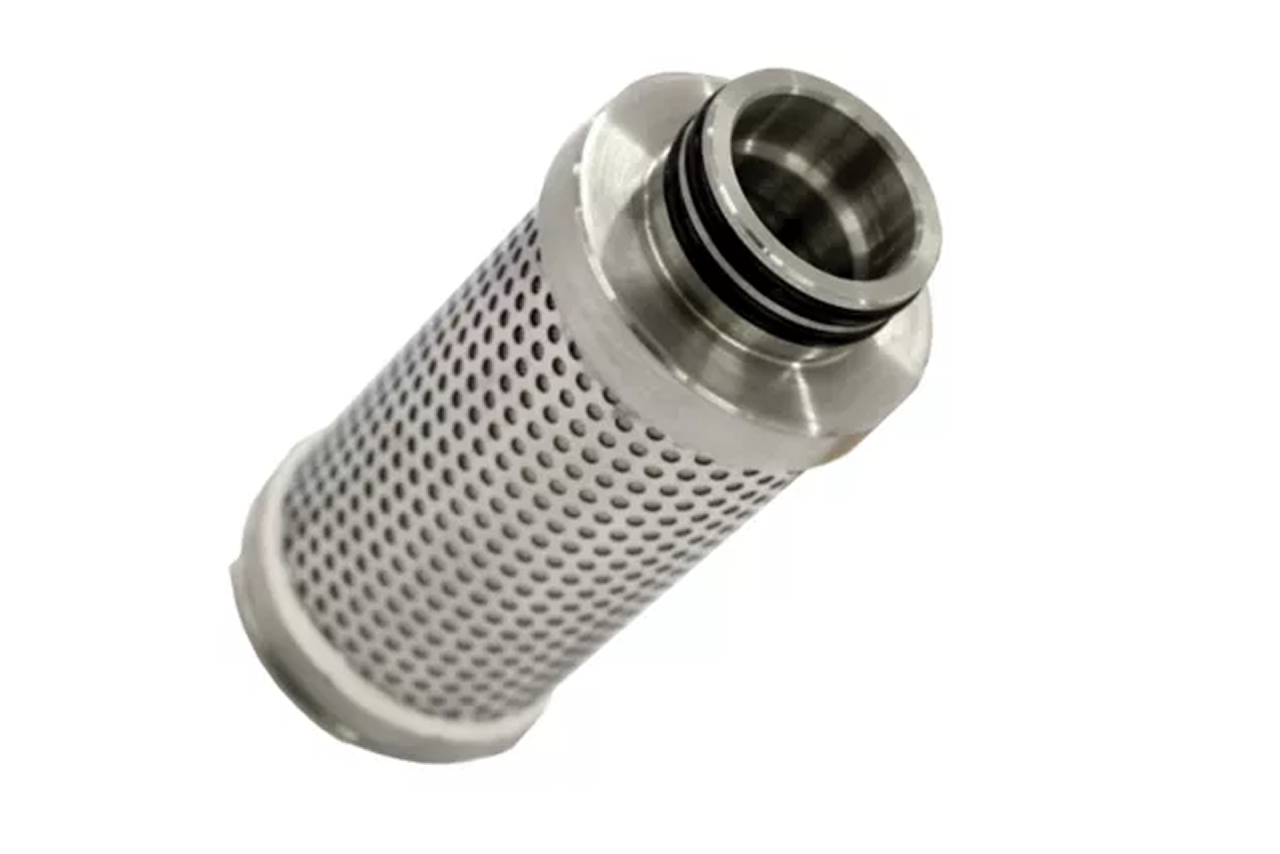
A coalescing filter is the middle stage of a compressed-air filtration train — the stage that removes liquid oil aerosol and water mist. As contaminated air passes through multi-layer borosilicate glass fiber media, fine airborne droplets collide and merge ('coalesce') into larger drops; those drops grow heavy enough to fall out of the air stream, drain down the inside of the housing, and collect in the sump for discharge through a condensate drain. The deeper the media grade, the smaller the droplet it can capture and the lower the oil carryover it leaves behind. It sits downstream of the dryer and a particulate pre-filter, and upstream of any activated-carbon vapor-removal stage.
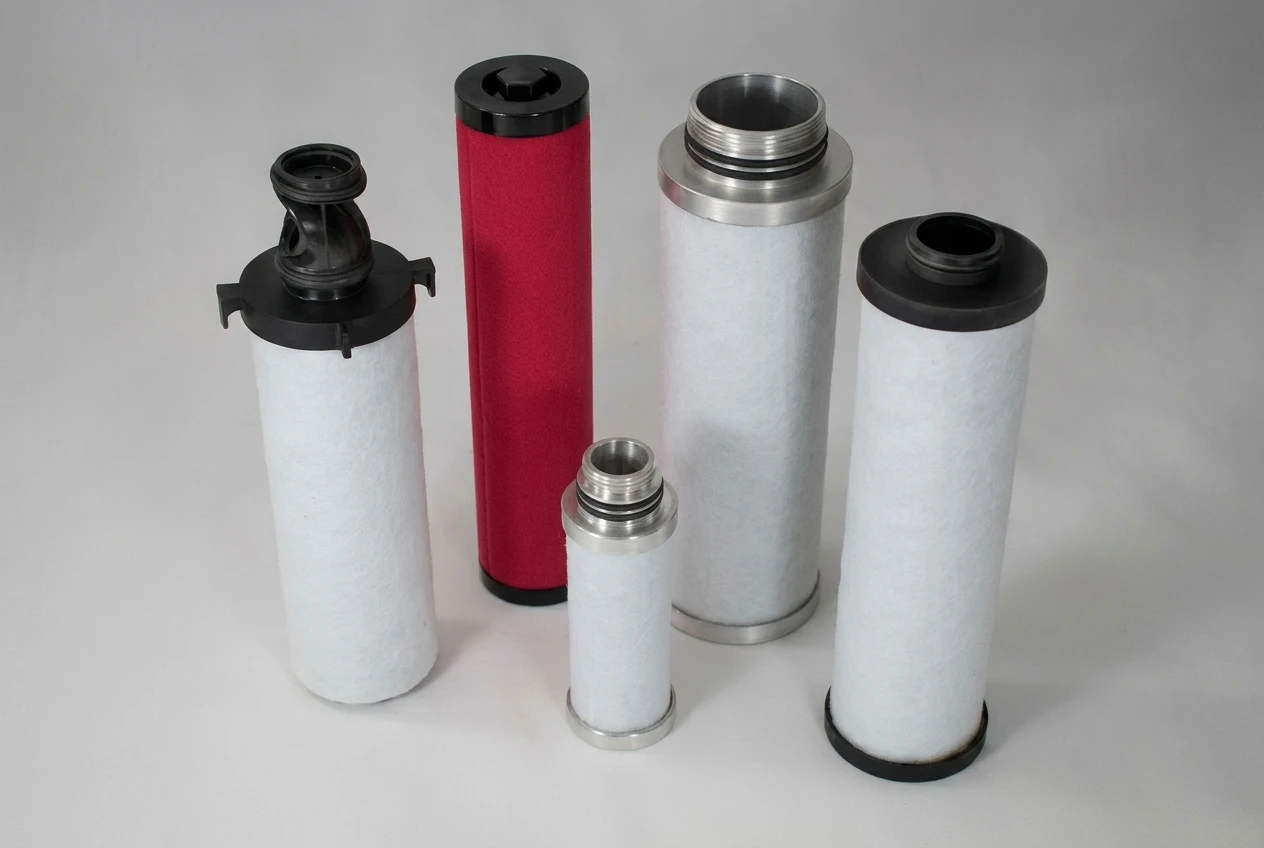
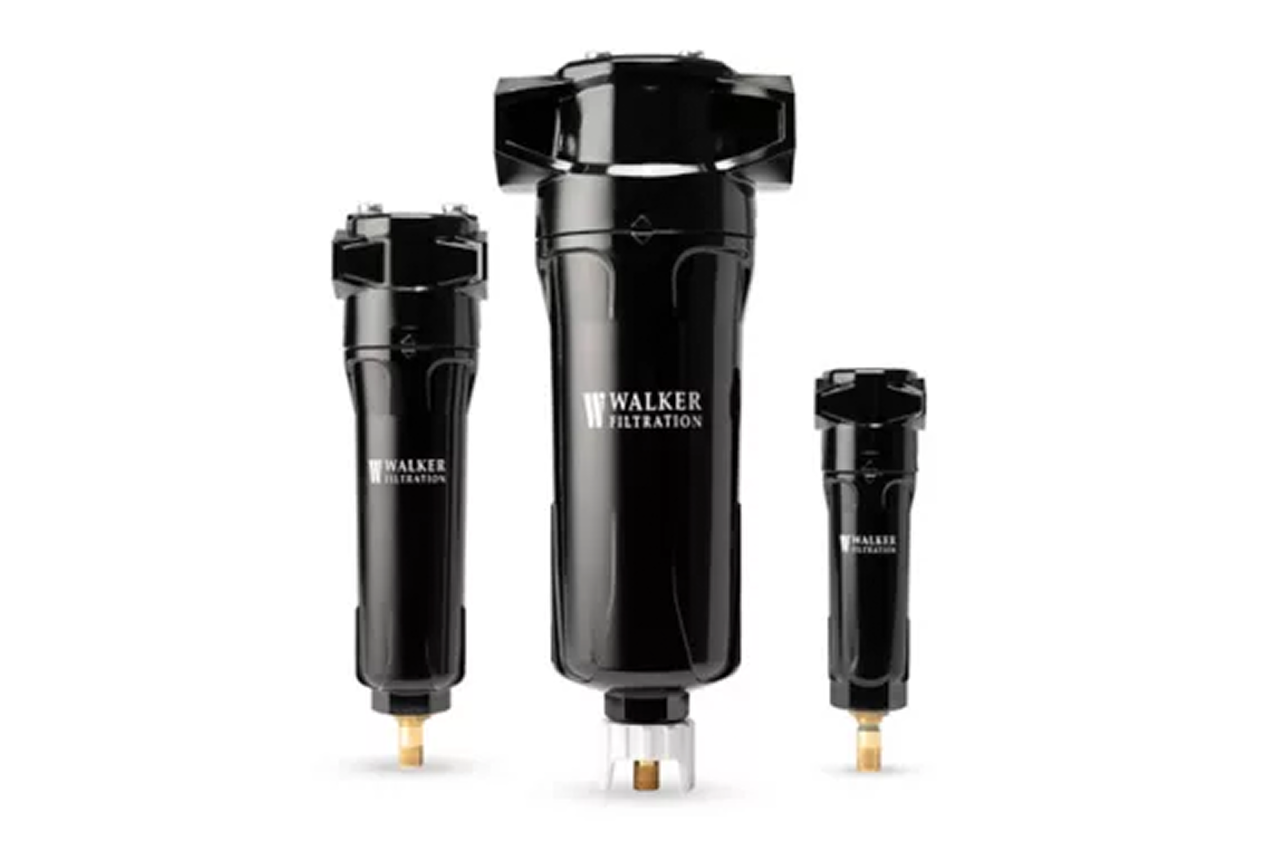
Real-world reference Representative coalescing filter
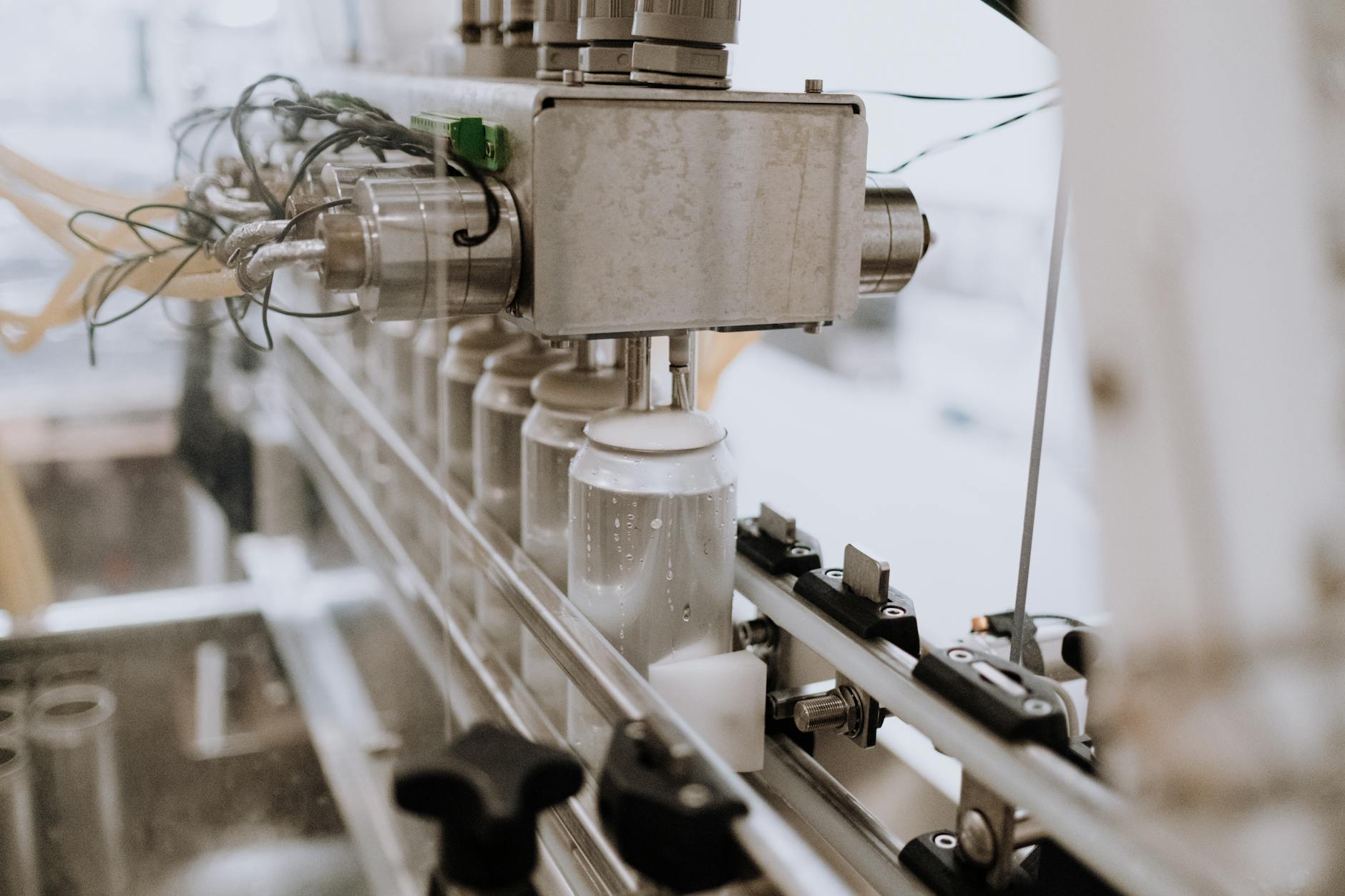
Coalescing Filter — representative product photo
02Why it's needed

Why this matters.

Where coalescing earns its place in the filter train — and where it falls short. Scroll the strip →

01 · Key point
It closes the oil-aerosol gap.

The compressor's internal separator leaves 2-5 ppm oil carryover in the air; coalescing media takes it the rest of the way down. Regulators and particulate filters can't touch sub-micron liquid droplets.

02 · Key point
It hits ISO 8573-1 Class 1.

The 0.01 micron deep-coalescing grade drops oil carryover to ~0.01 ppm — Class 1 territory. The 0.1 micron general-purpose grade gets to ~0.1 ppm (Class 2), right for typical plant and tool air.

03 · Key point
It also drops out water mist.

Same collision-and-coalescing physics captures liquid water droplets after the dryer. The sump catches both oil and water; a condensate drain dumps them out together.

04 · Pro tip
Pick grade by ISO 8573-1 target.

0.01 micron for paint, pharma, food packaging, instrumentation — anything specifying Class 1 oil. 0.1 micron for general plant air. Run both in series on critical installs: 0.1 first as a guard stage, 0.01 as the polish.

05 · Where not to use
Dry-solid loading kills it.

Pipe scale, rust flakes, and desiccant dust blind coalescing media in weeks. → Add upstream particulate at 5 micron — without it, the customer replaces $200 elements quarterly and blames the brand.

06 · Where not to use
Oil vapor passes straight through.

Glass fiber coalesces droplets; it has no mechanism for gaseous hydrocarbon. Customers specifying Class 0 total oil (liquid + vapor) need a downstream stage. → Step up to activated-carbon in series for food, pharma, breathing air, paint.

07 · Where not to use
Sterile-grade medical air.

Coalescing removes oil and water — it doesn't address live bacteria. → Re-spec to medical-sterile as the final stage on NFPA 99 hospital medical-air, dental, and pharma fill lines, downstream of the full coalescing + carbon train.

03Key selection criteria

What we need to spec it right.

From the machine spec sheet → to the part number. Answer what you know — leave the rest blank — and send.

01 · Input
Pull from the compressor nameplate or a system audit and add ~25% headroom — undersize blinds elements early and starves downstream tools.
Point-of-use (single drop): 10-50 SCFM · Branch / cell: 50-250 SCFM · Main-line bulk: 250-1000+ SCFM
02 · Input
Read from the application spec — the ISO 8573-1 oil class selects the coalescing grade. Critical installs run both in series (0.1 guard + 0.01 polish).
0.1 micron (Class 2 ~0.1 ppm — general plant, tools, automation) · 0.01 micron deep-coalescing (Class 1 ~0.01 ppm — paint, instrument, food, breathing-air pre-filter) · Silicone-free 0.01 (paint shops / critical coatings)
03 · Input
Read off the system pressure gauge at the install point — housing pressure rating must clear it. Standard housings top out around 150 PSI.
Standard: 100 PSI · 125 PSI · 150 PSI · High-pressure housing: 232 PSI · 500+ PSI (booster discharge / high-pressure gas)
04 · Input
Confirm a 5 micron particulate pre-filter sits upstream — without it, pipe scale and rust blind the coalescing media in weeks instead of months.
Polish only (pre-filter already in place) · Pre-filter + coalescing as a pair · Full train (particulate + coalescing + carbon)
05 · Input
For replacements, get the existing housing brand, model, and a photo of the nameplate — aftermarket cross-reference at 50-60% of OEM is SPC's strongest filtration play. Also pull last change date from the maintenance log.
New install · Cross-reference element (OEM brand + model) · Repeat 12-month replenishment
06 · Input
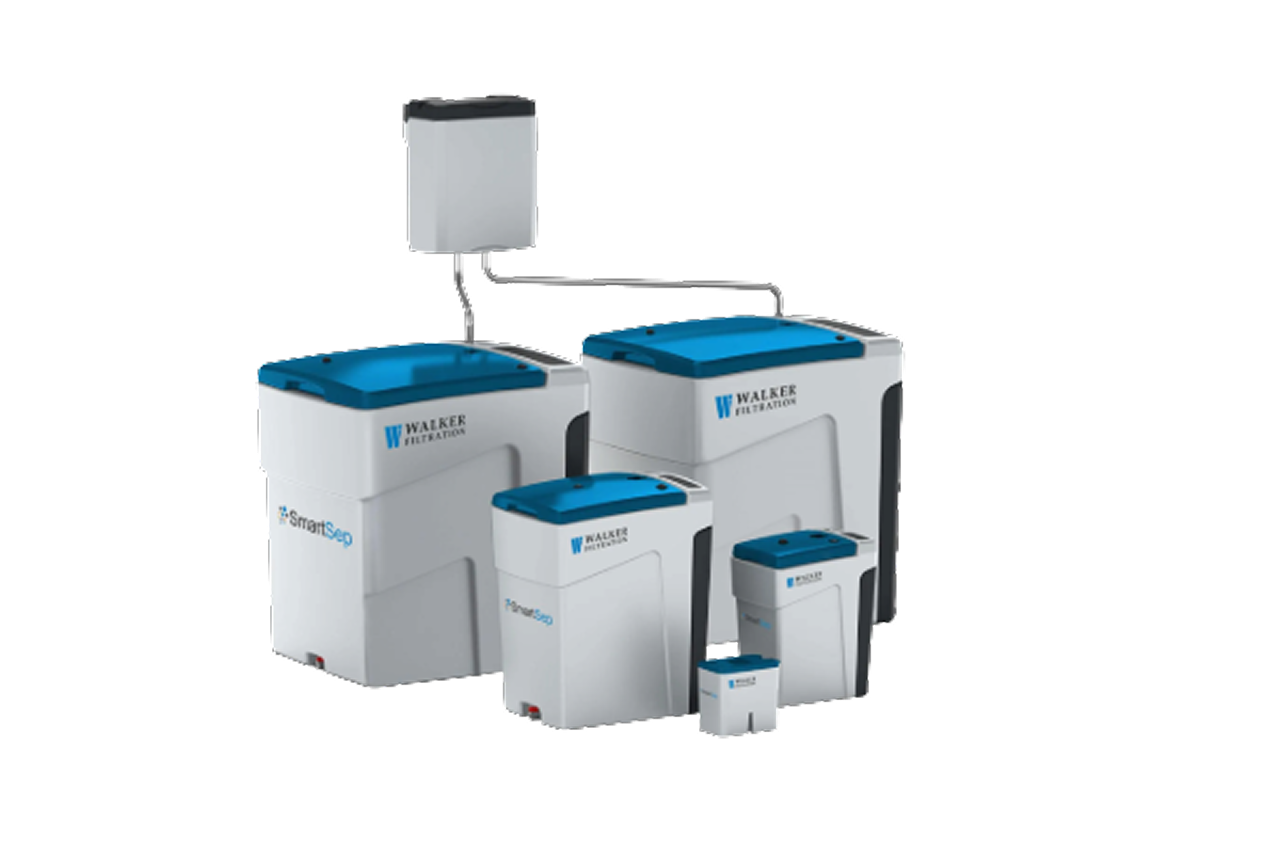
Coalescing housings collect liquid — every install needs a drain. Tying oily condensate to sanitary is a regulatory violation in most jurisdictions; route to an oil-water separator.
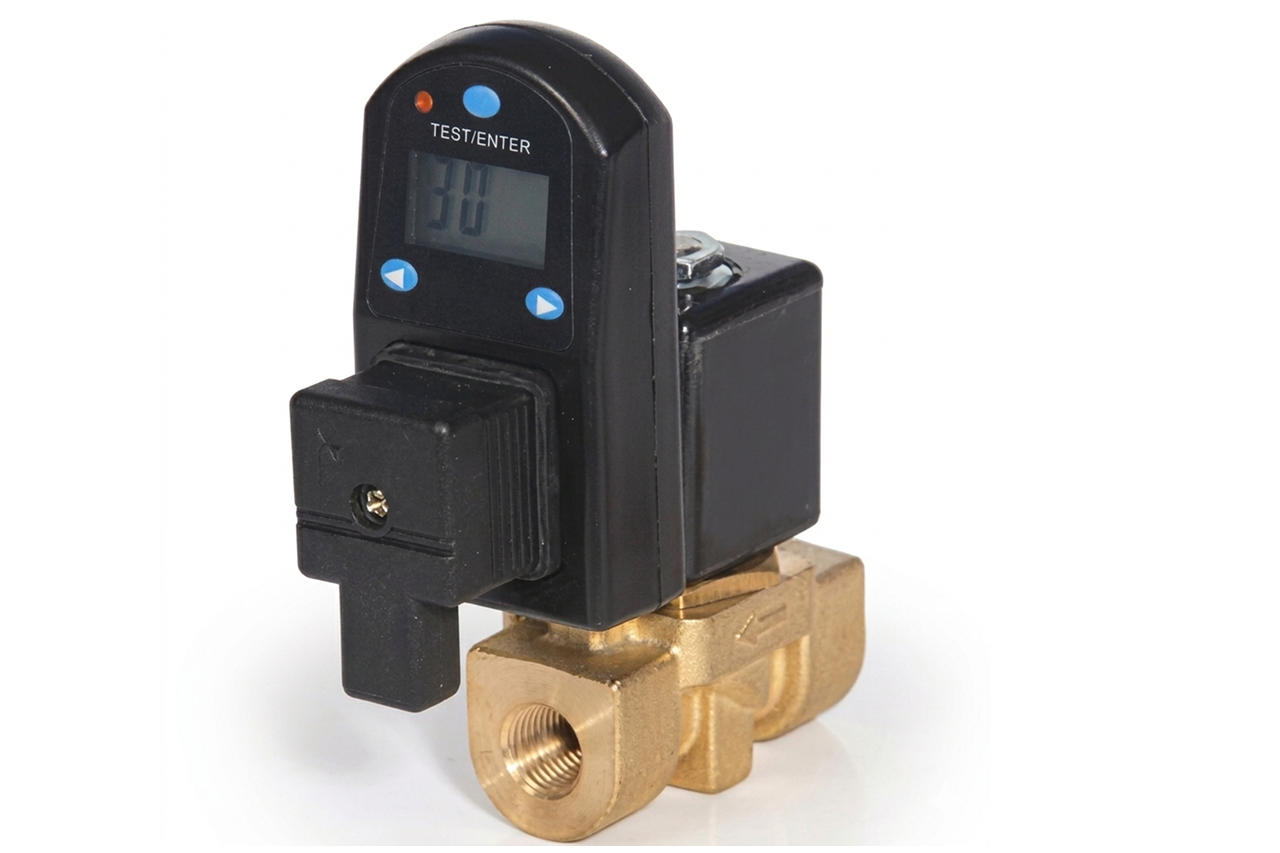
Manual (smallest point-of-use) · Float drain (zero-power, default) · Electronic-timer (dusty environments)
07 · Input
Number of housings for this configuration. Running a staged train or multiple branches? Add a separate quote line per housing position.
1 housing · 2-3 (staged train: pre-filter + coalescer + carbon) · 4+ (multi-line plant or branch polishers)

Need different sizes, colors, or quantities? Fill the form, add to quote, then fill again — each click is one quote line.

04Choose your solution tier  ·  core differentiator

Whatever your lever — spec, value, or price — SPC has the right brand.

Most distributors sell one brand per product type. SPC's 60-brand portfolio means every Product Type page surfaces three real options matched to how your customer is buying today. Pick the tier; the quote desk handles the cross-reference.

05How to sell this  ·  distributor talk track

The tier conversation closes the deal. The cross-reference catalog wins the next one.

Coalescing isn't one filter — it's a position in a stack. The sale is the stack: particulate pre-filter, coalescing for oil and water mist, activated carbon for oil vapor. Selling a coalescing element by itself means the customer's air quality fails on the next audit and they think the filter didn't work.
The SPC difference · how distributors actually buy

The 30-second positioning

Quote the train, not the element. Customers who buy the stack as a system replace elements on schedule, hit their air-quality target, and come back for the recurring consumable. Customers sold just one coalescing housing typically end up frustrated when their air still fails Class 1 because nothing upstream removes rust and nothing downstream removes vapor.

Tier: Industry Leader tier for audit-spec installs requiring full ISO 8573 documentation. Emerging tier for engineering-grade value (same borosilicate depth media, 50-70% of Industry Leader list). Economical tier for point-of-use and FRL-adjacent guard installs.

The consultative move — grade selection. 0.1 micron for general plant air, blow-off, pneumatic tools, automation. 0.01 micron for paint, instrumentation, food packaging, breathing-air pre-filter, any Class 1 oil spec. Some installs run both in series — 0.1 first as a guard stage protecting the more expensive 0.01 polish element.

Element interval: 12 months OR 2,000 hours OR 8-10 PSI differential, whichever first. Differential-pressure gauge across the housing is what tells the customer when to change; coalescing elements look clean even when saturated.

Customer cue → talk move

"Paint shop air"
0.01 micron silicone-free coalescing + activated carbon + 5 micron particulate pre-filter. Silicone carryover causes fisheye defects.
"ISO 8573-1 Class 1 oil at point of use"
0.01 micron coalescing + carbon in series. Document brand and grade in the customer's air-quality binder.
"Coalescing element plugging every 3 months"
Pre-filter problem. Either missing, overdue, or upstream piping shedding scale faster than the pre-filter catches.
"Customer wants a single filter that removes everything"
No such filter exists. Particulate handles solids; coalescing handles liquid; carbon handles vapor. Different physics, different stages.
"Replacement element — what brand?"
Aftermarket cross at 50-60% of OEM price, same micron rating, same ISO 8573 documentation. SPC's strongest filtration play.
"Compressed air for food packaging"
0.01 micron coalescing + carbon + sterile filter at point of use. SQF / BRC / FSSC 22000 all reference ISO 8573 air quality.
06Where it's used

Industries served.

Each industry below uses this product across the listed areas. Open an industry to see how it fits the rest of its system.
Also applies to Plant main-air headers · Paint shops and coating booths · Instrument and control air · Sandblasting and abrasive-blast breathing-air supply

09Install · 6 critical steps

The things that matter on the first install.

Step 01
Position the filter in the train
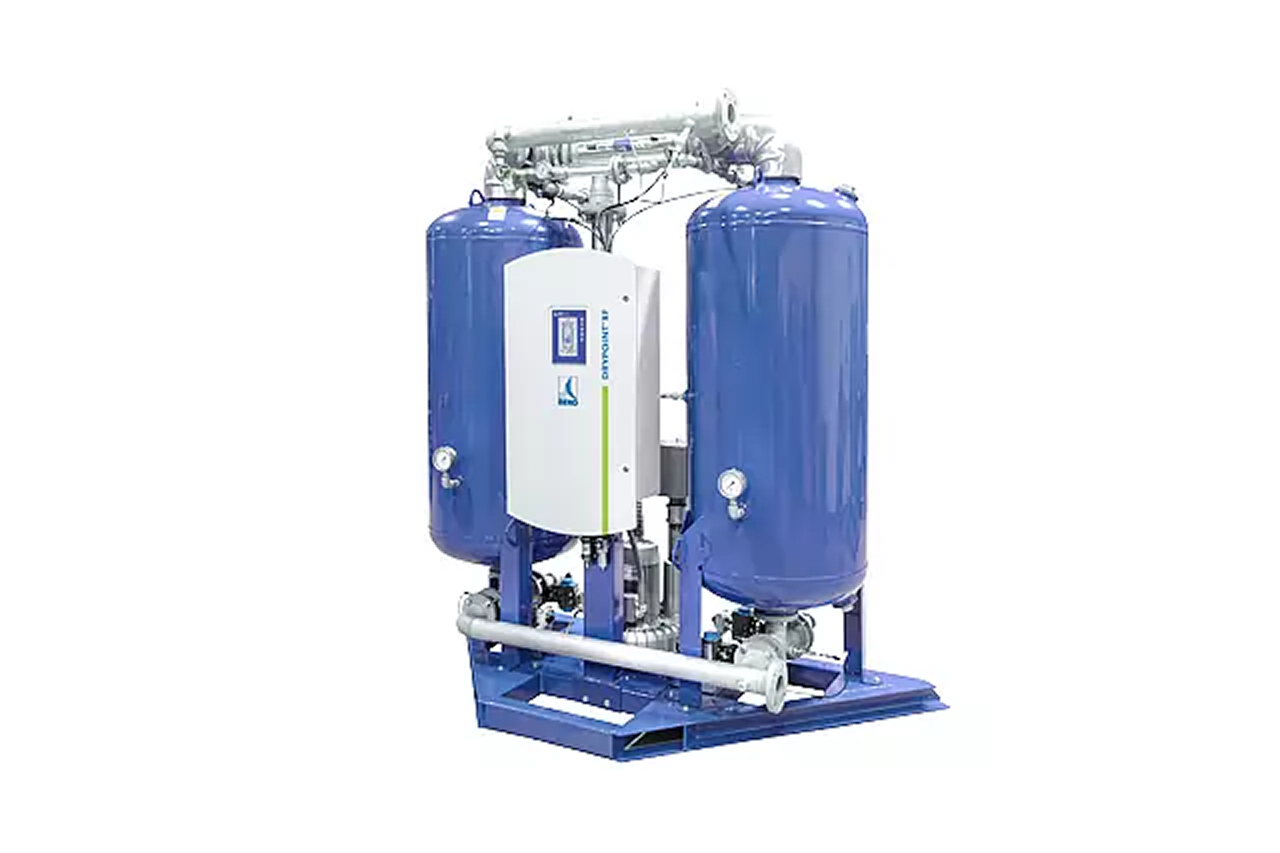
Standard order: compressor → aftercooler → wet receiver → dryer → 5 micron particulate pre-filter → coalescing (this product) → activated carbon (if needed) → distribution. The dryer goes UPSTREAM of coalescing — wet air saturates coalescing media faster, and a dryer drying already-filtered air is doing easier work.
Step 02
Size to flow plus 25% headroom
Match housing SCFM at operating pressure to compressor output. Oversize is fine (lower pressure drop, longer element life); undersize is the consistent failure — elements blind early, pressure drop spikes, downstream tools starve. Main-line bulk = floor-standing housing; point-of-use polish = threaded inline body sized to the drop.
Step 03
Particulate pre-filter is mandatory
A 5 micron particulate (sometimes 25 micron in dirty systems) sits immediately upstream. Without it, pipe scale, rust, and desiccant fines hit the coalescing media directly and blind it. Replacing elements every 3 months instead of every 12 is the cost of skipping the pre-filter — and the customer always blames "cheap filters."
Step 04
Install a differential-pressure gauge
Two-port DP gauge across inlet and outlet, or built-in DP indicator on premium housings. Replace at 8-10 PSI differential, not on a calendar guess. New element clean DP is 1-3 PSI; an element pushing 10+ PSI is dumping oil downstream because the media is saturated.
Step 05
Plumb the condensate drain to a permitted discharge
Manual on the smallest point-of-use units; automatic float drain or electronic-timer drain on everything else. Route to an oil-water separator if the housing collects oil-bearing condensate (it will, on any oil-lubricated compressor). Tying oily condensate to sanitary is a regulatory violation in most jurisdictions.
Step 06
Document at commissioning and stock spares
Record install date, element part number, micron grade, brand, and starting DP. Stock at least one spare element in the customer's MRO crib; on main-line installs in heavy use, stock two. Element supply-chain delay at change time = downtime, and downtime on a critical line costs more than a year of element inventory.
10Troubleshoot · top failures

Most returns trace to one of these causes.

Symptom
Most likely cause
Fix
Differential pressure rising fast / element plugging within months
Missing or undersized 5 micron particulate pre-filter letting solids through (most common), upstream pipe scale or rust shedding faster than the pre-filter catches, dryer dumping desiccant fines, or oil aerosol overload from a failing compressor air/oil separator.
Verify pre-filter is installed and within service life. Inspect upstream piping for visible rust; flush if needed. Check the compressor's air/oil separator differential — a failing separator dumps far more oil than the coalescing element is sized to handle. Replace the coalescing element AFTER fixing the upstream issue.
Oil carryover at the point of use despite filter installed
Element past service life (running on calendar guess rather than DP), wrong grade installed (0.1 micron when application needs 0.01), missing carbon stage for vapor removal, or — rarely — cracked element bypassing air around the media.
Read the DP gauge; replace if over 8-10 PSI. Verify grade against requirement — 0.01 micron is needed for Class 1; 0.1 micron only reaches Class 2. If application is Class 0 or hydrocarbon-sensitive, add activated carbon downstream.
Sump fills with water but no oil visible
Dryer bypassed or underperforming, condensation in the cool piping run between dryer and filter, or the system was installed without a dryer.
Verify dryer is operating and sized to compressor SCFM. Insulate piping between dryer and filter if line condensation is the issue. Add a dryer if missing — coalescing alone is not a substitute; it removes liquid that's already condensed, not vapor.
Sump fills with oil-water emulsion that won't separate
Detergent additives in synthetic compressor oil emulsifying with water, condensate drain firing too fast to let emulsion settle, or surfactant contamination upstream.
Match drain timing to housing fill rate. Verify the downstream oil-water separator is sized for emulsion-grade condensate — not all OWS units handle synthetic-oil emulsions.
Element bursting / housing rupture
Customer ran the element past 15-20 PSI DP, housing pressure exceeded rating (system pressure boosted since install), or freezing damaged the housing in winter.
Replace housing and element together. Verify housing pressure rating against current system pressure. Insulate or heat-trace outdoor installs.

Get the right coalescing filter on quote in 24 hours.

Send us the application — a specialist routes you to the correct tier with a configured part. Lead-times and pricing returned within one business day.

Request a quote