DISTRIBUTOR-FIRST SUPPLY PARTNER · SINCE 1999 Live · Product System

SPC Company
Industry Leader · Walker Filtration
01What it is

Water Separator

A water separator is a bulk liquid-water knockout device — it strips free liquid water out of the compressed air stream by mechanical means rather than by fine filtration. Instead of forcing the air through a fine medium, it spins the air or routes it through baffles so that centrifugal force and inertia throw the heavier liquid water against the housing wall, where it runs down and collects in the sump for discharge through a condensate drain. Because it works by mass separation, it removes only what is already liquid — the large slugs and droplets the air carries after the compressor and aftercooler. It does not remove water vapor, oil aerosol, or particulate; those are the jobs of the dryer and the fine filter train. In the system the separator sits in the treatment layer near the front of the chain — downstream of the wet receiver and upstream of the dryer — as the coarse first defense against liquid water.

Where it's used Chemical & Petrochemical
Chemical & Petrochemical application
02Why it's needed

Why this matters.

Tips and pointers on when the water separator is the missing piece — and when the problem lives elsewhere in the train. Scroll the strip →

01 · Key point
It catches bulk liquid before the dryer.

Centrifugal spin (cyclonic) or inertial baffles (vane) throw heavier water droplets against the housing wall — a 50 HP screw in humid summer can dump 20-30 gallons/day of liquid that would otherwise flood the dryer.

02 · Key point
No media, no element cost.

Mass separation — not fine filtration. Nothing to replace on a recurring cycle. The only wear item is the float drain on the sump. One-time install, years of unattended service.

03 · Key point
It extends every filter downstream.

By knocking bulk liquid out first it stops coalescing sumps from overflowing hourly, keeps refrigerated dryers off saturated-dewpoint trips, and dramatically reduces the volume condensate drains have to manage.

04 · Pro tip
Size for flow, pick the right drain.

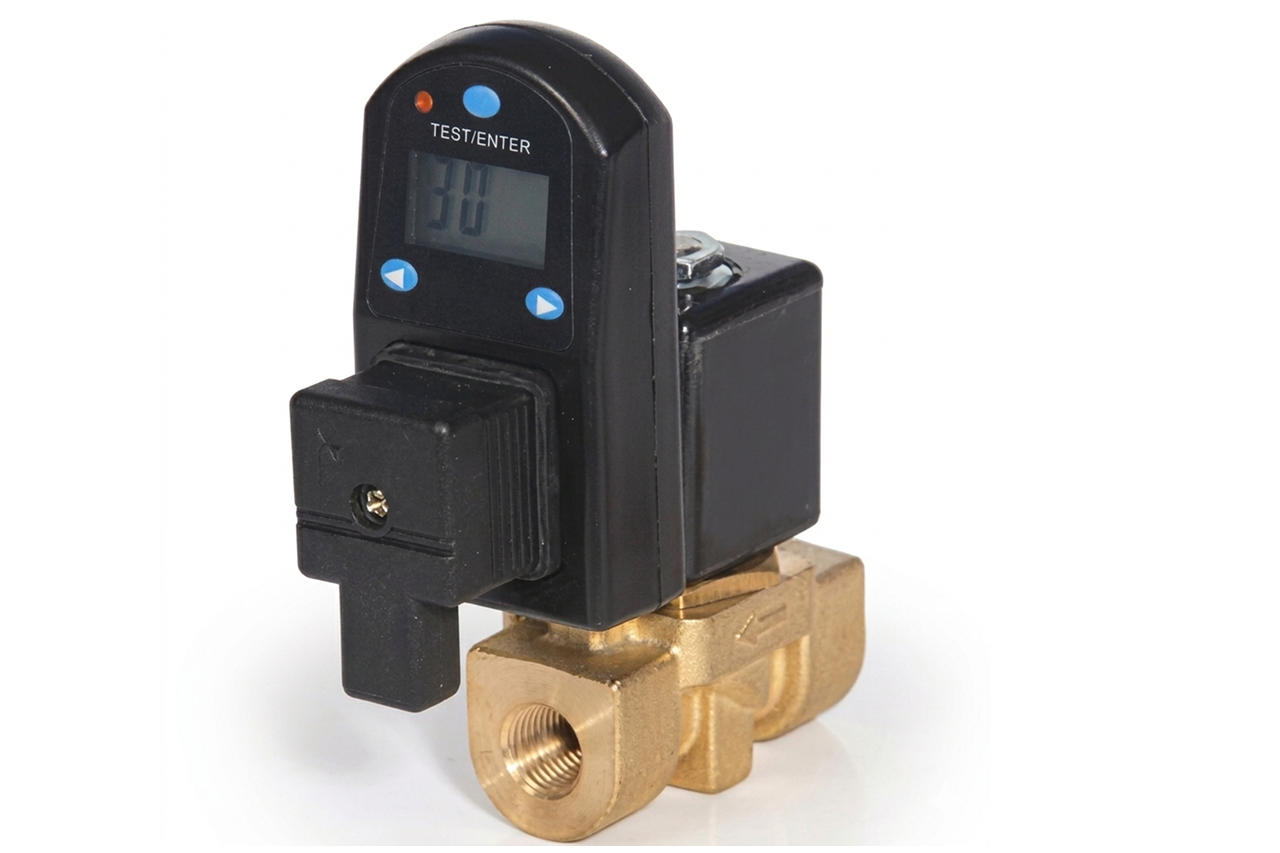
Oversize is fine — 125% of compressor max SCFM gives lower face velocity and better separation. Float drain standard; electronic timer in dusty/oily environments where float seats foul.

05 · Where not to use
Don't expect it to remove vapor.

Coarse stage by design — removes liquid only. Vapor passes straight through, oil aerosol passes through, fine particulate passes through. → Re-spec to a refrigerated or desiccant dryer for vapor, coalescing filter for aerosol.

06 · Where not to use
Downstream of the dryer.

Installed after the dryer it has nothing to catch — the dryer already removed what it would have separated. → Re-spec the install location to between the wet receiver and the dryer (the only correct position).

07 · Where not to use
Horizontal mount on cyclonic units.

Cyclonic separators rely on gravity to drain collected water down the housing wall to the sump — horizontal mount breaks that flow and water re-entrains. → Re-spec to vertical orientation per the manufacturer's diagram, every install.

03Key selection criteria

What we need to spec it right.

From the machine spec sheet → to the part number. Answer what you know — leave the rest blank — and send.

01 · Input
Size to system maximum plus ~25% headroom. Oversize improves separation; undersize is the consistent failure mode (liquid passes through at high face velocities).
Under 100 SCFM · 100-300 SCFM · 300-600 SCFM · 600+ SCFM
02 · Input
Read the system gauge. Standard housings run 150-232 PSI; boosted or high-pressure gas service needs a dedicated high-pressure housing.
150 PSI · 175 PSI · 200 PSI · 232+ PSI (high-pressure)
03 · Input
Humid climates (Gulf Coast, Florida, Midwest summer) justify the separator most — a 100 SCFM compressor in 80% RH summer can dump 5-15 gal/day. Also confirm whether an aftercooler / wet receiver precedes the separator.
Humid climate · Moderate / mixed · Dry climate · Outdoor / unheated install
04 · Input
Float drain ships as standard; electronic timer is the upgrade for dusty / oily environments where float seats foul.
Float drain (standard) · Electronic-timer upgrade
05 · Input
If replacing, capture the existing unit's brand, model, and connection size — geometry mismatch is the most common at-install miss on a like-for-like swap.
1/2" · 3/4" · 1" · 1-1/2" · 2"+ / flanged
06 · Input
Confirm planned position: between the wet receiver and the dryer is the only correct location. If replacement, capture the existing brand and model.
New install · Like-for-like replacement · Audit retrofit on existing system
07 · Input
Number of units for this configuration. Different size or capacity? Add a separate quote line.
1 unit · 2 units · 3+ units

Need different sizes, colors, or quantities? Fill the form, add to quote, then fill again — each click is one quote line.

04Choose your solution tier  ·  core differentiator

Whatever your lever — spec, value, or price — SPC has the right brand.

Most distributors sell one brand per product type. SPC's 60-brand portfolio means every Product Type page surfaces three real options matched to how your customer is buying today. Pick the tier; the quote desk handles the cross-reference.

05How to sell this  ·  distributor talk track

The tier conversation closes the deal. The cross-reference catalog wins the next one.

Water separators are the filter customers don't think they need until their dryer keeps tripping in August. Quoting one with every new system saves the August service call.
The SPC difference · how distributors actually buy

The 30-second positioning

The sale is education-led: show the customer the August dryer-trip problem and explain that this is what fixes it. The conversation has three pieces. First, diagnose the moisture-load situation — is the customer in a humid climate (Gulf Coast, Florida, Midwest summer)? Is the compressor sized close to demand (high duty cycle = more moisture production)? Is there an aftercooler integrated with the compressor or installed downstream? If yes to any, a water separator belongs in the train. Second, locate it in the install sequence — between the wet receiver and the dryer is standard. On systems with integrated aftercoolers but no wet receiver, locate between the aftercooler and the dryer. Third, size and pick the drain — separator capacity matched to system SCFM with 25% headroom; automatic float drain on every install (manual drains get forgotten and the separator overflows).

Tier: Industry Leader tier is the engineered choice for audited installs and large plant systems — centrifugal cyclonic design with no moving parts, integral automatic float drain, full pressure-temperature curves documented, threaded or flanged connections to match piping standards. A major OEM supply-chain network backs the documentation customers need for plant filings. SPC carries one tier in this category — water separators are simple physics where engineering content is in cyclone geometry and drain reliability, and the leading-tier brand's data package is the differentiator. For cost-driven applications a value alternative can be quoted from Emerging tier cyclonic-separator lines, but engineered installs default to Industry Leader tier.

The recurring revenue lives in the drain, not the housing. Float drains in water separators handle bulk liquid daily and wear out — typical 2-3 year replacement cadence in heavy-duty service, 5+ years in light-duty. Stock float-drain rebuild kits and replacement drains in the customer's MRO crib; failed drains overflow the separator and dump bulk water downstream into the dryer (exactly what the separator was installed to prevent). Drain failure is the leading water-separator failure mode and an easy preventive-maintenance line item.

Customer cue → talk move

"My refrigerated dryer keeps tripping on saturated outlet in summer"
Classic water-separator-missing diagnosis. The dryer is being flooded with more liquid water than its refrigeration circuit can handle. Add a properly sized separator immediately upstream of the dryer; trip frequency drops to zero. Single highest-ROI retrofit in the filtration category.
"New compressor install, humid climate"
Quote the separator as a standard line item, not as an option. Add it to the system drawing between the wet receiver and the dryer.
"Coalescing element sumps overflowing"
Symptom of bulk liquid water reaching the coalescing stage. Verify upstream — aftercooler? wet receiver with a working drain? water separator? Adding the separator drops coalescing-sump volume dramatically.
"Customer pushback on adding another filter"
It's not a fine filter; it's a mass-separation device. No media to replace, no recurring element cost, just a float drain that lasts years. Reframe as a one-time install that protects the more expensive filters.
"Existing separator drain stuck open or stuck closed"
Replace the float drain — it's a wear item, not a defect. Stock rebuild kits. Educate the operator on checking drain function at the annual PM.
"How much water does it actually catch?"
A 100 SCFM compressor in 80% RH summer air can dump 5-15 gallons per day into the separator. Most customers are stunned by the volume; show the math.
"Doesn't my wet receiver do this already?"
Partially. The receiver catches what condenses inside the tank as the air cools further; the separator catches what's already liquid PLUS additional droplets thrown out centrifugally on the way through. Both devices play different roles.
06Where it's used

Industries served.

Each industry below uses this product across the listed areas. Open an industry to see how it fits the rest of its system.

Also applies to Humid-climate plant air systems · High duty-cycle industrial plants · Outdoor compressor installations · Compressor rooms without integrated aftercoolers · Plants with refrigerated dryers sized close to capacity · Audit-retrofit projects

09Install · 6 critical steps

The things that matter on the first install.

Step 01
Position the separator between the wet receiver and the dryer
Standard order: compressor → aftercooler → wet receiver → WATER SEPARATOR (this product) → dryer → particulate pre-filter → coalescing → distribution. On systems without a discrete wet receiver, locate immediately downstream of the aftercooler. Never install downstream of the dryer — that defeats the purpose.
Step 02
Match flow rating to compressor output with 25% headroom
Separator SCFM rating at operating pressure should be 125% of compressor maximum SCFM. Oversize is fine — lower velocity through the cyclone means better separation efficiency. Undersize is the consistent failure: liquid passes through at high face velocities and the separator under-performs.
Step 03
Verify housing pressure rating and install with the cyclone vertical
Standard housings rated to 150-232 PSI; boosted systems or high-pressure gas service need a dedicated high-pressure housing. Cyclonic separators rely on gravity to drain collected water down the housing wall to the sump — horizontal-mount installations break that flow and water re-entrains in the airstream. Follow the manufacturer's orientation diagram exactly.
Step 04
Plumb the drain output to an oil-water separator, then to permitted discharge
On oil-lubricated compressor installs, the separator collects oil-bearing condensate that is regulated under most local stormwater and sanitary-sewer ordinances. Plumb to an OWS, OWS effluent to permitted discharge. On oil-free compressor installs, the condensate is still not certified hydrocarbon-free (atmospheric intake contamination) — same OWS-to-permitted-discharge install applies.
Step 05
Verify drain function at install and document commissioning
Most separators ship with a float-operated drain; some ship as no-drain variants requiring a separate drain valve. Confirm the drain is installed and functional before pressurizing. Briefly open the manual override (if equipped) to confirm water passes; it should drain a slug then reseat cleanly. Record installation date, model number, flow rating, and drain type in the customer's air-quality binder.
Step 06
Brief the operator and set the drain replacement cadence
Daily walk-by: visually verify the separator is not weeping pressure (drain stuck open) and not pooling water at the inlet (drain stuck closed). Two-minute morning check is the right cadence. Float drains in heavy-duty service replace at 2-3 years; light-duty at 5+. Stock at least one replacement drain in the customer's MRO crib — drain failure dumps bulk liquid downstream and is the leading water-separator failure mode.
10Troubleshoot · top failures

Most returns trace to one of these causes.

Symptom
Most likely cause
Fix
Refrigerated dryer downstream of the separator still flooding or tripping
Separator drain stuck closed (water overflowing through the separator into the dryer), separator undersized for actual flow, separator installed downstream of the dryer (architectural error), or separator orientation horizontal instead of vertical breaking the cyclone flow.
Verify the drain is operating — manually trip the override and confirm water discharges. If the drain is good, verify orientation against the manufacturer's diagram. If both are correct and the dryer is still flooding, the separator is undersized — upsize. Architectural errors (separator downstream of dryer) require re-piping.
Separator constantly losing pressure / drain weeping continuously
Float drain stuck open (most common — debris in the float seat is the usual culprit), failed float-arm seal, or on electronic-timer variants the timer is set too aggressive and dumps too frequently.
Replace or rebuild the float drain. Inspect the seat for debris (rust flakes, scale fragments) and clean. On electronic drains, reset the timer to longer intervals matched to actual fill rate.
Bulk liquid water reaching the coalescing filter despite separator installed
Separator drain stuck open intermittently (drain leaks pressure, water re-entrains and passes through), drain stuck closed (overflowing), or separator undersized for actual flow.
Replace the float drain. Verify separator capacity against actual SCFM. On humid-climate installs in particularly bad summers, additional capacity may be needed — staged separators or upsizing.
Separator weeping condensate around the housing (not from the drain)
Housing gasket or O-ring degradation (age-related), threaded connection loose, or — rarely — housing crack from a pressure-transient event.
Replace the housing seals. Inspect threaded connections and retorque. If the housing is cracked, replace the entire unit — patching a cracked pressure vessel is a regulatory violation.
Customer reports separator is "dry" / never sees water discharge
Customer is in a dry climate (low ambient humidity), compressor is undersized and the aftercooler is doing most of the condensation work, separator drain is functioning correctly and discharging water faster than the operator catches it, or — rarely — a bypass installed during maintenance routing air around the separator.
Verify the separator is actually online (check piping). On dry-climate installs, low discharge volume is normal — the separator's value is during humid weather events. If the unit truly never discharges and the climate is humid, look for an air-bypass that was installed during maintenance and never removed.
Loud spitting or pulsing noise from the separator
Drain attempting to discharge under partial liquid load, drain seat damaged and chattering, or — on automatic drains — power supply issue causing rapid open/close cycling.
Service the drain. Verify power supply if electronic. Pulsing on a healthy float drain is unusual; if it persists after drain service, return to vendor for inspection.

Get the right water separator on quote in 24 hours.

Send us the application — a specialist routes you to the correct tier with a configured part. Lead-times and pricing returned within one business day.

Request a quote