DISTRIBUTOR-FIRST SUPPLY PARTNER · SINCE 1999 Live · Compressed Air System

SPC Company
Compressed Air / End-Use / Nitrogen Generation / PSA Nitrogen Generator — Standard
Layer 06 · End-Use Emerging · Great Lakes Air
01What it is

PSA Nitrogen Generator — Standard

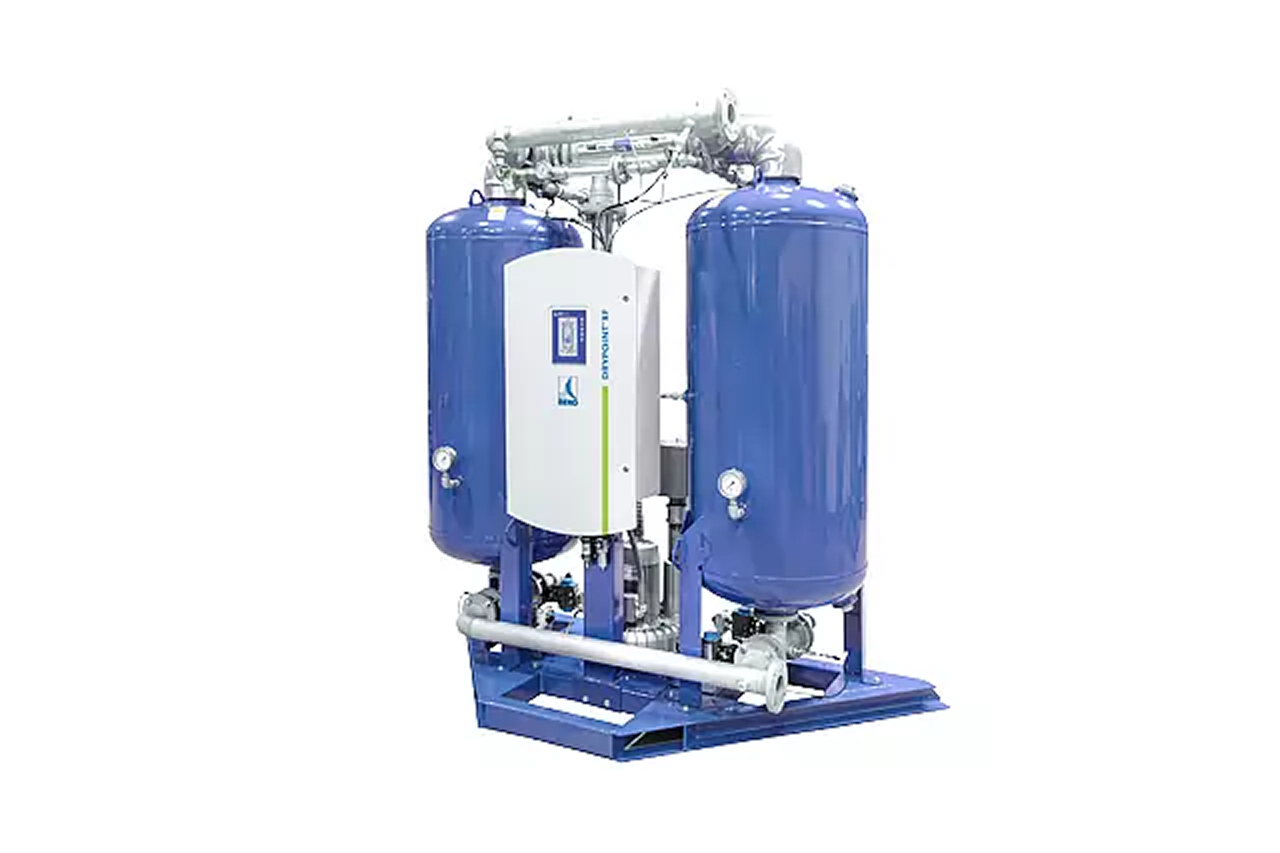
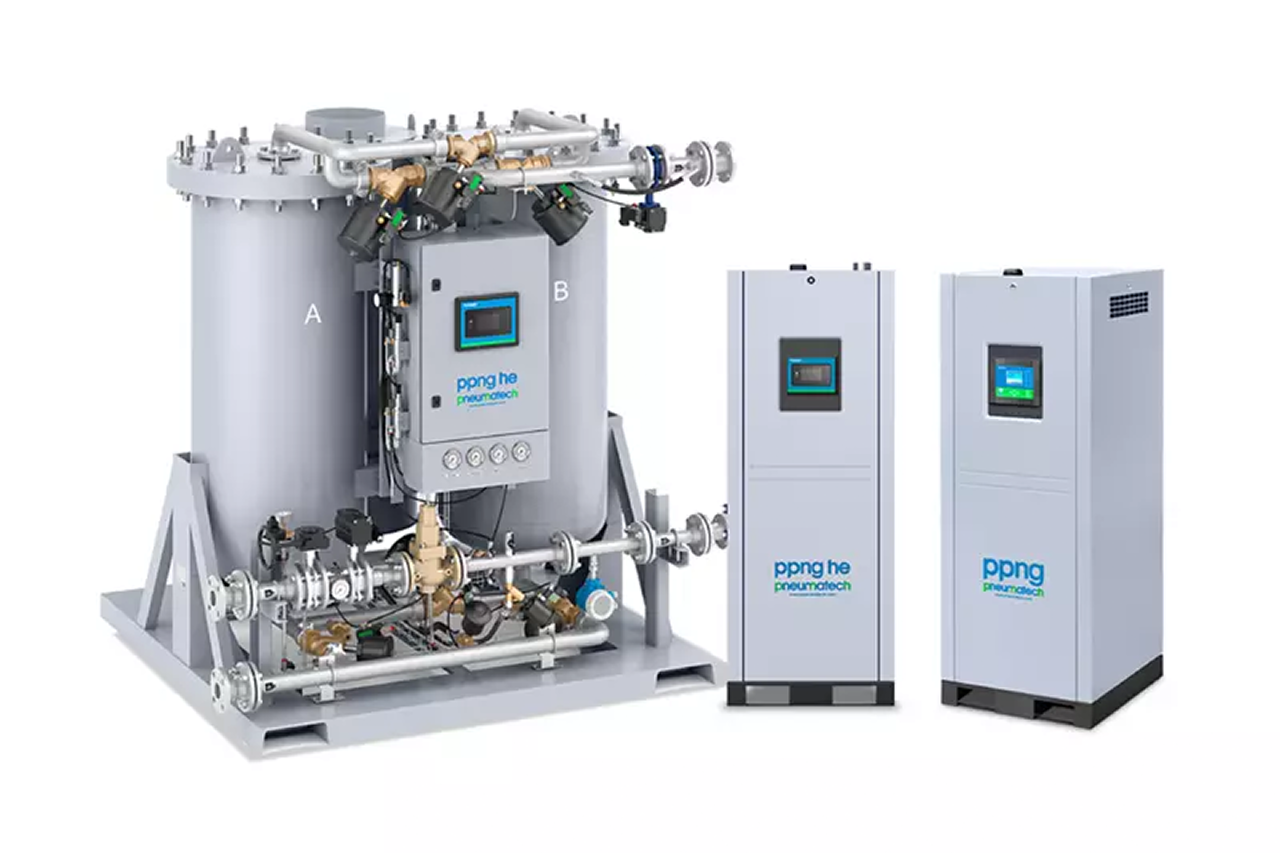
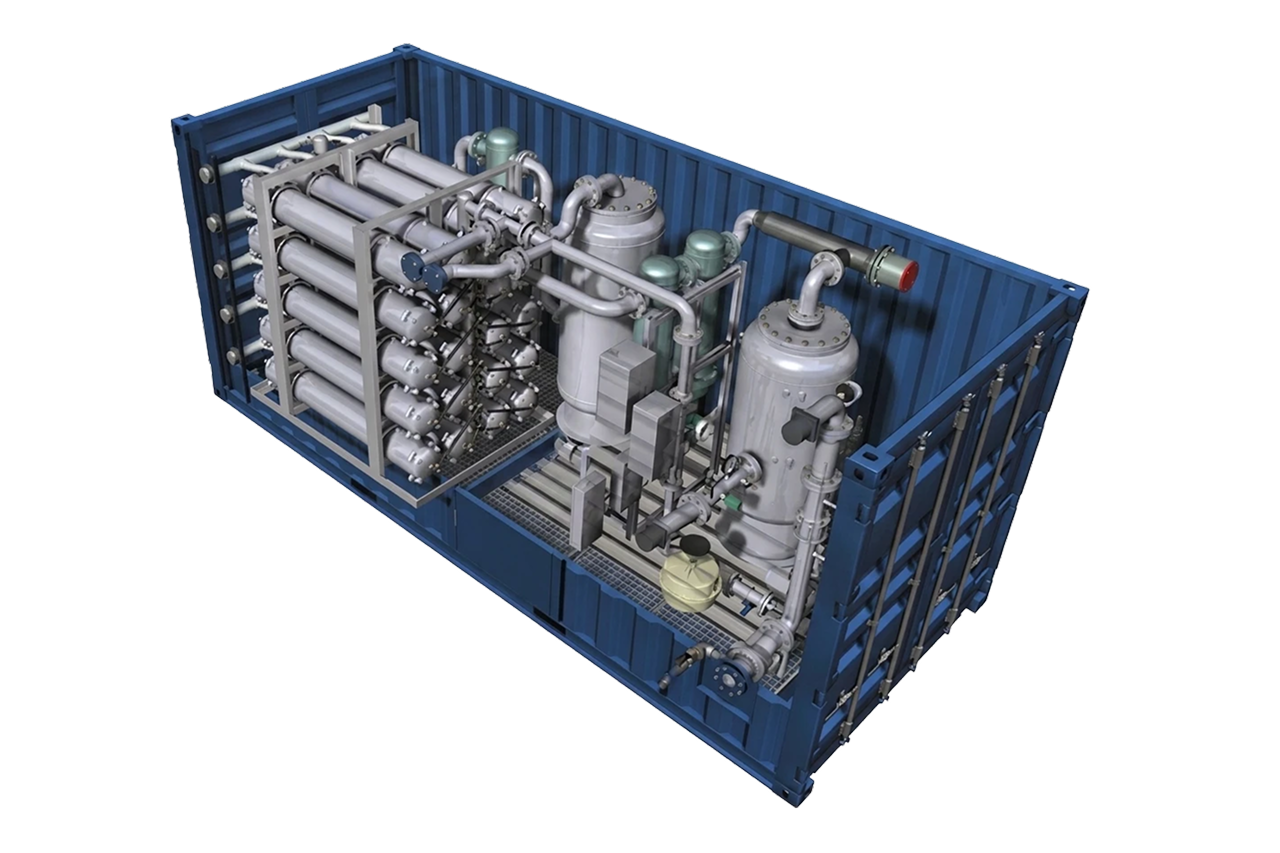
A PSA (Pressure Swing Adsorption) nitrogen generator is a skid- or cabinet-mounted plant that makes nitrogen on-site from the facility's existing compressed air, at standard plant pressure. It is the workhorse format of the nitrogen-generation category — the right answer for the large majority of industrial nitrogen demand, anything where gas is consumed at normal line pressure rather than packaged back into cylinders. Installed downstream of the compressor and feed-air treatment, the generator feeds a buffer vessel that smooths demand swings before nitrogen reaches the point of use. Available as a floor skid, an enclosed cabinet, a compact unit, or a portable skid/trailer chassis — all the same PSA platform, packaged for the site.
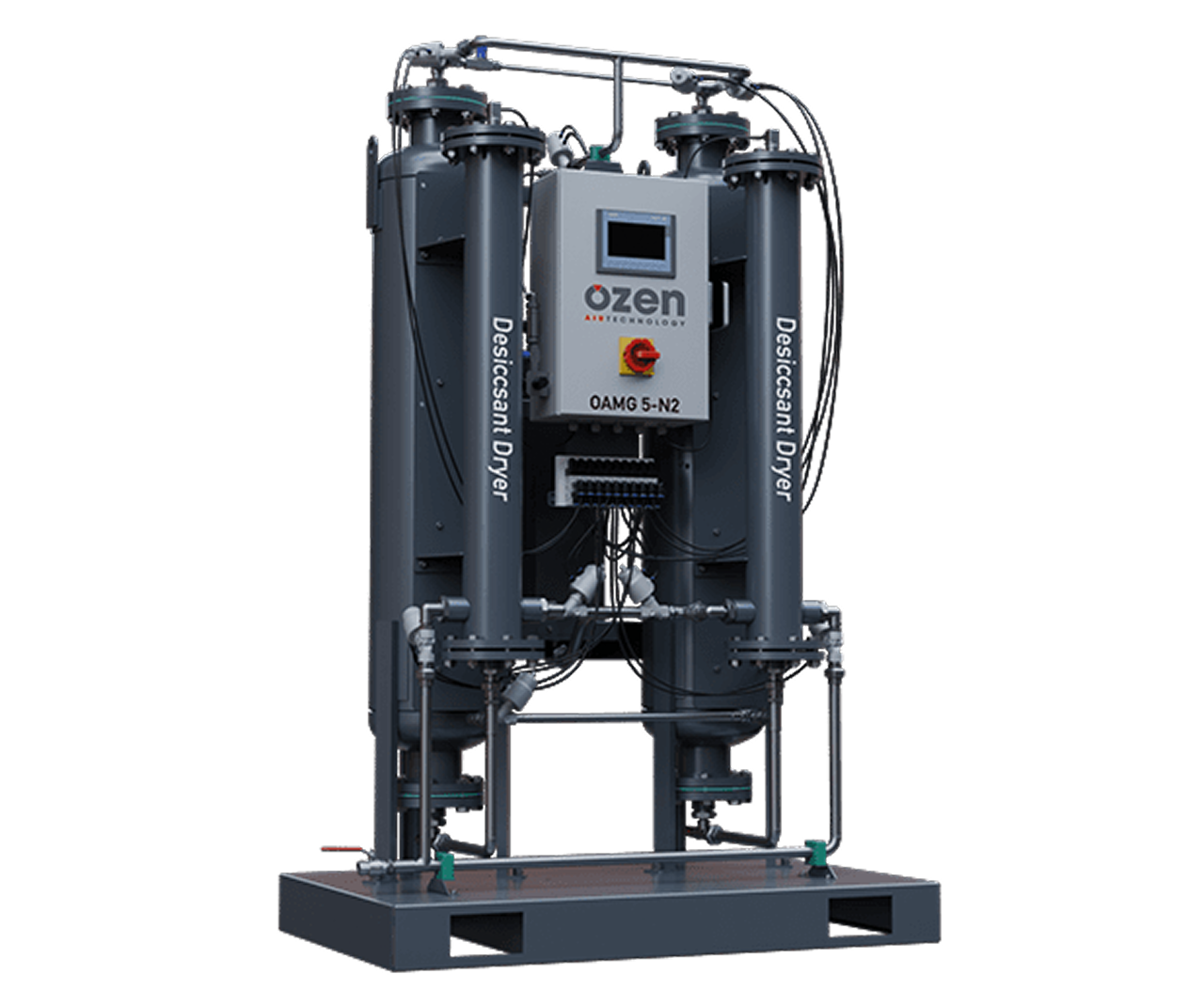
Real-world reference Representative psa nitrogen generator — standard
PSA Nitrogen Generator — Standard — representative product photo
02Why it's needed

Why this matters.

Tips and pointers on when on-site PSA wins — and when delivered gas is still the right call. Scroll the strip →

01 · Key point
It kills the cylinder bill.

On-site nitrogen runs roughly $0.10-$0.30 per 100 SCF against $0.75-$3.00 delivered — a 3-10× gap that compounds every shift. Plus no rental, demurrage, or annual escalator.

02 · Key point
Purity dials to the job.

PSA = pressure swing adsorption: twin CMS (Carbon Molecular Sieve) beds tune from 95% to 99.999%+ on the same machine. Same unit covers tire fill, laser cutting, food MAP, electronics.

03 · Key point
Runs on plant air you own.

Feed is the customer's existing compressor — roughly 3-4 SCFM treated feed per 1 SCFM N2 at standard purity. Towers cycle every 60-120 seconds, output is steady, no truck on the schedule.

04 · Pro tip
Size on peak and purity together.

Always quote a purity-and-flow pair, never one number. Size to peak SCFM, never average — the buffer smooths swings but can't erase peaks, and an undersized unit ends in supplemental cylinder deliveries that wreck the payback.

05 · Where not to use
Low-volume, intermittent draw.

Under roughly $1,500/month in delivered spend, capital payback stretches past 4-5 years and the case gets soft. → Stay on cylinder supply until the application scales or runs more shifts.

06 · Where not to use
Ultra-high purity above 99.999%.

Five-nines is the practical PSA ceiling and feed-air ratio climbs to ~10× there. For 99.9995%+ semiconductor or specialty pharma → Add cryogenic for 99.999%+ or quote a getter/deoxo polishing stage downstream.

07 · Where not to use
Cylinder fill or aircraft service.

Standard PSA outputs at plant pressure (a few PSI below feed) — it cannot fill bottles at 2,200-3,500 PSIG. → Re-spec to high-pressure with the matched booster and fill stand.

03Key selection criteria

What we need to spec it right.

From the machine spec sheet → to the part number. Answer what you know — leave the rest blank — and send.

01 · Input
Set by the application — drives generator model selection and feed-air ratio. Higher purity = steeper feed-air ratio.
95-99% (tire fill, cabinet purge) · 99.5-99.9% (laser cutting, food MAP) · 99.99% (heat treat, blanketing) · 99.999% (electronics, pharma)
02 · Input
Size to peak SCFM, never average — buffer smooths swings but cannot erase peaks, and an undersized unit ends in supplemental cylinder deliveries.
Under 100 SCFM (small/cabinet) · 100-500 SCFM (mid plant) · 500-2,000 SCFM (laser fab, food MAP) · 2,000+ SCFM (multi-skid)
03 · Input
Pull from 12 months of supplier invoices — cylinders, dewars, bulk liquid, hazmat, demurrage, rentals all in. Denominator on the payback case.
Under $1,500/mo (case soft — stay on cylinders) · $1,500-$5,000/mo (typical payback zone) · $5,000+/mo (strong payback)
04 · Input
Confirm the plant compressor can supply ~3-4 SCFM treated feed per 1 SCFM N2 on top of current plant demand. Ratio climbs to ~10× at 99.999%. If short, quote a compressor upgrade alongside.
Adequate headroom · Tight (upgrade likely) · Maxed out (upgrade required — two-line capital quote)
05 · Input
Desiccant dryer to -40°F PDP plus coalescing filter is mandatory — refrigerated dryers destroy the CMS beds. Frame as protecting capital, not upsell.
Desiccant + coalescing in place · Refrigerated only (upgrade required) · None (full treatment chain in quote)
06 · Input
Size to 10-15 minutes of peak demand at system pressure. Part of the system design, not an optional accessory.
Existing tank adequate · Existing tank undersized (upsize) · New buffer in quote
07 · Input
Required in food/pharma, strongly recommended everywhere — single most important diagnostic for catching CMS degradation before production loss.
Quote analyzer (standard) · Quote analyzer + data logging (food/pharma audit) · Customer declined (note in file)
08 · Input
Industry and audit scope drives enclosure (cleanable), documentation package, and analyzer spec.
General industrial (no special cert) · Food-grade (cleanable enclosure, documented purity) · Pharma / GMP (full validation package)
09 · Input
Fixed install vs portable chassis sets the package. Portable also needs feed-air confirmed at each deployment site (compressor + dryer travel with unit if absent).
Fixed indoor (standard) · Skid-mounted (in-plant relocation) · Trailer-mounted (field / remote)
10 · Input
Most installs are 1 system per site. Multi-site, redundancy, or N+1 backup? Add a separate quote line per location or unit.
1 system · 2 systems (redundancy / N+1) · Multi-site rollout (specify locations)

Need different sizes, colors, or quantities? Fill the form, add to quote, then fill again — each click is one quote line.

04Choose your solution tier  ·  core differentiator

Whatever your lever — spec, value, or price — SPC has the right brand.

Most distributors sell one brand per product type. SPC's 60-brand portfolio means every Product Type page surfaces three real options matched to how your customer is buying today. Pick the tier; the quote desk handles the cross-reference.

05How to sell this  ·  distributor talk track

The tier conversation closes the deal. The cross-reference catalog wins the next one.

Get the monthly spend, the required purity, and the peak flow. Those three numbers turn a vague conversation into a sized quote with a payback date — and the payback date is what closes the order.
The SPC difference · how distributors actually buy

The 30-second positioning

Selling a standard PSA generator is a cost-replacement conversation, not a technology conversation. The customer is already buying nitrogen every month; what you're replacing is a line item on their P&L. Three inputs: monthly spend (from 12 months of invoices — the denominator on the payback), required purity (tire/cabinet 95-99%, food/laser 99.5-99.9%, electronics/pharma 99.999%), and peak flow in SCFM (Standard Cubic Feet per Minute), never average. Size to peak, quote a buffer to 10-15 minutes of peak, put the payback in front of the customer.

Tier: Industry Leader tier leads essentially every standard-pressure quote — mature N2 line, validated CMS bed life, full package options, service SPC carries cleanly. Emerging tier alternatives are available for brand preference or price sensitivity. Don't lead with import-tier — bed life and warranty support are uneven.

Sell the system, not the generator. Every install needs the dryer, the coalescing filter, the buffer, and the on-line purity analyzer. Bundled-system margin plus recurring service is where the install pays off — not the standalone generator capital.

Customer cue → talk move

"Spending $3,000-$8,000/month on cylinders"
Anchor case. Pull 12 months of invoices, divide installed cost by monthly figure. Most land 18-30 month payback [VERIFY].
"Needs 99.999% for electronics/pharma"
Feed-air ratio climbs to ~10x at five-nines vs 3-4x at 99%. Size with headroom; quote the analyzer as mandatory.
"Doesn't track total nitrogen spend"
Pull 6 months of invoices. Most underestimate by 30-50% because hazmat, demurrage, and rentals are on separate lines.
"Existing compressor maxed out"
Quote compressor upgrade alongside. PSA needs ~3-4 SCFM treated feed per 1 SCFM N2. Two-line capital quote.
"Can we use our refrigerated dryer?"
No. CMS is destroyed by moisture. Desiccant to -40°F PDP plus coalescing is mandatory. Frame as protecting capital, not upsell.
"Indexed bulk contracts"
8-15% annual escalators baked in. Show the 5-year differential — gap widens, case strengthens every renewal.
09Install · 6 critical steps

The things that matter on the first install.

Step 01
Verify feed-air capacity and treatment
Measure compressor SCFM at the PSA's inlet pressure (90-150 PSIG). Generator needs ~3-4 SCFM treated feed per 1 SCFM nitrogen; ratio climbs at higher purity. Confirm desiccant dryer to -40°F PDP plus coalescing filter upstream. Do not proceed without the feed-air chain in place.
Step 02
Prepare pad, power, and venting
Flat level pad rated for package weight. Voltage and phase confirmed against nameplate. Vent the regen tower's oxygen-rich exhaust to a safe outdoor location — oxygen-enriched venting indoors is a fire hazard.
Step 03
Set buffer and on-line purity analyzer
Size buffer to 10-15 minutes of peak demand at system pressure. Install analyzer downstream of the buffer outlet — single most important diagnostic, catches CMS degradation early. Loop into customer controls or local alarm.
Step 04
Run the commissioning cycle
First start runs a manufacturer break-in — purging towers at low flow before opening to the buffer. Verify both towers cycle correctly (clean valve transitions, tower-pressure gauges alternating), no leaks at feed-air, regen, or output connections.
Step 05
Calibrate to purity, load-test against peak
Set purity on the controller; stabilize 4-24 hours. Ramp point-of-use flow up to peak watching the analyzer. Purity must hold at or above target through peak; if it drops, the generator is undersized or feed air is underdelivering.
Step 06
Document and train
Record model, serial, purity setpoint, measured peak flow, buffer size, next service date. Walk operations through the purity alarm, low/high-flow alarms, tower-pressure indicators. Customers who understand the alarms run their generators for decades. Leave a one-page operator quick-reference at the controller.
10Troubleshoot · top failures

Most returns trace to one of these causes.

Symptom
Most likely cause
Fix
Purity drops below target during peak demand
Generator undersized for peak, feed-air sagging under load, CMS bed degradation, or analyzer drift.
Verify analyzer with fresh calibration gas first. Measure feed-air pressure at PSA inlet during peak — if it sags below controller minimum, upstream is the bottleneck. If feed is solid, beds are undersized or contaminated; sample and inspect.
Towers cycle but pressure swings abnormally or one runs hotter
Sluggish cycling valve (most common after years), plugged equalization line, wrong cycle-time, or one bed degraded.
Watch a full cycle at the controller, time each phase against spec. Schedule sluggish-valve replacement at next planned downtime — running to failure damages the bed below.
Generator cannot reach target purity even at low flow
CMS beds saturated with moisture (the cardinal failure mode) from failed desiccant dryer, oil contamination from failed coalescing, severe feed-air shortfall, or fundamentally undersized generator.
Inspect feed-air dryer first — measure PDP at outlet, must be -40°F or colder. If dryer has failed, beds may be permanently degraded; pull samples. Inspect coalescing for oil saturation. If everything upstream is intact, generator is undersized.
Pre-filter differential pressure climbs rapidly between services
Upstream treatment delivering particulate/oil — failed coalescing, compressor air-end carryover, or wrong filter grade.
Inspect upstream coalescing. Verify air/oil separator within service life — overdue separator dumps oil aerosol that loads every filter behind it. Replacing the pre-filter without fixing what loaded it is a treadmill.
Buffer pressure drops faster than generator can refill at peaks
Peak demand exceeds rated output (sizing error), buffer undersized for peak duration, or undisclosed point-of-use leakage.
Log point-of-use flow over a full shift with a thermal mass flow meter. If demand exceeds rated, quote second unit in parallel or upgrade. If within rated, buffer is undersized. Verify no unmetered leakage before recommending capital upgrades.
Whistling or continuous hissing from the regen vent
Stuck regen valve, internal leak bypassing feed air to vent, or restricted vent piping whistling at silencer.
Verify cycle timing — regen vent should pulse, not flow continuously. If flowing through both halves, controller is faulted or a tower-isolation valve has failed open. If properly pulsing and whistle is at the silencer, replace the silencer element.

Get the right psa nitrogen generator — standard on quote in 24 hours.

Send us the application — a specialist routes you to the correct tier with a configured part. Lead-times and pricing returned within one business day.

Request a quote