DISTRIBUTOR-FIRST SUPPLY PARTNER · SINCE 1999 Live · Compressed Air System

SPC Company
Compressed Air / End-Use / Nitrogen Generation / Containerized Nitrogen System
Layer 06 · End-Use Emerging · South-Tek Systems
01What it is

Containerized Nitrogen System

A containerized nitrogen system is a complete on-site nitrogen plant built inside an ISO shipping container — the PSA (Pressure Swing Adsorption) generator together with its feed compressor, feed-air treatment, and buffer storage, delivered as one self-contained, plug-and-play package. It is the format for sites that have no building to house equipment: remote installations, modular or rapidly-deployed facilities, expansion projects where plant floor space is unavailable, and operations that may relocate the asset later. Set on a pad, connected to power, and run — engineering, integration, and a stick-built install timeline collapsed into a single shippable unit. Offered in nitrogen and compressed-air package configurations; pairs naturally with SPC's Enclosed Air Systems add-on.
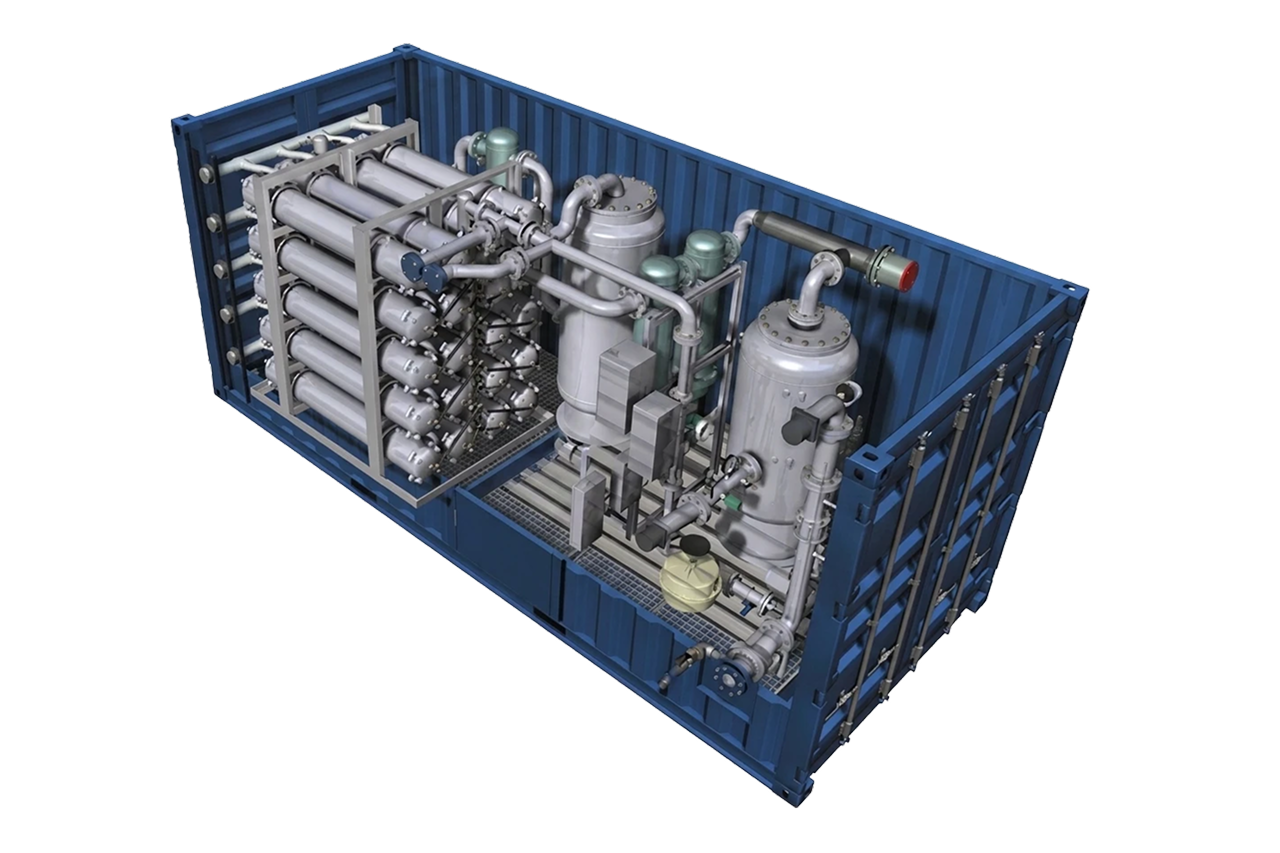
Real-world reference Representative containerized nitrogen system
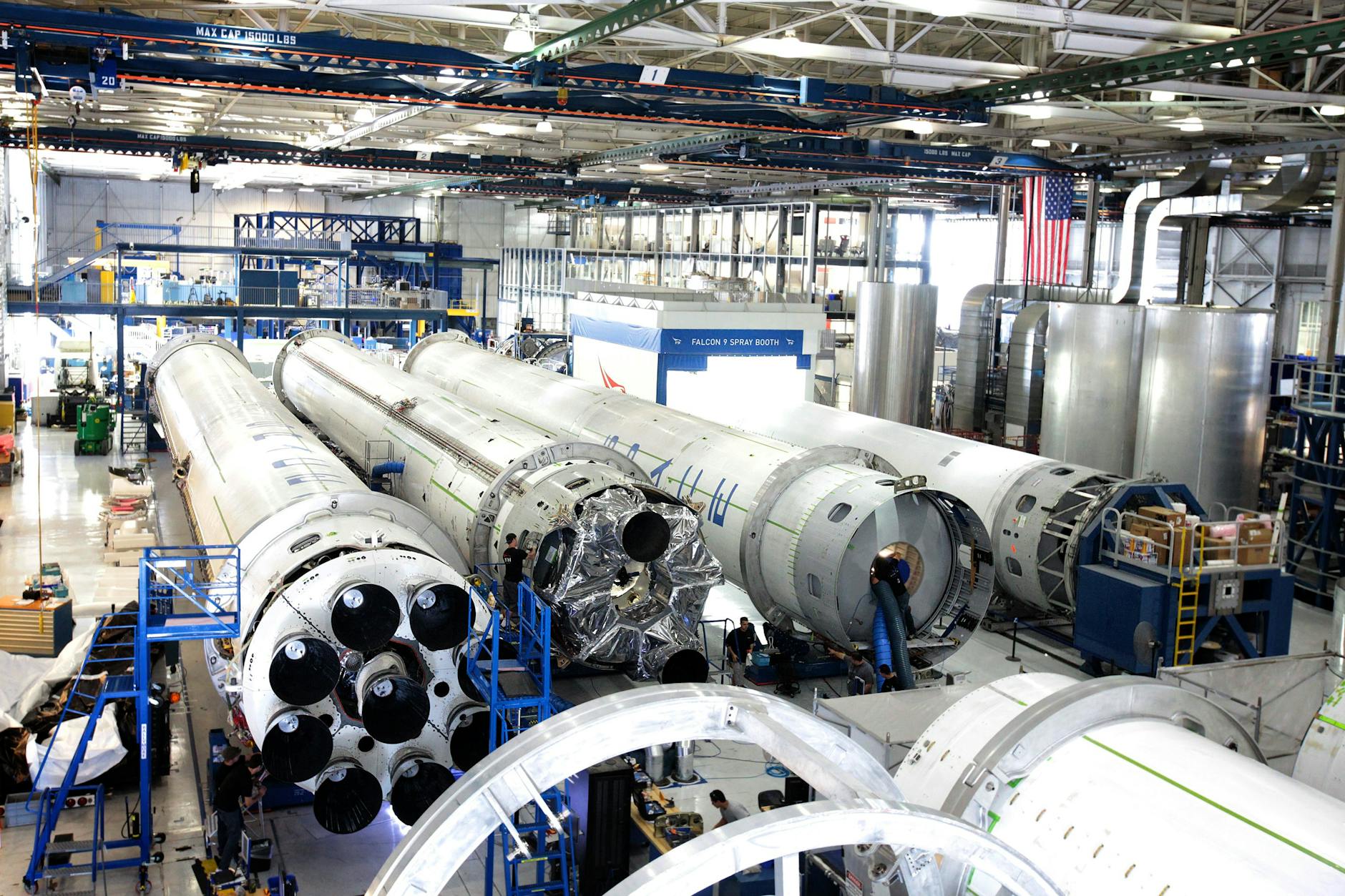
Containerized Nitrogen System — representative product photo
02Why it's needed

Why this matters.

Tips and pointers on when to spec a containerized package — and when a fixed install is the cleaner answer. Scroll the strip →

01 · Key point
No building required.

Full nitrogen plant — generator, feed compressor, dryer, coalescing filter, buffer — pre-assembled inside an ISO container. Set on a pad, connect power and N2 line, run. Remote sites, modular facilities, full plant floors all served.

02 · Key point
Days to deploy, not months.

A stick-built equivalent is months of engineering, permitting, contractor scheduling, and commissioning. The container ships factory-tested and produces N2 in days — schedule-compression alone often justifies the format.

03 · Key point
Optionality on a long-life asset.

When a remote site shuts down, a temporary facility decommissions, or corporate rebalances regions, the container moves with the work rather than getting stranded. Fixed installs can't offer that.

04 · Pro tip
Lock site services in proposal.

Everything inside the box is SPC and the build partner; everything crossing the boundary is the customer. Confirm power (voltage and phase), pad rating, ambient envelope, N2-line and regen-vent routing in writing before shipping — and quote HVAC, insulation, intake pre-filtration upfront for extreme climates.

05 · Where not to use
Plant already has indoor space.

If the customer has an existing equipment room and the schedule isn't the constraint, the container premium buys nothing. → Re-spec to standard PSA as a fixed install — materially lower capital, same generation core.

06 · Where not to use
Cylinder fill or aircraft service.

Container is a standard-pressure package — generator outputs at plant pressure, no booster, no fill stand. → Re-spec to high-pressure for any cylinder-filling, aircraft tire/strut, or thousands-of-PSIG application.

07 · Where not to use
In-plant relocation, not site moves.

If the customer needs to roll the unit between cells inside one facility — not ship it across regions — the ISO container is overkill. → Spec the portable skid/trailer chassis on the standard PSA platform instead.

03Key selection criteria

What we need to spec it right.

From the machine spec sheet → to the part number. Answer what you know — leave the rest blank — and send.

01 · Input
The customer's answer drives the rest of the conversation — containerized sells on deployment speed and optionality, not generation technology.
Remote site, no building · Modular / rapidly-deployed facility · Expansion, plant floor full · Multi-year construction project · Asset may relocate later (optionality)
02 · Input
Same sizing inputs as standard PSA — size to peak SCFM, never average. Higher purity climbs the feed-air ratio.
95-99% / under 100 SCFM (tire, cabinet) · 99.5-99.9% / 100-1,000 SCFM (food MAP, laser) · 99.999% / sized per app (electronics, pharma)
03 · Input
Pricing and engineering differ materially between the configurations. Confirm which the customer needs upfront.
Nitrogen-only container · Compressed-air + nitrogen integrated container · Container inside Enclosed Air Systems enclosure
04 · Input
Confirm in writing before the container ships — remote sites often have weaker service than indoor plant installs and voltage/phase mistakes cost days of delay.
208V 3Φ · 230V 3Φ · 460V 3Φ · 575V 3Φ · Other (specify)
05 · Input
Everything inside the box is SPC and the build partner; everything crossing the boundary is the customer. Lock in proposal, not after delivery.
Pad rated for container weight · Ambient within standard envelope · Extreme climate (HVAC / insulation / pre-filtration in quote) · N2-line and regen-vent routing confirmed
06 · Input
Container can ship inside an Enclosed Air Systems enclosure for noise, security, or aesthetic reasons — flag at proposal so engineering coordinates from the start.
Standalone container · Inside Enclosed Air Systems enclosure · Customer evaluating — quote both
07 · Input
Remote-site service trips cost meaningfully more per visit than indoor installs — pre-scheduled bundled contracts amortize the travel and protect uptime.
Bundled annual PM contract · Time-and-materials (customer accepts higher per-trip cost) · On-site spares stocked at install
08 · Input
Supports the payback case but deployment speed and optionality usually dominate in this segment.
Under $2,000/mo · $2,000-$5,000/mo · $5,000+/mo · New site (no existing spend)
09 · Input
Most deployments are 1 container per site. Multi-site corporate rollout standardizing the same package across the network? Add a separate quote line per site.
1 container · 2 containers (redundancy or large site) · Multi-site rollout (specify locations)

Need different sizes, colors, or quantities? Fill the form, add to quote, then fill again — each click is one quote line.

04Choose your solution tier  ·  core differentiator

Whatever your lever — spec, value, or price — SPC has the right brand.

Most distributors sell one brand per product type. SPC's 60-brand portfolio means every Product Type page surfaces three real options matched to how your customer is buying today. Pick the tier; the quote desk handles the cross-reference.

05How to sell this  ·  distributor talk track

The tier conversation closes the deal. The cross-reference catalog wins the next one.

Containerized isn't a generator — it's a deployment. The customer's buying a few days of install instead of a few months of engineering, and the option to move the asset later. Sell the deployment timeline and the optionality.
The SPC difference · how distributors actually buy

The 30-second positioning

Selling containerized is fundamentally a deployment-and-optionality conversation, not a generation-technology conversation. The customer has already decided they need on-site nitrogen — the structural sale is whether the site has the engineering bandwidth, the permitting envelope, the floor space, and the timeline tolerance for a stick-built install, or whether the turnkey package is the right fit. Customers in remote sites, modular facilities, expansion projects, or operations that may relocate the asset all skew toward containerized for non-economic reasons that dominate the decision. Once the format is decided, sizing and economics are the same as standard PSA work.

Five structural inputs do the work: (1) confirm site context — permanent indoor (standard), remote/space-constrained (containerized), movable in-plant (portable chassis), or cylinder-filling (high-pressure). Get the customer to articulate why they're looking at containerized — the answer tells you what to emphasize. (2) Standard sizing inputs — required purity, peak nitrogen flow, monthly nitrogen spend if applicable. (3) Package configuration — the container line is offered in nitrogen and compressed-air configurations. (4) Site services — power (voltage and phase), pad rating, ambient conditions (HVAC available for extreme climates), nitrogen-line routing, regen-vent routing. (5) Build-partner pairing — quote as turnkey delivery rather than separate component purchases.

Tier: Industry Leader tier is the dominant US partner for the PSA core, paired with specialist container-integration build partners. The combined offering gives SPC margin capture across the entire interior of the container — materially better than OEM-packaged competitors who source the same components from third parties at higher cost. Import-tier exists at lower cost but undermines the deployment-speed and reliability values the customer is buying.

Recurring economics are the same as a standard install — the equipment inside generates nitrogen the same way and needs the same service kits. What's different is service access: a remote-site container costs more per service event because the tech travels to site, which pushes customers toward bundled annual service contracts that pre-schedule visits and amortize travel. Containerized assets at remote sites are durable service relationships once established.

Customer cue → talk move

"Needs nitrogen on-site, no building to put equipment in"
Anchor case. Confirm drivers (remote, modular, expansion with no plant floor), get sizing, quote turnkey with site-services scope clearly defined. Customer is paying for the deployment timeline — lead with that.
"Engineering and permitting timeline killing the project"
A stick-built nitrogen plant is months of engineering, mechanical, electrical, and commissioning. Containerized is factory-engineered, factory-tested, deployable in days. Schedule-compression value alone often justifies the format on top of equipment economics.
"May move the asset to a different site in a few years"
Optionality value. Fixed installs are stranded if the site closes; containers can be lifted onto a truck. Reference customer's asset-life expectations and corporate flexibility requirements as part of the case.
"What's inside the container?"
Walk through the full BOM (Bill of Materials): PSA generator, feed-air compressor, desiccant dryer to -40°F PDP, coalescing filter, buffer vessel, controls, lighting, optional HVAC. Completeness of the BOM is the value proposition — OEM-packaged container with the same exterior might have smaller interior BOM and require the customer to add components on-site.
"Power and site services?"
Customer delivers power (voltage/phase confirmed per unit), pad rated for container weight, ambient within operating envelope (HVAC optional for extreme climates), nitrogen-line piping out to point of use. SPC and build partner handle everything inside. Confirm site services in writing during proposal, not after the container ships.
"Site in really cold/hot/dusty environment"
Site conditions matter. Container HVAC, insulation, intake pre-filtration, and corrosion-resistant exterior coatings are all available as options. Quote them in the package — don't let the customer discover them after delivery.
"Wants Enclosed Air Systems enclosure around it"
Pairs naturally. SPC's Enclosed Air Systems can house the containerized package for noise, security, or aesthetic reasons. Flag the pairing in the proposal so engineering coordinates from the start.
06Where it's used

Industries served.

Each industry below uses this product across the listed areas. Open an industry to see how it fits the rest of its system.
Also applies to Remote production sites without on-site equipment buildings · Modular and rapidly-deployed facilities · Expansion projects where plant floor space is already full · Container is deployed for project duration and can be relocated to the next project · Operations planning future site relocation or asset rebalancing · optionality · Multi-site corporate customers standardizing nitrogen plant configuration · Same package, same spec, same service kit, same training, repeated at each site. · Sites paired with Enclosed Air Systems for full turnkey utility plant · Strong cross-sell within the SPC product line.

09Install · 7 critical steps

The things that matter on the first install.

Step 01
Site survey and pad preparation before delivery
The package is heavy and large — confirm site access for the delivery truck (overhead clearance, road weight rating, turning radius). Pad must be flat, level, and rated for the container's full weight. Electrical service must match the unit's nameplate (voltage and phase confirmed in writing before shipping). Plan and clear the nitrogen-line route from the container to the point of use. A container that arrives at an unprepared site costs days of delay and substantial logistics expense.
Step 02
Receive and set the container on the pad
Coordinate the delivery carrier and rigging contractor to lift the container into final position. Orient so doors, intake louvers, vent terminations, and electrical connection point all match the engineering drawing. Anchor per manufacturer spec — wind loading, seismic, and pad-anchor engineering all matter for containers that live outdoors at the site for years.
Step 03
Connect site services
Run the customer's power feed to the container's electrical connection point per the wiring drawing. Verify voltage and phase before energizing. Connect the nitrogen output line at the bulkhead with rated piping sized for system flow. Confirm vent terminations for PSA regeneration exhaust and safety reliefs are routed outdoors and away from intake-air paths or occupied areas.
Step 04
Pre-energize inspection and walkthrough
Walk the container interior with the manufacturer's install checklist. Verify all internal piping connections are tight (factory-piped but transit can loosen fittings), electrical connections torqued, no shipping debris, intake louvers clear, drains positioned correctly, controller in commissioning mode. Document the pre-energize state with photographs for the install record.
Step 05
Energize the feed compressor and air-treatment chain first
Bring the internal compressor online and let it stabilize. Verify the desiccant dryer is cycling correctly (tower switchover at the right interval, regen exhaust discharging cleanly, PDP at outlet reading -40°F or colder). Verify the coalescing filter is in service and the drain is functioning. Do not energize the PSA generator until the feed-air chain is stable and at-spec.
Step 06
Energize the PSA generator and calibrate to target purity
Same procedure as a standard fixed install: tower break-in per manufacturer spec, both towers cycling, regen vent discharging outdoors, purity climbing toward target as beds stabilize. Set the purity target on the controller. Open the customer's point-of-use demand gradually to peak watching the analyzer through the load curve. Purity must hold at or above target through peak flow.
Step 07
Document, train, set the remote-site service calendar
Containerized assets at remote sites need disciplined service calendars more than indoor installs — the cost of an unscheduled service trip is much higher. Set pre-filter changes, analyzer calibration, internal compressor service, and CMS bed sampling on a documented calendar. Stock critical spares inside the container at install — cost of stocking a $200 pre-filter element on-site is trivial against the cost of a service trip to deliver one.
10Troubleshoot · top failures

Most returns trace to one of these causes.

Symptom
Most likely cause
Fix
Container interior temperature drifts outside the equipment operating range
Inadequate ventilation for the heat rejected by the internal compressor and PSA in hot ambient conditions, or insufficient heating in cold-climate installs without HVAC. Container thermal management is a real engineering element of the package.
Verify the container's engineered ventilation — intake louvers clear, exhaust fans operational, any HVAC unit running on setpoint. If thermal margin is fundamentally inadequate for the site's ambient, retrofit additional ventilation or HVAC capacity. The equipment inside has documented operating envelopes and exceeding them shortens service life or trips alarms.
Internal compressor cycles abnormally or runs hotter than commissioning
Compressor service overdue (oil filter, air/oil separator, intake filter past replacement interval), intake-air contamination from the container's exterior (dust loading the intake filter rapidly), or thermal envelope issue inside the container reducing cooling effectiveness.
Check compressor service records and inspect the air/oil separator and intake filter. In dusty industrial or coastal environments the intake filter may load far faster than catalog interval — bump replacement frequency and consider a higher-grade intake filter. Verify container ventilation is moving heat out effectively.
PSA purity drops during peak demand or on hot days
Same root causes as standard
ed install (generator undersized, feed-air shortfall, CMS bed degradation) plus container-specific causes — internal compressor running hot and underdelivering feed air, or container HVAC failure raising equipment temperature beyond the PSA's thermal envelope. Fix: Verify feed-air supply at the PSA inlet during peak — pressure and volume both at spec. Inspect internal compressor performance. Verify container thermal management is functioning. If all internal services are at spec, the PSA itself is undersized for the load or has bed degradation; troubleshoot per standard procedures.
Water accumulation inside the container during winter or seasonal changes
Inadequate container drainage or vapor barrier, infiltration through poorly-sealed cable or pipe penetrations, or condensation on internal surfaces during thermal cycling.
Inspect all exterior penetrations (electrical, piping, vent) for proper sealing. Verify container floor drainage is functional. Check door seals and louvers. Persistent water infiltration is structural and needs to be addressed at the container build level — coordinate with the build-partner manufacturer on warranty-period repairs.
Site-power feed instability tripping the container's internal equipment
Remote sites often have weaker electrical service than indoor plant installs; voltage sags, phase imbalance, and short outages are more common. Internal equipment is more sensitive to power-quality issues than typical plant installs.
Verify the site power feed meets the container's nameplate spec under load, not just at idle. Add power conditioning if the site has documented power-quality issues — voltage stabilization, phase-balancing, or UPS (Uninterruptible Power Supply) on the controls at minimum. Some remote sites benefit from an automatic restart sequence for unattended recovery from short outages.
Service tech reports difficulty accessing components during PM visits
Container interior space is optimized for shipping, not for maintenance. Some component access angles are tight, and PM procedures that are routine on a stick-built install are awkward inside the container.
Document the actual service procedure with the build-partner manufacturer and coordinate access requests on future builds. Stock the right tools inside the container if access requires specialty tooling. Some routine work (oil changes, filter replacements) can be done through side doors; deeper service may require staging components outside and re-installing in stages.

Get the right containerized nitrogen system on quote in 24 hours.

Send us the application — a specialist routes you to the correct tier with a configured part. Lead-times and pricing returned within one business day.

Request a quote