DISTRIBUTOR-FIRST SUPPLY PARTNER · SINCE 1999 Live · Compressed Air System

SPC Company
Compressed Air / Distribution / System Piping / Modular Aluminum Piping
Layer 04 · Distribution Industry Leader · AST TruLink Emerging · AIGNEP
01What it is

Modular Aluminum Piping

Modular aluminum piping is a compressed-air distribution system that assembles with push-together or clamped O-ring joints instead of threaded, welded, or soldered connections. It carries treated air from the receiver through header lines and drop legs to the points where work happens. Because the joints seal mechanically and the system is repositionable, it installs ~3x faster than traditional black iron or copper and can be reconfigured as plant layout changes — a real advantage in a facility where the average plant loses 20-30% of its compressed air to leaks, many at pipe joints. Aluminum also does not rust, so the bore stays clean and the air picks up no corrosion product on its way to the tool. The pipe is extruded to a smooth, calibrated bore, which keeps friction and pressure loss low along long runs. It is the cost-optimization and flexibility layer of the distribution system: fast to install, leak-tight, corrosion-free, reconfigurable.
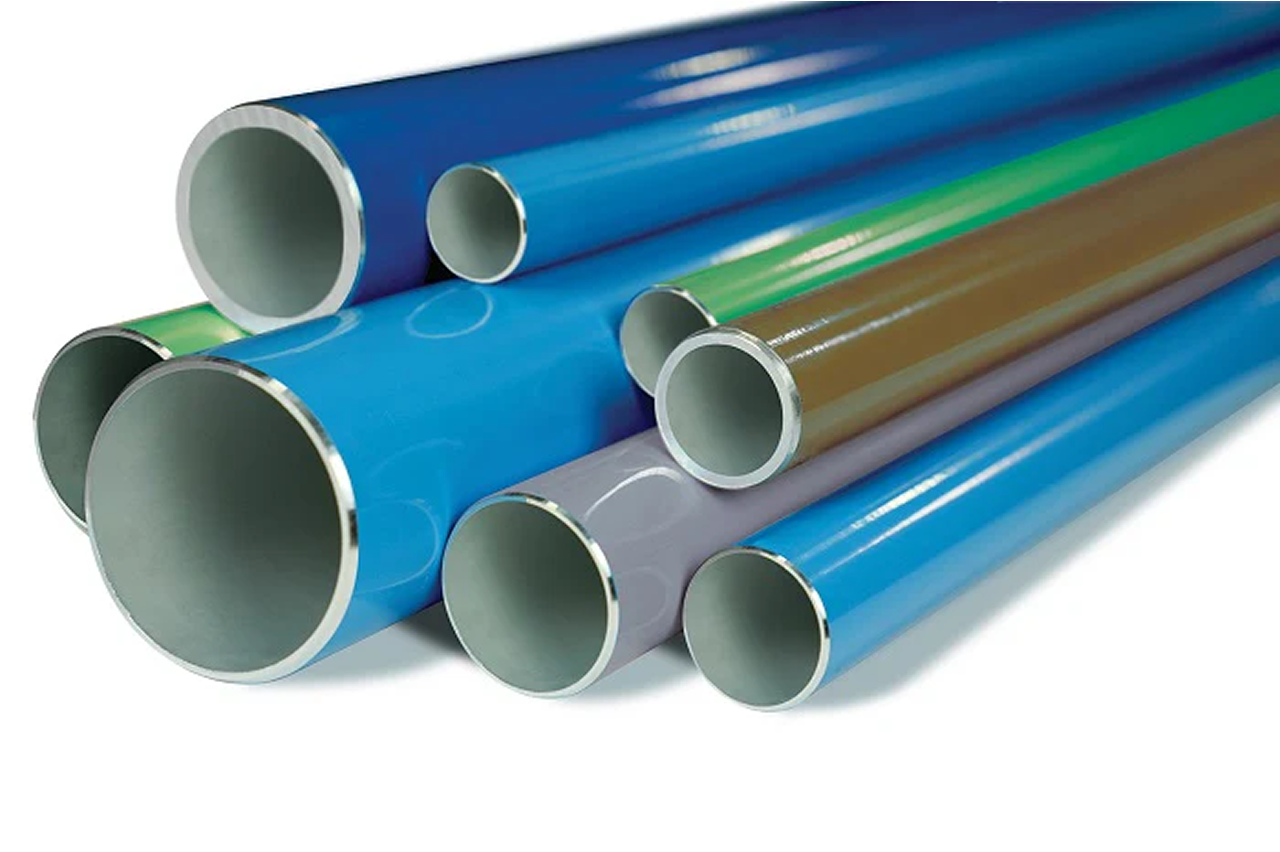
Real-world reference Representative modular aluminum piping
Modular Aluminum Piping — representative product photo
02Why it's needed

Why this matters.

Tips and pointers on when modular aluminum piping is the right call — and when to spec something else. Scroll the strip →

01 · Key point
Doesn''t rust, ever.

Aluminum bore stays mill-clean for the life of the system — no rust scale fouling downstream filters and tools. Black iron oxidizes from inside the moment compressed air enters; aluminum doesn''t.

02 · Key point
O-ring joints — install-skill-independent.

Push-together or clamped O-ring seals at every joint, not threaded-and-doped. Commissioning leak rate under 1%; black iron rarely commissions below 5% even when new.

03 · Key point
Installs 3× faster, repositionable.

No welding, no threading — a tube cutter, deburring tool, and the manufacturer''s guide. Layout changes that cost a weekend shutdown on black iron are hours on a running plant.

04 · Pro tip
Size by SCFM and pressure drop.

Header diameter against peak system SCFM; overspec by one nominal size if growth plan supports it. Watch tiered pressure ratings — some systems step down working pressure (300/232/188 psig) as diameter increases.

05 · Where not to use
Flexible drops to moving tools.

Rigid pipe can''t flex to a hand tool or robot end-effector. → Pair with PA12 nylon tubing for the flexible drop from header to tool; PU for constant-flex tool drops.

06 · Where not to use
Direct aluminum-to-steel contact.

Galvanic corrosion eats aluminum preferentially in damp environments at transitions to existing black iron or copper. → Use manufacturer''s transition fittings with dielectric isolation at every boundary to non-aluminum piping.

07 · Where not to use
Food-contact or washdown sanitary.

Industrial aluminum isn''t food-contact or NSF-certified piping. → Use stainless PTC + stainless tube on sanitary drops; aluminum stays on utility air, transitioning at the sanitary-zone boundary.

03Key selection criteria

What we need to spec it right.

From the machine spec sheet → to the part number. Answer what you know — leave the rest blank — and send.

01 · Input
Sized to peak SCFM against acceptable pressure drop using the manufacturer's flow chart. Header and drop-leg diameters differ. Overspec by one nominal size if growth plan supports it.
Drop-leg: 3/4" / 20mm · 1" / 25mm · Header: 1.5" / 40mm · 2" / 50mm · 3" / 80mm · 4" / 100mm+
02 · Input
Must fall within the rated pressure for the chosen diameter — tiered systems step down at larger diameters (e.g., 300/232/188 psig).
Typical: 100 PSI · 125 PSI · 175 PSI · 230 PSI · 300 PSI
03 · Input
Confirm the system is rated for the medium — most aluminum systems rate for all three but check the brand spec.
Compressed air · Vacuum · Inert gas (N2 / Ar)
04 · Input
Confirm within the system's rated range (typical -20°F to +300°F by brand and seal). Outdoor / unheated spaces hit the cold limit; near-process zones hit the hot limit.
Indoor general · Outdoor / unheated (verify cold limit) · Near hot process (verify upper)
05 · Input
Count tees, elbows, reducers, drop-leg take-offs, point-of-use outlets. Transition fittings to existing black iron / copper / NPT with dielectric isolation are non-negotiable at every boundary.
Tees · Elbows · Reducers · Drop take-offs · Transition fittings
06 · Input
Expansion projects need transition fittings to the existing pipe and brand-compatibility check against the legacy system.
New install (full BOM) · Expansion of existing (transition + matched brand) · Full retrofit (existing pipe removed)
07 · Input
Footage of each diameter + fitting count drives the kit. Multiple sizes = separate quote lines per diameter (e.g., 200 ft of 2" header + 80 ft of 1" drops = two lines). Pipe ships in standard stick lengths.
Stick length: 10-ft / 3m · 20-ft / 6m · Format: "diameter × footage" per line

Need different sizes, colors, or quantities? Fill the form, add to quote, then fill again — each click is one quote line.

04Choose your solution tier  ·  core differentiator

Whatever your lever — spec, value, or price — SPC has the right brand.

Most distributors sell one brand per product type. SPC's 60-brand portfolio means every Product Type page surfaces three real options matched to how your customer is buying today. Pick the tier; the quote desk handles the cross-reference.

05How to sell this  ·  distributor talk track

The tier conversation closes the deal. The cross-reference catalog wins the next one.

Modular aluminum is a project sale, not a parts sale. The customer is buying a system that pays for itself in two years on energy, installs in a third of the time of black iron, and never rusts — but only if you can walk them through the project case and show up with the design support.
The SPC difference · how distributors actually buy

The 30-second positioning

The customer is ordering a plant-wide distribution system with hundreds of pipe sections, fittings, drops, outlets, designed against their layout and SCFM demand, delivered as a kit, installed by maintenance or an SPC-coordinated contractor. Buying motion is consultative: walk the plant, capture the layout, size against demand, deliver a quoted BOM with engineering rationale, stage the install.
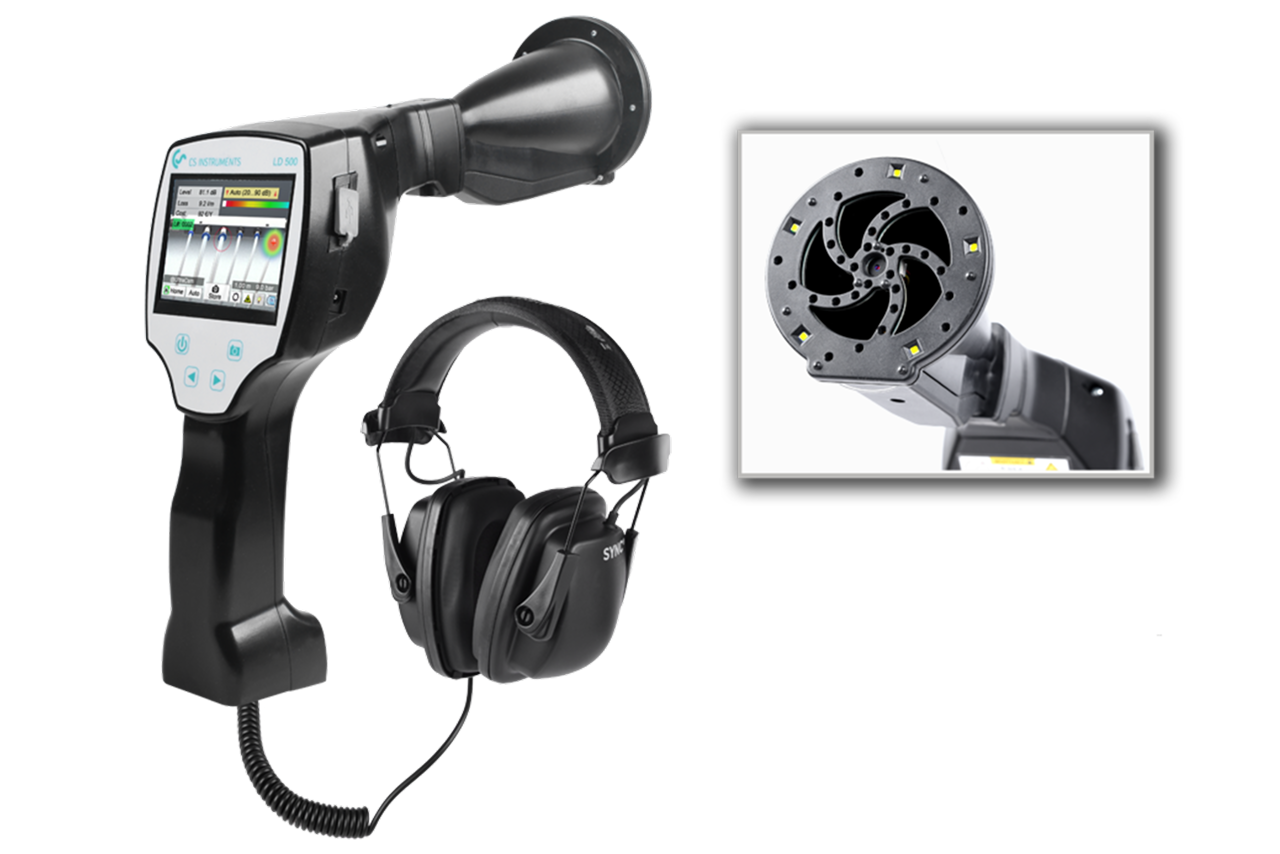
Five structural conversation pieces. Walk the plant — compressor HP + SCFM, receiver, dryer + filtration train, current piping material + diameter, run length, drop count + locations, leak audit if possible. The leak audit is the most powerful sales tool — a $500 ultrasonic leak survey at the front typically finds $10,000-$30,000 of annualized waste. Size the system — header diameter for peak SCFM with acceptable pressure drop, drop-leg for connected tools, outlet count matched to floor plan. Overspec the header by one nominal size for future expansion if growth plan supports it. Spec brand + series. Quote the project — full BOM + install labor + commissioning leak test + payback analysis. Commit to install schedule — modular installs ~3x faster than black iron, schedulable on a shutdown weekend or live during off-shifts.
Tier: Industry Leader tier (two brands) — one Italian global manufacturer (broad diameter coverage, full push-to-connect smaller / clamped joints larger, 232+ PSI, comprehensive accessory catalog) and one US manufacturer (230 PSI / 300°F, strong domestic distribution, faster US lead times). Emerging tier — tiered pressure (300/232/188 psig by diameter), -4°F to +176°F, value play for smaller projects, less-demanding pressure profiles, price-shopping against Industry Leader brands.

Customer cue → talk move

"Losing too much air to leaks, compressor running flat-out"
Buying signal. Quote $500 ultrasonic leak survey at the front; document annualized waste in dollars. Pivot from "leak repair" to "distribution retrofit." Show payback math.
"Black iron rusting, rust scale at the tools"
Aluminum's structural advantage. Quote retrofit + matched point-of-use filtration. Customer's tool maintenance bill drops alongside energy savings.
"Moving the production line, piping is in the way"
Layout flexibility is the win. Quote as repositionable system — next change is a half-day re-route instead of a weekend shutdown.
"How do I justify cost vs. black iron per foot?"
Total cost of ownership. Pipe-per-foot cheaper on black iron; installed cost comparable; 5-year cost materially lower on aluminum once energy + avoided downtime are counted. Bring the payback analysis with plant engineer + controller in the room.
"Pressure rating — we run 175 PSI"
All three IL brands rate above 200 PSI. Spec the right diameter and confirm against manufacturer's per-diameter table. Don't under-spec.
"Can my maintenance team install themselves?"
Customer-installable is the model. No welding, threading, specialized tools beyond a tube cutter + deburring tool. SPC provides install training + manufacturer's guide. For larger projects, SPC can coordinate a contractor.
"Only adding one drop leg, not retrofitting whole plant"
Yes — expansion play. Single-drop installs become the gateway to the next phase of retrofit; once maintenance installs the first drop and sees the install speed, the larger conversation gets easier.
"Competitor quoting Parker Transair / Atlas Copco AIRnet"
Cross-quote. Industry Leader tier brands compete head-to-head on spec and pricing. Bring comparison sheet, let the engineer verify equivalence.
06Where it's used

Industries served.

Each industry below uses this product across the listed areas. Open an industry to see how it fits the rest of its system.

Also applies to Plant-wide compressed-air mains in manufacturing facilities · Highest-volume application — full plant-wide installs $15,000-$200,000+ in materials · Production line air distribution and assembly stations · Modular aluminum's repositionability is the win · Corrosion-resistant aluminum bore is particularly valuable here · Clean interior of aluminum pipe is consistent with food-plant cleanliness expectations. · Long-run aluminum's low pressure drop is particularly valuable when distances exceed 200-500 ft. · Retrofit projects replacing aged black iron or galvanized · Largest single sales segment. · Expansion buildouts and satellite facilities · Brand standardization is the buying motion

09Install · 8 critical steps

The things that matter on the first install.

Step 01
Walk the plant and document the install path BEFORE ordering material
Capture run length, drop locations, fitting count, elevations. Note structural obstructions, expansion-joint requirements, seismic/vibration considerations. BOM accuracy depends on field measurements; under-ordering creates project delays, over-ordering creates waste. Photos at every junction and drop location, labeled against the plant drawing.
Step 02
Cut aluminum pipe perpendicular to the axis
Use a purpose-built aluminum tube cutter or precision rotating cutter with a fresh wheel — NOT a bandsaw, hacksaw, or abrasive cutoff wheel. Cut square within 0.5°; an angled cut won't seat the O-ring uniformly and will leak. For larger diameters, use a chop saw with a fine-tooth aluminum-rated blade in a V-block.
Step 03
Deburr the inside and outside of the cut end
Factory extrusion has a sharp edge at the OD and a burr ridge at the ID after cutting; both will damage the O-ring during insertion. Chamfer the outside (30-45° chamfer, 0.5-1mm depth) and the inside. Wipe the cut zone clean of aluminum chips — chips between the O-ring and pipe OD become an immediate leak path.
Step 04
Verify calibrated OD before insertion
Modular aluminum is extruded to a calibrated OD that the fitting O-ring is dimensioned against — typical tolerance is +/- 0.1mm. If pipe has been crushed, dented, or scored at the OD insertion zone, do not install — cut back to clean pipe. Caliper-check if any doubt.
Step 05
Mark insertion depth
Each fitting has a published depth — typically 25-50mm depending on size. Mark with a felt-tip pen at the published depth from the cut end. Visual confirmation that pipe has reached the tube-stop.
Step 06
Insert pipe fully until depth mark reaches fitting body
Push-to-connect: push straight in with steady pressure — grip ring releases and re-engages; push until depth mark is at the collet face. Clamped: insert to depth mark, then tighten clamp ring with specified tool to manufacturer's torque spec. Verify depth mark visually after install — partial insertion is the most common leak cause on first commissioning.
Step 07
Support pipe at manufacturer-specified clip spacing
Vertical and horizontal support clips at specified intervals — typically 1.5-3 meters depending on diameter and orientation. Unsupported pipe sags and the joint takes a moment load that can crack the fitting body. Install supports alongside the pipe; do not retrofit later.
Step 08
Pressure-test and commission with a leak survey
Charge to operating pressure (or 1.5× working for test per manufacturer commissioning spec), hold for specified duration (typically 1 hour minimum), verify no measurable pressure drop. Soap-test every fitting; ultrasonic leak survey is the more sensitive verification. A properly-installed modular aluminum system commissions to <1% leak rate; black iron rarely commissions below 5% even when new. Document commissioning leak rate in the project file — baseline for future audits.
10Troubleshoot · top failures

Most returns trace to one of these causes.

Symptom
Most likely cause
Fix
Joint leaks audibly at commissioning.
Pipe not fully inserted to depth mark (partial insertion), pipe cut at an angle (O-ring not seating uniformly), pipe OD damaged or out-of-round, O-ring damaged during install (cut by a burr), debris between O-ring and pipe OD, OR mismatched fitting/pipe series.
Disassemble. Inspect pipe OD at insertion zone; if scored or oval, cut back. Inspect O-ring; if cut or chipped, replace. Re-insert to marked depth with a fresh cut and clean OD.
Joint passes commissioning but leaks after months in service.
Thermal cycling fatigued the O-ring, vibration at an unsupported pipe run fatigued the joint, system pressurized above the rated working pressure at the joint's diameter, OR pipe expanded/contracted thermally without proper expansion-joint accommodation.
Verify operating pressure within rated working pressure for the diameter (tiered systems step down at larger diameters). Add support clips. Install expansion joints where long straight runs experience thermal cycling. Replace joint O-ring if visibly fatigued.
Pipe pulls out of the fitting under pressure.
Pipe not fully inserted past the grip ring (partial insertion is the leading cause), pipe beveled or chamfered at the OD (grip ring can't bite a beveled OD), pipe not matched calibrated OD for the fitting series (out-of-spec aftermarket pipe), or fitting grip ring damaged.
Verify pipe is manufacturer's matched aluminum at calibrated OD. Re-cut square with no chamfer at the OD, mark insertion depth, re-insert fully. If pull-out persists, replace the fitting.
System pressure drops across long header runs.
Header diameter undersized for peak SCFM demand, downstream filtration loaded and creating restriction, regulator setpoint at source compressor too low, OR a closed valve in the run.
Re-check diameter sizing against manufacturer's flow chart at peak SCFM. If undersized, upsize on next iteration. Inspect filtration and replace loaded elements. Walk the run and verify every valve is fully open.
Joint cracked or fitting body damaged after installation.
Over-torquing of clamped fittings (excessive torque cracks the aluminum body), forklift or impact damage, freeze damage (water in line froze and expanded), OR thermal stress from an uncompensated long run.
Replace the damaged joint. For clamped, use a torque wrench to manufacturer spec — never feel-tighten. For forklift damage, relocate pipe or install bollards. For freeze, verify the dryer is functioning. For thermal stress, install expansion joints.
Drop leg whips or vibrates when connected tool actuates.
Drop leg unsupported at the bottom (free-hanging from header), drop diameter undersized for the tool's peak SCFM, OR defective flexible hose at the bottom.
Add support bracket at the bottom of the drop leg. Verify drop diameter against tool's peak SCFM — many drops are undersized when the tool was upgraded but the drop wasn't.
Galvanic corrosion at aluminum-to-steel transition.
Direct aluminum-to-steel contact in a damp environment creates a galvanic cell; aluminum corrodes preferentially.
Use the manufacturer's transition fittings with a dielectric isolation barrier between aluminum and any steel mating component. Inspect existing transitions for corrosion; replace if damaged. In high-humidity plants, consider an environmental cover at the transition.
System leak rate climbed from 2% at commissioning to 8% after 3 years.
Joints disturbed during plant work (re-routes, drop additions, tool changes) without being properly re-made, support clips removed and not replaced, vibration sources introduced, OR original install had marginal joints that have aged.
Ultrasonic leak survey to localize. Re-make any leaking joints — disassemble, inspect, fresh O-ring, re-insert to depth. Restore missing support clips. Track leak rate at quarterly intervals.

Get the right modular aluminum piping on quote in 24 hours.

Send us the application — a specialist routes you to the correct tier with a configured part. Lead-times and pricing returned within one business day.

Request a quote