DISTRIBUTOR-FIRST SUPPLY PARTNER · SINCE 1999 Live · Pneumatic Automation System

SPC Company
Pneumatic Automation / Distribution & Conveyance / Push-to-Connect Fittings / Metallic / Brass Fitting
Layer 02 · Distribution & Conveyance Industry Leader · Alkon Emerging · AIGNEP
01What it is

Metallic / Brass Fitting

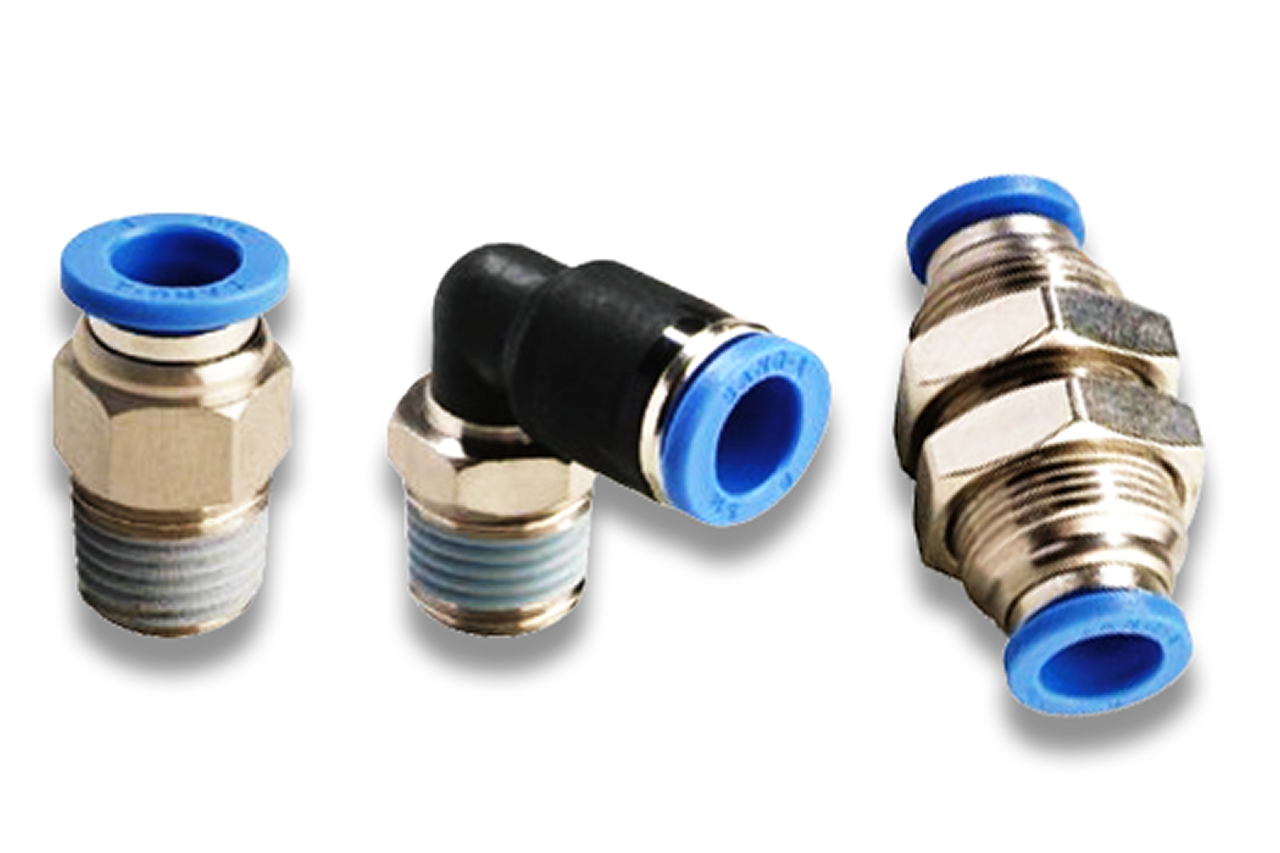
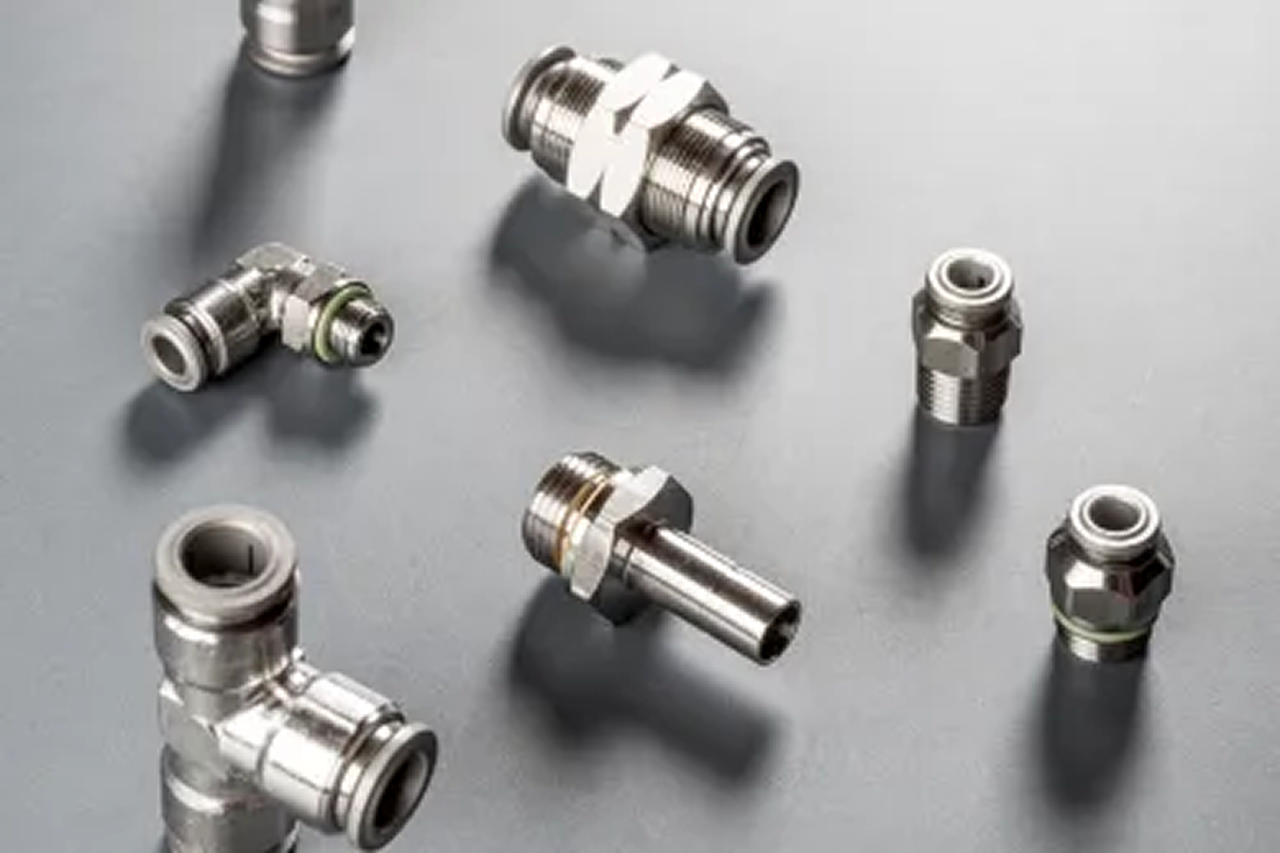
A metallic / brass fitting is a push-to-connect fitting with a metal body — most commonly nickel-plated brass — that threads into a port and accepts a pneumatic tube on the push-in end. The body raises the working-pressure ceiling to roughly 230 PSI and the temperature band to roughly -40°F to +200°F, with a stainless-steel grab-ring inside that bites the tube OD under vibration. Nickel plating adds the corrosion resistance plain brass lacks under humidity or chloride exposure. The push-in mechanism (collet + O-ring + release sleeve) is identical to composite, so install discipline transfers directly. This type covers composite-construction metal-bodied fittings (metal body, polymer release sleeve). A fully-metallic fitting with zero polymer is a separately-sourced, made-to-order construction and is outside this type. For 95% of customers asking for "a metal fitting," nickel-plated brass with a polymer sleeve is exactly what they need.
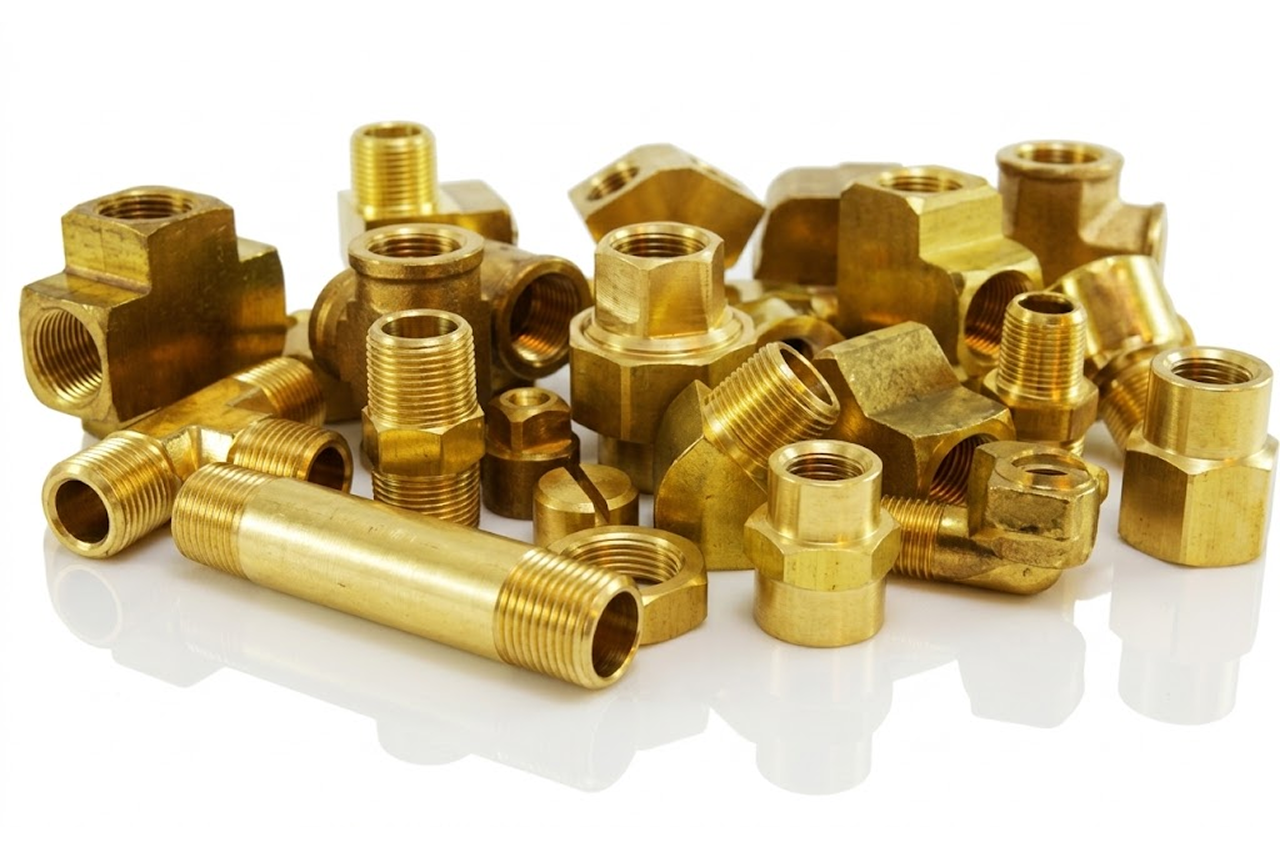
Real-world reference Representative metallic / brass fitting
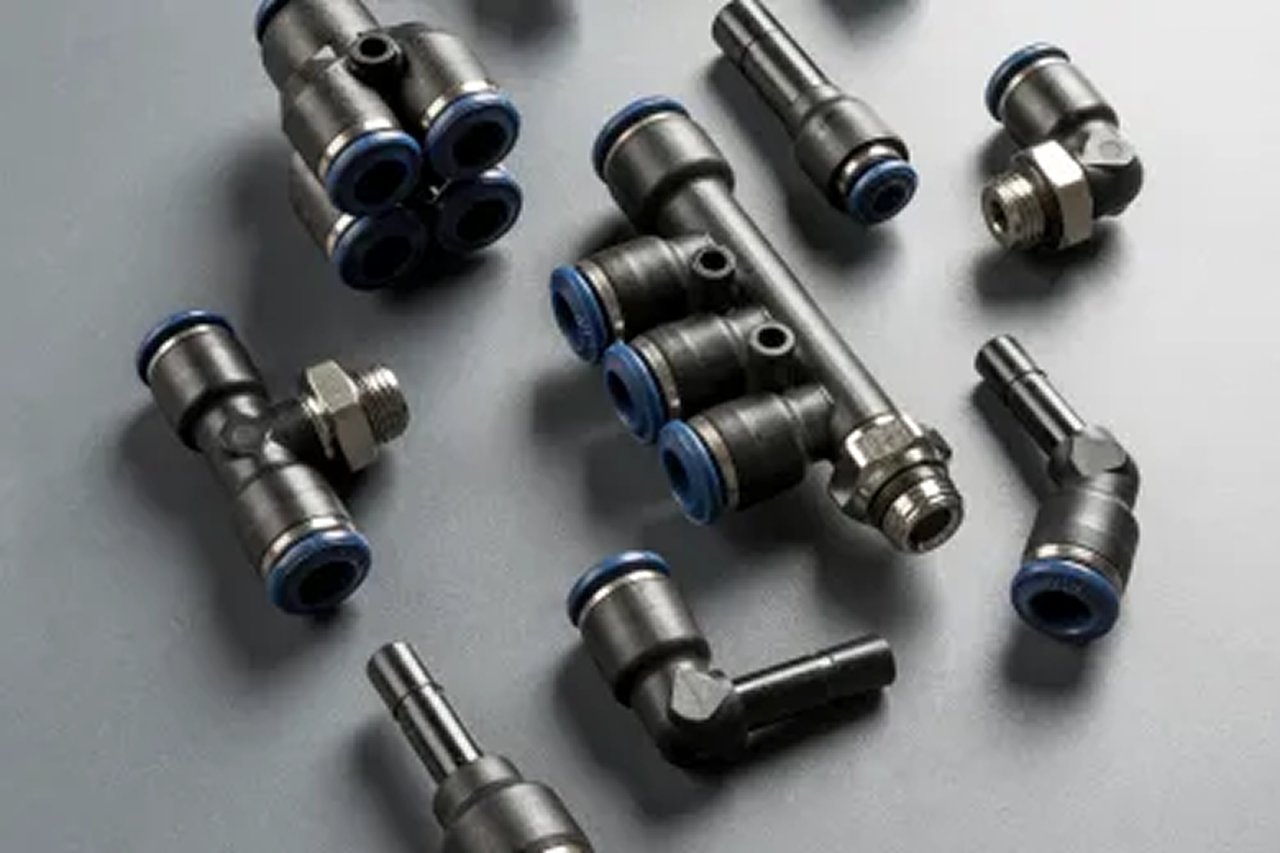
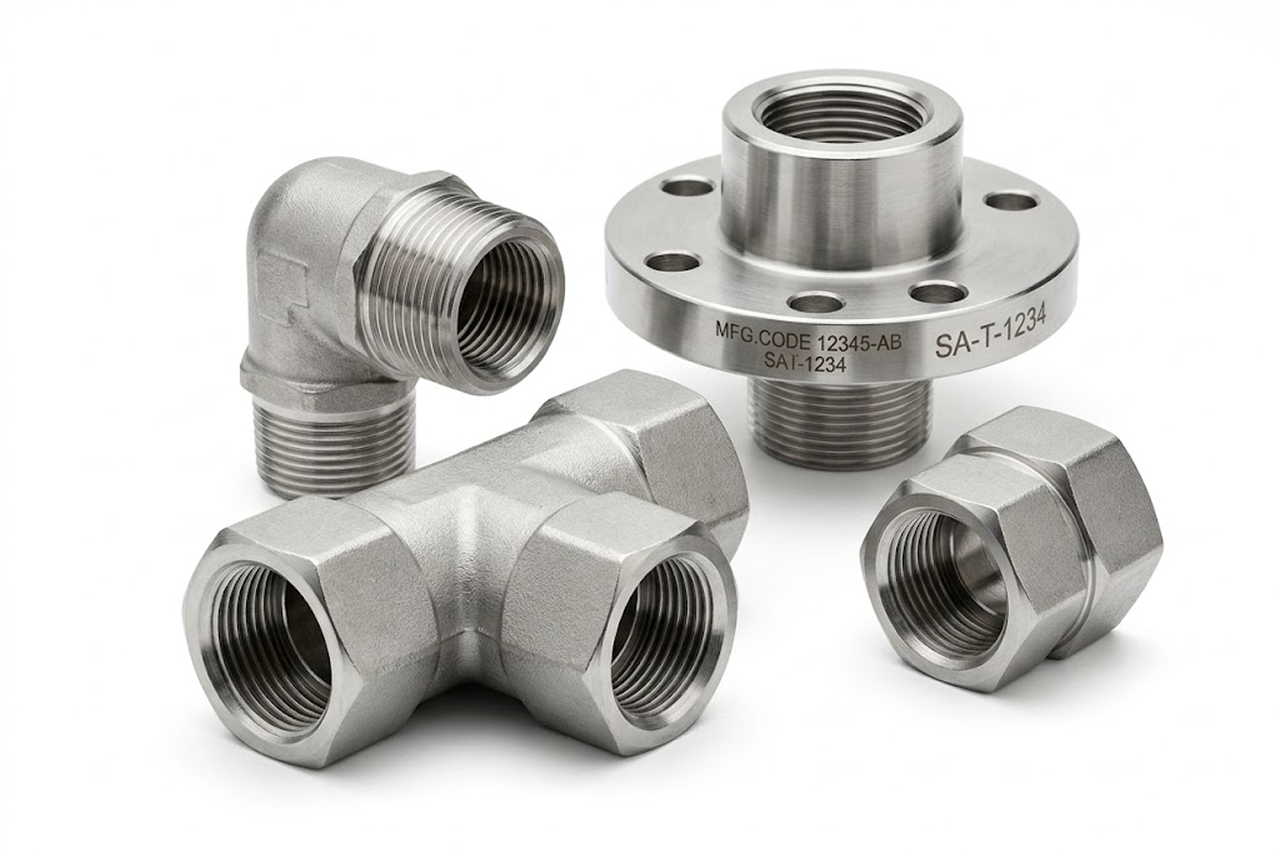
Metallic / Brass Fitting — representative product photo
02Why it's needed

Why this matters.

Tips and pointers on when brass PTC is the right call — and when to spec something else. Scroll the strip →

01 · Key point
It holds at 230 PSI.

Nickel-plated brass body carries working pressure to ~230 PSI and tolerates pressure-spike cycling that cracks composite at the thread root. The fitting for booster-fed drops, pressing operations, and high-pressure clamping.

02 · Key point
It tolerates oil and heat.

Temperature band -40°F to +200°F; coolant mist and oil aerosol don''t soften the body. CNC machine tools, hydraulic-adjacent pneumatics, hot-side compressor-room runs.

03 · Key point
Stainless grab-ring inside.

Stainless-steel grab-ring (not plastic collet) bites the tube OD firmly and holds under vibration for years. Same push-in mechanism as composite — no new technique for the install tech.

04 · Pro tip
Default to nickel plating.

Nickel-plated brass for any humidity, chloride, or oil exposure — the standard US-market spec. Plain brass only for dry indoor service (and there, composite is usually cheaper).

05 · Where not to use
Washdown, dairy, chloride spray.

Nickel plating is corrosion-resistant, not corrosion-proof. → Step up to stainless-steel PTC for CIP/SIP, marine, coastal, or audit-driven food-contact zones.

06 · Where not to use
DOT truck brake circuits.

Industrial brass PTC is not legal in FMVSS-regulated air-brake lines. → Switch to DOT air-brake fitting on any service, emergency, or parking-brake circuit.

07 · Where not to use
Hard tube (stainless, copper).

PTC seats on soft tube only — the grab-ring won''t bite rigid tubing. → Use instrumentation stainless tube fitting (double-ferrule) for hard-tube instrumentation, gauge, and sample lines.

03Key selection criteria

What we need to spec it right.

From the machine spec sheet → to the part number. Answer what you know — leave the rest blank — and send.

01 · Input
Measure the existing tube with a caliper — the fitting OD must match exactly. 6mm = 0.236", 1/4" = 0.250" — the 0.014" gap leaks indefinitely. Metric and inch are not interchangeable.
Metric: 4mm · 6mm · 8mm · 10mm · 12mm · 16mm · Inch: 1/4" · 3/8" · 1/2"
02 · Input
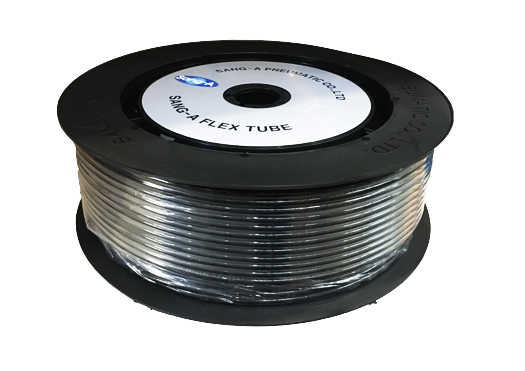
The matched tube on a brass install. Critical: PU caps at ~145 PSI — a 200 PSI brass install on PU blows the tube off, not the fitting. Spec nylon (PA) for the pressure.
PU (≤145 PSI clean air) · Nylon / PA (≥150 PSI — brass default) · PE (utility runs)
03 · Input
Read the component port spec sheet. NPT/BSPT seal on the threads (sealant required); BSPP seals on a bonded washer at the shoulder — no thread sealant. Cross-threading creates immediate failure.
NPT: 1/8" · 1/4" · 3/8" · 1/2" · BSPT / BSPP: G1/8 · G1/4 · G3/8 · Metric: M5 · M10 · M12
04 · Input
Pull from the connection geometry at the install point.
Straight · Male / female straight · Elbow (90°) · Tee · Y · Cross · Reducer · Bulkhead · Plug / cap
05 · Input
Default to nickel-plated for any humidity, chloride, or oil exposure. Plain brass only in dry indoor service — and there, composite is usually cheaper.
Nickel-plated brass (default — oily / humid / outdoor) · Plain brass (dry indoor only) · Fully-metallic, no polymer sleeve (made-to-order, MOQ + lead time)
06 · Input
Drives the spec step: above 150 PSI sustained, above 140°F, or any oil/coolant exposure rules out composite and forces brass.
High pressure (150-230 PSI) · CNC / coolant-mist · Hot-side compressor room · Outdoor / humid · Standard indoor
07 · Input
Number of pieces. Multiple sizes? Add separate quote lines per size variant. Problem-machine re-spec lands at 8-20 fittings; full plant retrofit 50-200+.
1-10 pcs · 25-100 pcs (counter stock) · 500+ pcs (volume tier)

Need different sizes, colors, or quantities? Fill the form, add to quote, then fill again — each click is one quote line.

04Choose your solution tier  ·  core differentiator

Whatever your lever — spec, value, or price — SPC has the right brand.

Most distributors sell one brand per product type. SPC's 60-brand portfolio means every Product Type page surfaces three real options matched to how your customer is buying today. Pick the tier; the quote desk handles the cross-reference.

05How to sell this  ·  distributor talk track

The tier conversation closes the deal. The cross-reference catalog wins the next one.

When a customer's composite fittings keep failing on the same drop, the answer isn't a better composite — it's the brass upgrade for that drop. Diagnose, re-spec, sell the install once, end the call-backs.
The SPC difference · how distributors actually buy

The 30-second positioning

The metallic / brass sale is almost always a diagnostic conversation, not a catalog conversation. Three questions resolve most quotes: what's the operating pressure (anything sustained above 150 PSI rules out composite); what's the operating temperature (above 140°F rules out composite); what's the environment (oily, coolant-mist, humid, or outdoor rules out composite). Any one of the three tips the spec to metallic. All three together make it non-negotiable.

Tier: Industry Leader tier — nickel-plated brass, stainless grab-ring, full thread coverage (NPT, BSPT, BSPP, Metric), full configuration coverage, deep US stock. The volume play for MRO and general machine builds. Emerging tier is the European engineered-system pick where the customer is standardizing fittings, valves, cylinders, and FRLs on one brand. Economical tier is the US-domestic value play on bread-and-butter NPT-thread inch-tube installs.

Bundle the matched tubing. A brass fitting at 200 PSI demands nylon (PA) tubing rated for the pressure — PU caps out around 145 PSI and blows the tube off before the fitting fails. Quote the matched nylon on every brass quote.

Stocking pattern: a problem-machine re-spec is rarely "one elbow." It's 8-20 fittings on the affected drops, plus matched nylon tubing, plus PTFE thread sealant. A $400-$1,500 single order that stays installed for years.

Customer cue → talk move

"Composite fittings keep leaking on this machine"
Diagnostic first. Pressure above 150 PSI? Re-spec the failing drops to Industry Leader tier brass + matched nylon. Frame as "one-time fix" vs. six-month replacement cycle.
"Need fittings for 200+ PSI line"
Composite is off the table. Industry Leader tier for engineered builds, Economical tier for US-spec NPT inch-tube where price matters.
"Building a CNC cell with coolant mist"
Don't even quote composite. Coolant aerosol plates every surface and softens technopolymer at the O-ring seat. Quote nickel-plated brass for the whole machine's connection layer.
"Spec says no polymer anywhere"
Route to the separately-sourced made-to-order fully-metallic channel. Confirm MOQ and lead time before quoting.
"Standardizing on one European brand"
Emerging tier. Matched system: fittings, valves, cylinders, FRLs share thread standards and mounting.
"Brass but unsure on plating"
Default to nickel-plated. Plain brass corrodes in humidity and any chloride exposure. Plain brass is only the right call in dry indoor non-oily service — and there, composite is cheaper.
06Where it's used

Industries served.

Each industry below uses this product across the listed areas. Open an industry to see how it fits the rest of its system.

Also applies to High-pressure pneumatic lines (150-230 PSI) · Compressor room hot-side air-prep (downstream of aftercooler) · Hydraulic-adjacent and oil-mist pneumatics · Outdoor and semi-protected installs (variable humidity) · Heavy-industrial OEM machine builds · Distributor service trucks and field MRO

09Install · 6 critical steps

The things that matter on the first install.

Step 01
Confirm tube OD, tube material, and pressure rating match the fitting
6mm and 1/4" are NOT interchangeable (0.014" gap = slow leak). PU tubing tops out at ~145 PSI; a 230 PSI brass install needs nylon (PA) tubing. Mismatched tube/fitting pressure ratings blow the tube off, not the fitting.
Step 02
Cut the tube square and deburr the OD
Use a tube cutter (rotary or shear) — not side cutters or a hacksaw. An angled cut prevents the O-ring from sealing against the tube OD. Deburr to remove cut marks that would tear the O-ring on insertion. Nylon is harder than PU and demands a clean square cut.
Step 03
Insert the tube to full insertion depth and tug-test
Push straight in (no rotation, no rocking) until it bottoms against the internal stop. Typical insertion depth: 16-22mm. Tug back to verify grab-ring engagement — firm resistance, zero tube travel. Any movement = not seated; it will blow off under pressure.
Step 04
Apply thread sealant by thread type
NPT/BSPT (tapered): 2-3 wraps PTFE tape in the direction of engagement, OR thread paste rated for compressed air — never both. BSPP (parallel): seals on a bonded washer at the shoulder — no sealant on the threads. Sealant on a parallel thread is a leak waiting to happen.
Step 05
Torque to spec
Typical NPT torque: 12-22 ft-lb depending on size. Over-torquing cracks the brass body at the thread root; under-torquing leaves a slow thread leak. Rule of thumb on field MRO: "snug plus 1¼ turns past hand-tight" for NPT. Stop the moment the wrench resists — brass cracks before it groans.
Step 06
Pressurize gradually and soap-test
Bring pressure up in stages (50 / 100 / 150 / full operating) and brush soap solution at every collet, every thread, every release sleeve. Zero bubbles = working. Any foam = real leak; depressurize and address. Most first-start leaks are angled tube cuts at the collet or wrong sealant at the thread — both five-minute fixes.
10Troubleshoot · top failures

Most returns trace to one of these causes.

Symptom
Most likely cause
Fix
Slow leak at the collet (push-in end) of a newly-installed brass fitting
Angled or burred tube cut, tube OD scratched (O-ring damaged on insertion), tube not bottomed against the internal stop, or wrong tube OD for the fitting (1/4" tube in a 6mm fitting — 0.014" undersized).
Pull the tube (press the release sleeve fully forward, pull tube straight back). Cut off the affected section with a tube cutter, deburr, re-insert. A brass fitting will not adapt to an out-of-spec OD the way composite sometimes does — verify with a caliper.
Thread leak at the NPT/BSPT port end
Insufficient or wrong sealant (paste used where tape is spec'd or vice versa), under-torqued, or cross-threaded on initial install.
Back the fitting out, inspect threads on fitting and port. If clean, re-apply sealant (tape OR paste, not both) and torque to spec. Visibly damaged threads = fitting scrap + port chase or re-tap. Never over-torque to "stop" a thread leak — that cracks the brass body.
Tube blows off the fitting under pressure
Tube not fully seated past the grab-ring (most common), tube pressure rating below operating pressure (PU on a 200+ PSI line), or wrong tube OD.
Confirm tube is rated for operating pressure — PU caps at ~145 PSI; nylon (PA) required for ~230 PSI brass. Re-seat fully and tug-test. If a properly-rated, properly-seated tube still blows off, verify the fitting source against authorized distribution — counterfeit fittings are a real failure mode.
Brass body cracked at the thread root
Over-torqued at install (single most common cause), repeated thermal cycling on an over-torqued fitting, or impact damage.
Replace. On reinstall, torque to manufacturer spec (typically 12-22 ft-lb) with a torque wrench on machine builds. Multiple cracks on the same machine = install protocol is the root cause; retrain on torque spec.
Nickel plating discolored, peeling, or pitted within months
Plain brass installed where nickel-plated was needed (corroding through), chloride exposure (washdown, coastal humidity, road salt), or sustained oxidizing chemistry.
Verify the fitting is genuine nickel-plated. If chloride or oxidizing chemistry is the driver, nickel-plated brass is corrosion-resistant, not corrosion-proof — re-spec the affected drops to 316L stainless.
Fitting "leaks intermittently" — sometimes seals, sometimes doesn't
O-ring seat damaged by oil/solvent (swelling and shrinking as conditions change), or temperature cycling crossing through the 140°F-200°F band where a composite installed by mistake fails intermittently.
Confirm the fitting is actually brass (not a composite the customer thinks is brass). On oil/solvent exposure, FKM replacement O-rings are available on most Industry Leader and Emerging tier lines.

Get the right metallic / brass fitting on quote in 24 hours.

Send us the application — a specialist routes you to the correct tier with a configured part. Lead-times and pricing returned within one business day.

Request a quote