DISTRIBUTOR-FIRST SUPPLY PARTNER · SINCE 1999 Live · Pneumatic Automation System

SPC Company
Pneumatic Automation / Distribution & Conveyance / Push-to-Connect Fittings / Technopolymer Push-to-Connect Fitting
Layer 02 · Distribution & Conveyance Emerging · AIGNEP
01What it is

Technopolymer Push-to-Connect Fitting

A technopolymer push-to-connect fitting that connects pneumatic tube the same way as the standard composite type — the distinction is the system it belongs to and the certifications it carries. This type is the connection layer of a coordinated European pneumatic system: matched threads, matched tube ODs, matched mounting hardware, single-vendor coordination across fittings, valves, cylinders, FRLs, manifolds. It also covers the ATEX-certified subset of the same technopolymer line — certified to EU directive 2014/34/EU for Zone 1/21 and Zone 2/22 classified locations, where the standard composite PTC is not legal. Mechanically the body is technopolymer composite with a stainless grab-ring inside; pressure envelope is vacuum to ~218 PSI (~15 bar), temperature -4°F to +176°F. The decision tree is straightforward: system standardization OR hazardous-area certification — anything else routes to the standard composite type.
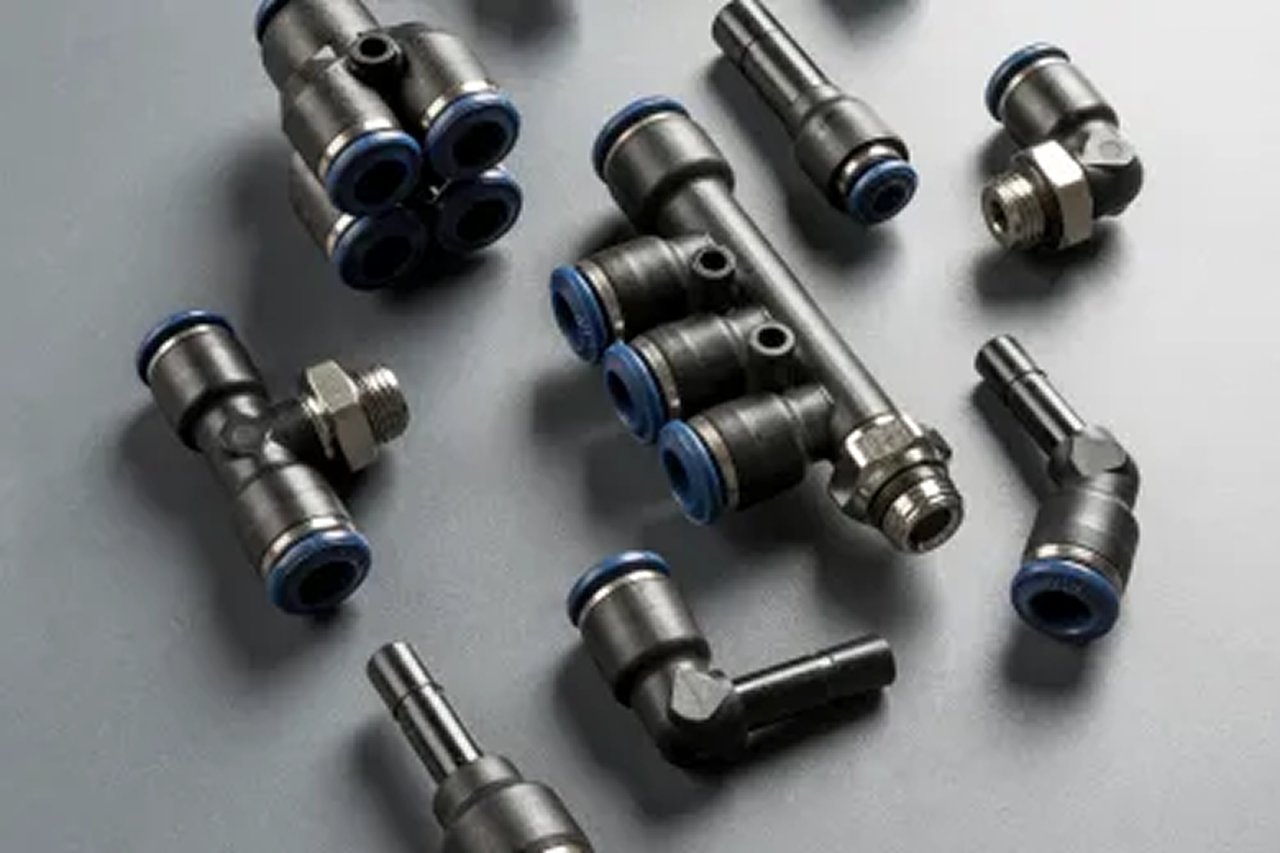
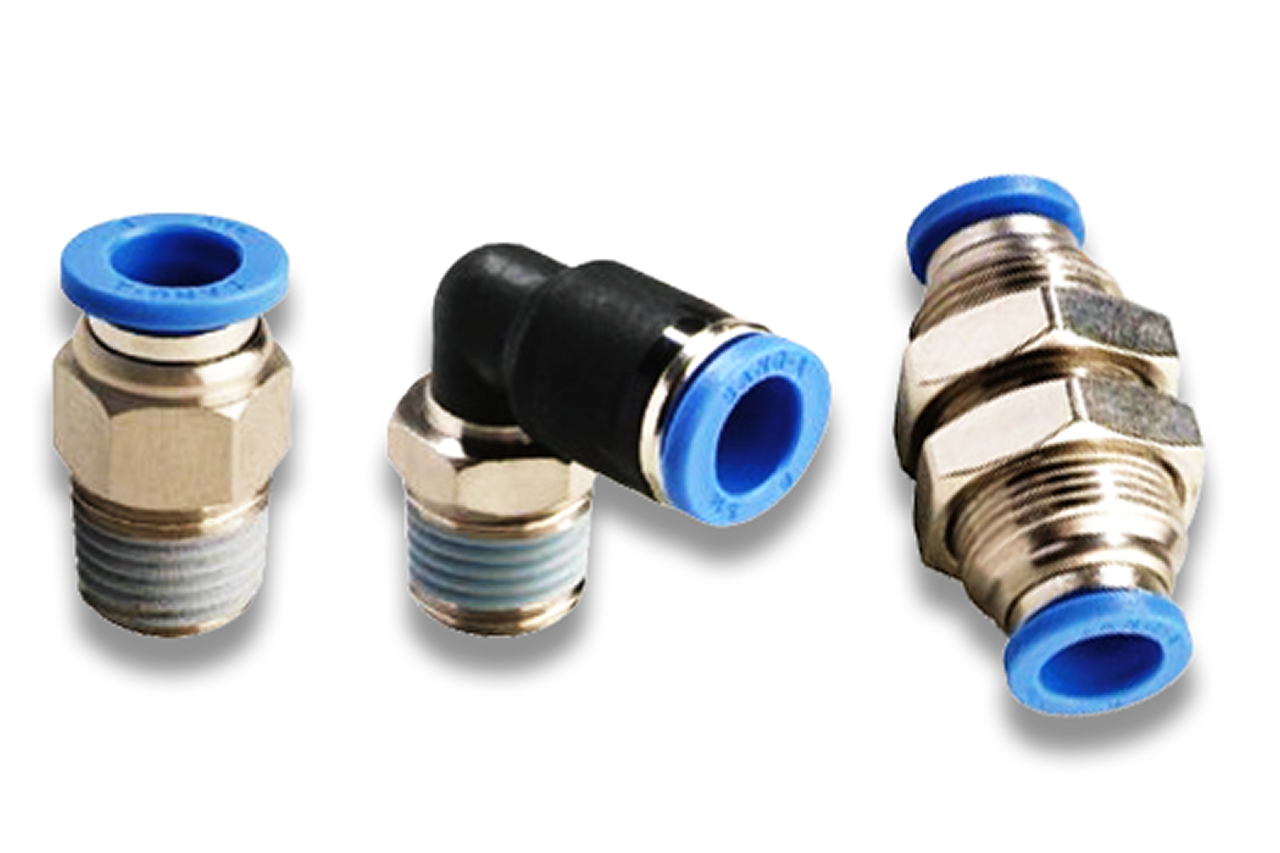
Real-world reference Representative technopolymer push-to-connect fitting
Technopolymer Push-to-Connect Fitting — representative product photo
02Why it's needed

Why this matters.

Tips and pointers on when technopolymer PTC is the right call — and when to spec something else. Scroll the strip →

01 · Key point
Engineered-system standardization.

Fittings, valves, cylinders, FRLs from one European brand standard — matched threads, ODs, mounting hardware. The connection layer of a single-vendor machine build.

02 · Key point
ATEX-certified subset.

Hazardous-area-certified configuration to EU directive 2014/34/EU — Zone 1/2 (gas) and Zone 21/22 (dust). The only off-the-shelf PTC legal in oil & gas, petrochemical, grain, mining classified zones.

03 · Key point
Stainless grab-ring + composite body.

Same push-in mechanism as composite — stainless grab-ring, O-ring seal, release sleeve. Pressure envelope vacuum to ~218 PSI, -4°F to +176°F.

04 · Pro tip
Identify the driver first.

Two structural reasons to spec this: system standardization (engineered-system BOM) or ATEX certification (plant zone classification). If neither, re-route — the wrong driver wastes the customer''s money.

05 · Where not to use
Non-system, non-ATEX general air.

Same pressure envelope as composite without proportional value if neither driver applies. → Step down to composite PTC — lower cost, deeper US stock.

06 · Where not to use
Above 150 PSI or 140°F.

Technopolymer body cracks at the thread root past composite''s envelope. → Step up to metallic brass PTC for 230 PSI / 200°F industrial duty (when not on a European engineered system).

07 · Where not to use
CIP/SIP, chloride, audit-driven.

Polymer body won''t pass cGMP, dairy CIP/SIP, marine, or pharma audits. → Step up to stainless-steel PTC — matched-brand step-up within the same system.

03Key selection criteria

What we need to spec it right.

From the machine spec sheet → to the part number. Answer what you know — leave the rest blank — and send.

01 · Input
System-driven means the machine BOM specifies a European engineered-system brand across valves / cylinders / FRLs. ATEX-driven means the plant area classification requires certified components. If neither, re-route to composite — technopolymer is the wrong answer for a non-system, non-ATEX customer.
System (engineered-brand BOM) · ATEX hazardous-area · Both
02 · Input
Measure with a caliper. Engineered-system European builds typically run metric (4-12mm); 6mm = 0.236" and 1/4" = 0.250" — not interchangeable.
Metric: 4mm · 6mm · 8mm · 10mm · 12mm · Inch: 1/4" · 3/8" · 1/2"
03 · Input
Pull from the tube supplier label.
PU (polyurethane — flex / general) · Nylon / PA (higher pressure, oil / coolant)
04 · Input
Read the component port spec. NPT/BSPT seal on the threads (sealant required); BSPP seals on a bonded washer at the shoulder — no thread sealant.
NPT: 1/8" · 1/4" · 3/8" · 1/2" · BSPT / BSPP: G1/8 · G1/4 · G3/8 · Metric: M5 · M10 · M12
05 · Input
Pull from the connection geometry at the install point.
Straight · Male / female straight · Elbow (90°) · Tee · Y · Cross · Reducer · Bulkhead
06 · Input
Pull from the plant area classification document — the zone determines equipment category (Cat 1 / 2 / 3). Installing a Cat 3 fitting in a Cat 2 zone fails audit. ATEX is EU; NEC is US; IECEx is harmonized international.
ATEX Zone 1/2 (gas) · ATEX Zone 21/22 (dust) · NEC Class I/II/III (US) · IECEx (international)
07 · Input
Number of pieces. Multiple sizes? Add separate quote lines per size variant. Engineered-system builds typically run 40-100+ technopolymer PTCs per machine.
1-10 pcs · 25-100 pcs (counter stock) · 500+ pcs (volume tier)

Need different sizes, colors, or quantities? Fill the form, add to quote, then fill again — each click is one quote line.

04Choose your solution tier  ·  core differentiator

Whatever your lever — spec, value, or price — SPC has the right brand.

Most distributors sell one brand per product type. SPC's 60-brand portfolio means every Product Type page surfaces three real options matched to how your customer is buying today. Pick the tier; the quote desk handles the cross-reference.

05How to sell this  ·  distributor talk track

The tier conversation closes the deal. The cross-reference catalog wins the next one.

Technopolymer PTC sells on system standardization or hazardous-area certification — never on price. If the customer isn't building a European-brand machine and isn't in an ATEX zone, route them to composite. If they ARE one or the other, this is the only fitting that fits.
The SPC difference · how distributors actually buy

The 30-second positioning

The conversation starts with one question: is the customer building on a European pneumatic system brand, or do they have an ATEX requirement? If neither, the right answer is composite-push-to-connect-fitting, not this product. Pushing technopolymer onto a non-system, non-ATEX customer sells them a higher-cost product without delivering proportional value — and they'll figure it out and re-spec next time.

Path A — System standardization. Get the machine's pneumatic brand spec from the engineering BOM; confirm the engineered-system brand is the standard before quoting. Quote the full machine's fitting count (typically 40-100 fittings in 8-15 configurations) as a single package, not line items. Commit to lead time and stocking depth — engineered-system customers run on a build schedule and a stockout on one fitting halts a $200K machine.

Path B — ATEX. Confirm the area classification and the zone (Zone 1/2 for gas, Zone 21/22 for dust); different zones require different equipment categories (Cat 1/2/3) and the wrong category is audit failure. Request the ATEX certificate of compliance at quote. Confirm whether NEC Class I/II/III or IECEx documentation is also required. Industry Leader tier ATEX often covers IECEx; NEC may need separate UL/FM. Never quote the ATEX variant without certificate documentation — a "we think it's ATEX" fitting is a returned shipment.

Tier: Industry Leader tier with the deepest US stock on the technopolymer line plus the ATEX-certified subset. Full thread and configuration coverage; lead time is consistent on common configurations, slightly longer on ATEX-specific because certification documentation is verified per shipment. No economical tier exists — the product exists to deliver engineered-system fit or hazardous-area certification, neither has a discount tier. A customer asking for "cheap technopolymer" is really asking for composite; re-route to the composite type.

Bundle the rest of the engineered system. The same European brand covers fittings + valves + cylinders + FRLs + manifolds + sensors + vacuum + air-prep. Customer standardizing on the brand's fittings should be quoted matched valves, cylinders, FRLs in parallel. Total engineered-system BOM on a typical machine: $2,000-$15,000 per build, of which fittings are 15-25% by dollar. ATEX customers add ATEX-rated valves, cylinders, and air-prep — same vendor, same certification documentation package.

Customer cue → talk move

"Building a machine on a European engineered-system brand — need all the fittings"
Pull machine fitting count from engineering BOM. Quote technopolymer PTC as a complete package; bundle matched valves, cylinders, FRLs if the BOM extends to those layers. Design-stage spec lock conversation.
"Plant is ATEX Zone 1 / Zone 2"
Confirm exact zone and equipment category. Quote ATEX-certified subset with certification documentation. Offer to quote ATEX valves and air-prep in parallel.
"Just need a few fittings for a one-off"
Re-route to composite-push-to-connect-fitting. Technopolymer is the wrong answer; quoting it wastes money and damages the relationship.
"Replacing fittings on an engineered-system machine"
The brand's series-and-config part-number convention is consistent; cross-reference within the same series is direct. Don't cross-reference to composite on engineered-system installs — the customer chose the brand for the standardization.
"My ATEX cert doesn't match my plant's NEC"
ATEX is EU; NEC Class I/II/III is US; IECEx is international harmonized. Confirm what the plant audit specifically requires. Most ATEX-certified products carry IECEx; NEC may require separate UL/FM.
"Customer wants European-system fittings but a different valve brand"
Common mixed-brand build. Technopolymer still works (threads and ODs are interchangeable), but the customer loses some engineered-system value. Flag that the next build is a chance to standardize.
"Lead time on the ATEX variant"
Often longer than non-ATEX equivalents because certification documentation is verified per shipment. Confirm at quote stage; ATEX customers will accept reasonable lead times but not missed delivery dates without warning.
06Where it's used

Industries served.

Each industry below uses this product across the listed areas. Open an industry to see how it fits the rest of its system.
Also applies to Engineered-system machine builds (European-standardized OEMs) · European-standardized factory automation · ATEX Zone 1 / Zone 2 gas-classified plants · ATEX Zone 21 / Zone 22 dust-classified plants · European-OEM equipment service and replacement · Custom industrial automation and robotics integration

09Install · 8 critical steps

The things that matter on the first install.

Step 01
Confirm tube OD, tube material, and configuration code
Engineered-system brands use a consistent series-and-config part-number convention; mismatched OD or wrong config is the most common spec error on engineered-system builds. Verify against the machine's engineering BOM, not just the customer's verbal request. Metric installs run 4mm/6mm/8mm/10mm/12mm — not interchangeable with inch.
Step 02
For ATEX installs, verify certification documentation is on hand BEFORE installing
ATEX certifications are equipment-category-specific (Cat 1/2/3) and zone-specific (Zone 1/21, Zone 2/22). Installing a Cat 3 fitting in a Cat 2 zone is audit failure. Confirm certificate of compliance number matches the installed part; file the certificate in the install documentation package.
Step 03
Cut the tube square with a fresh tube cutter and deburr
Same install discipline as composite or brass — angled or burred cuts cause slow leaks regardless of brand. The stainless grab-ring on the technopolymer line is firmer than a plastic-collet equivalent and more sensitive to a clean tube end.
Step 04
Insert tube to full insertion depth and tug-test
Push straight in to firm bottom-stop — typical 14-20mm. The technopolymer body is firmer than composite; the tube needs a definite push to bottom. Don't mistake first resistance for full insertion. Tug back to verify grab-ring engagement.
Step 05
Apply correct thread sealant — none on parallel
Engineered-system builds often run BSPP (parallel — seals on bonded washer at the shoulder, NO thread sealant); confirm thread type before applying anything. NPT and BSPT (tapered) need PTFE tape (2-3 wraps) or thread paste. The brand's spec sheets call out the correct sealant per configuration.
Step 06
Torque to the manufacturer's published spec
Typical NPT torque: 10-18 ft-lb. Over-torque cracks the technopolymer body at the thread root the same way it cracks brass. Use a torque wrench on machine builds — engineered-system customers are paying for an engineered install and will hold the distributor to OEM-spec procedure.
Step 07
Pressurize gradually and leak-test
Bring pressure up in stages, brush soap solution on every fitting, every thread, every collet. ATEX installs may also require a separate pressure-decay or hold-test per the customer's validation protocol — confirm the test procedure at install time.
Step 08
Document the install in the machine build record
Engineered-system customers: record brand part numbers, configurations, install dates, operator initials. ATEX installs: include the ATEX certificate number, equipment category, zone classification, certification verification date. The build record is what the customer's engineering team uses for service planning and the plant auditor reviews on ATEX installs.
10Troubleshoot · top failures

Most returns trace to one of these causes.

Symptom
Most likely cause
Fix
Slow leak at the collet on a newly-installed technopolymer PTC
Angled or burred tube cut, wrong tube OD (6mm = 0.236", 1/4" = 0.250" — close enough to fool a visual check, far enough to leak indefinitely), tube not bottomed, or O-ring damaged during insertion by grit on the tube OD.
Pull the tube via the release sleeve, inspect the end. Square-cut and deburr if angled; replace tube section if scored. Confirm OD with a caliper. Re-insert and tug-test.
Body cracked at the thread root on a newly-installed fitting
Over-torque (technopolymer cracks before it groans, like brass), wrong-thread mismatch (NPT into a BSPT port or vice versa creating local stress), or impact damage.
Replace. Use a torque wrench at install per the manufacturer's published values. Confirm thread type on both fitting and port — NPT and BSPT are NOT interchangeable. Multiple cracks on the same build = install protocol root cause; retrain on torque spec and audit the torque-wrench calibration.
ATEX certification documentation missing or wrong category at audit
ATEX certificate not retained at install, certificate from a different production lot than the installed part, or installed part is the non-ATEX equivalent (someone substituted the cheaper non-certified variant during procurement or install).
Source the certificate from the manufacturer or authorized distribution; the certificate references the production lot and date. If the installed part is non-ATEX (visually identical body, different part number), the entire affected zone fails audit until parts are swapped. ATEX substitution at the buyer or stockroom level is a known failure pattern — audit the procurement chain.
Tube blows off under pressure
Tube not seated, tube pressure rating below operating pressure (PU on a 200 PSI line — outside rated envelope), wrong tube OD, or counterfeit fitting with defective grab-ring.
Confirm tube pressure rating (PU caps at ~145 PSI; nylon needed for higher). Re-seat fully; tug-test. Verify the fitting source — authorized distribution only; counterfeits are increasingly common on European brands in the gray market.
O-ring swelling or degradation in service
Wrong elastomer for the chemistry (standard NBR in oil-mist, FKM in caustic), temperature peaks past envelope, or — on ATEX installs in oil & gas — vapor-phase hydrocarbon exposure attacking the O-ring.
Confirm chemistry against the manufacturer's elastomer compatibility chart. Most lines offer FKM or specialty elastomers as configuration options. For severe chemistry, the right answer may be the stainless PTC type, not technopolymer.
Engineered-system mismatch — fitting doesn't thread into the customer's valve port
Thread standard mismatch (NPT in a BSPT port, Metric in a BSPP port), wrong configuration (male thread quoted when port needs female), or a non-system-brand valve where port spec differs from the brand's catalog.
Confirm port thread on the customer's valve before quoting. On engineered-system builds, threads match by design; problems surface when a non-system component is in the BOM.

Get the right technopolymer push-to-connect fitting on quote in 24 hours.

Send us the application — a specialist routes you to the correct tier with a configured part. Lead-times and pricing returned within one business day.

Request a quote