DISTRIBUTOR-FIRST SUPPLY PARTNER · SINCE 1999 Live · Product System

SPC Company
Industry Leader · Solberg
01What it is

Intake Silencer / Filter-Silencer

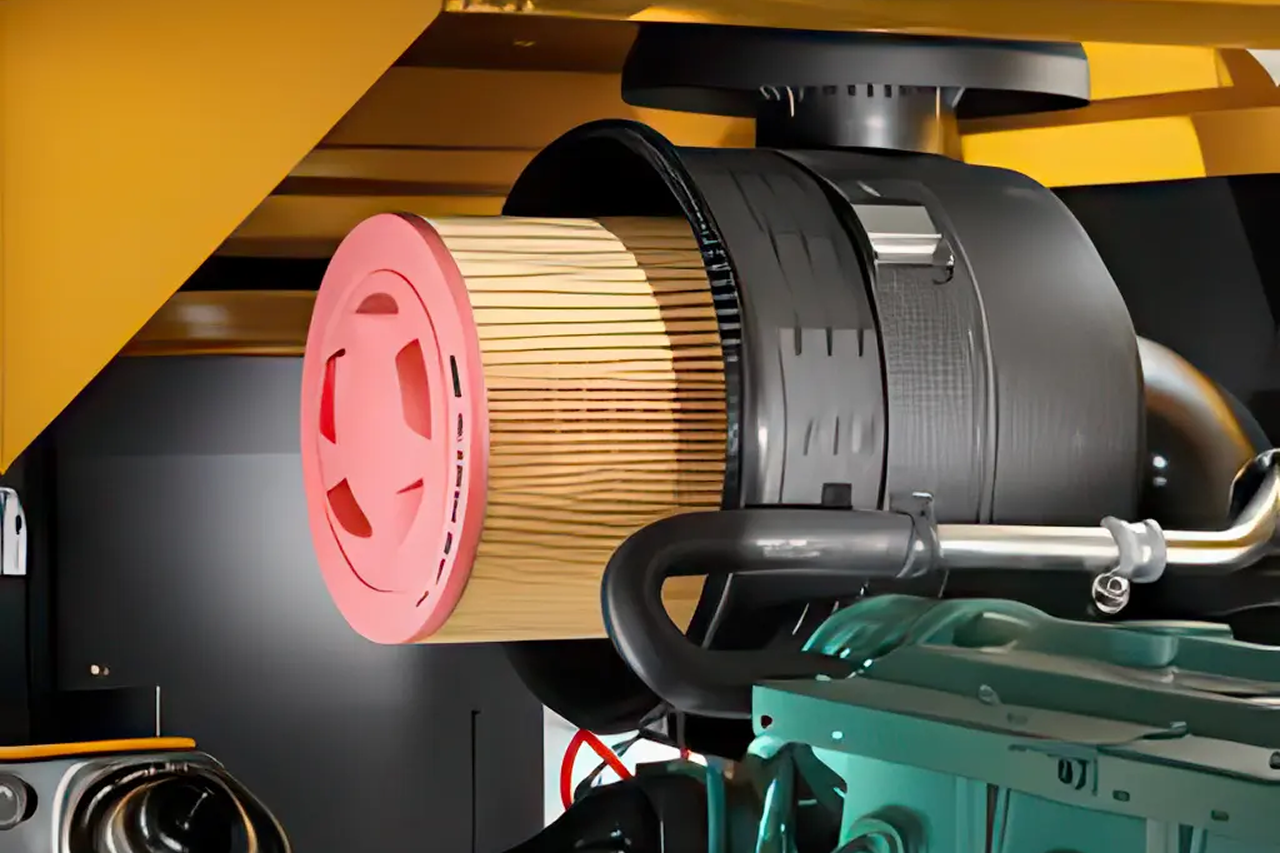
A combined intake air filter and acoustic silencer that mounts at the compressor inlet, handling two jobs in one housing. Like a plain intake filter, it captures dust, particulate, and oil mist before the air is compressed, protecting the compression element. But it also addresses intake noise: piston compressors and some rotary screws draw air in sharp pulses, and each rapid intake stroke creates a pressure pulse that radiates from the open inlet as low-frequency sound — often the loudest single noise source in a compressor room. A filter-silencer routes that intake air through tuned silencing passages that attenuate the pulse while still passing full flow at low pressure drop, so filtration and noise are solved together with one product and one installation rather than treated separately. The qualifier is simple: indoor near occupied space = filter-silencer; outdoor or isolated = plain intake filter.
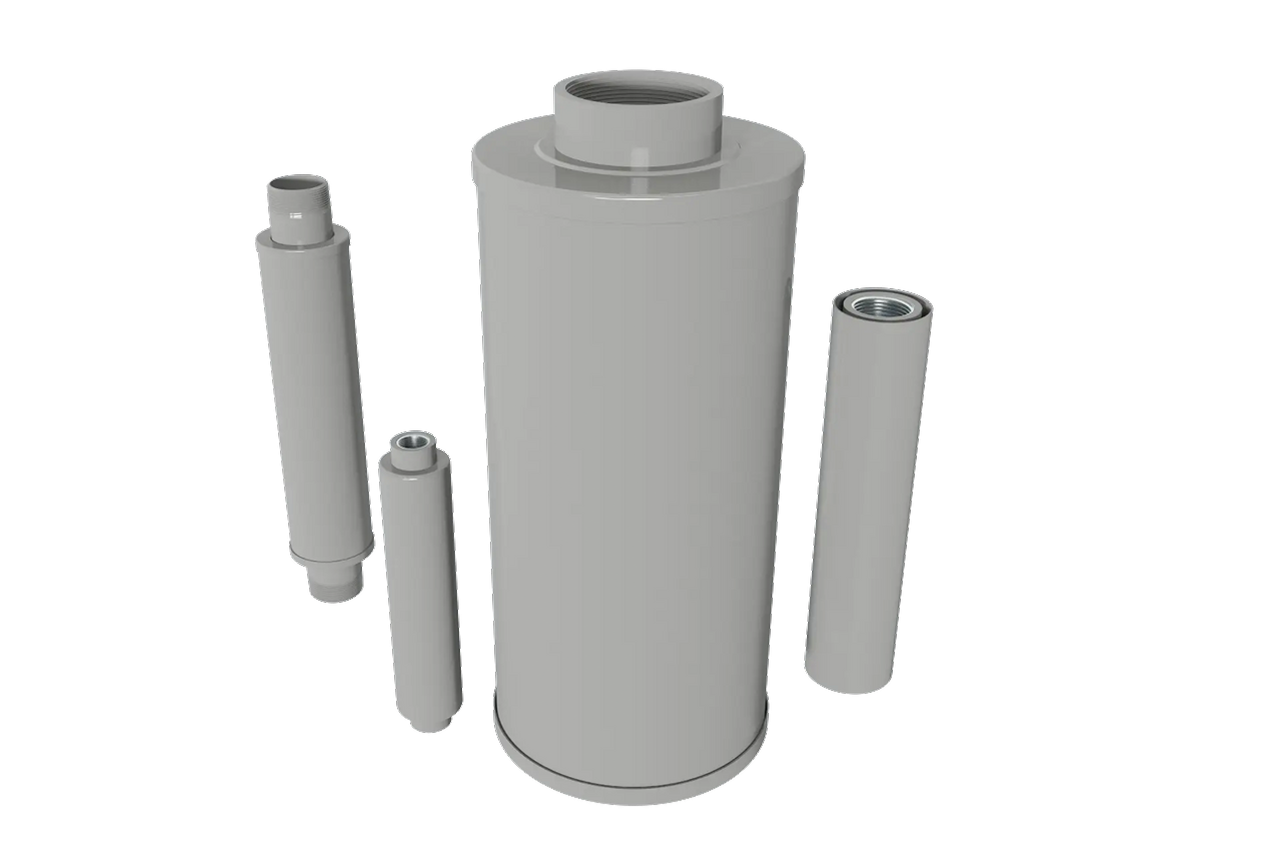
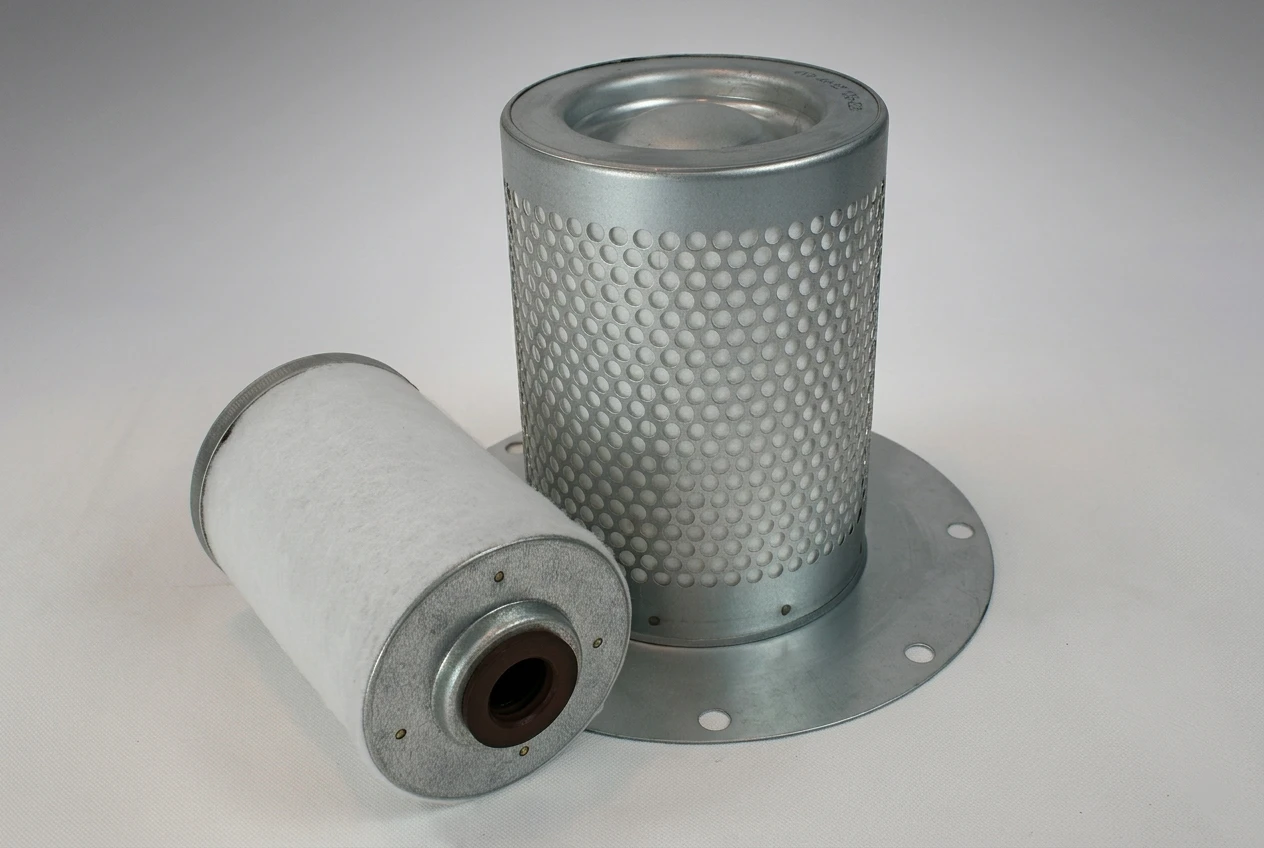
Real-world reference Representative intake silencer / filter-silencer
Intake Silencer / Filter-Silencer — representative product photo
02Why it's needed

Why this matters.

Filtration plus noise control in one housing — and the installs where you don't need both. Scroll the strip →

01 · Key point
It kills 10-15 dBA at the source.

A bare-inlet reciprocating compressor measures 95-105 dBA at three feet; a tuned filter-silencer typically knocks 10-15 dBA off the intake contribution. The single largest noise source on a piston compressor.

02 · Key point
It crosses the OSHA 85 dBA line.

OSHA's hearing-conservation action level is 85 dBA on an 8-hour TWA; permissible exposure is 90 dBA. Filter-silencer + closed door is often the difference between a room that needs a hearing-conservation program and one that doesn't.

03 · Key point
One housing, no joint count.

Bolt-on aftermarket silencers create unsupported inlet runs that vibrate, leak past the filter joint, and pull unfiltered ambient through every flange gap. One housing eliminates the joint count and the leak path.

04 · Pro tip
Size to SCFM with 15-20% headroom.

Match housing rating to compressor free air delivery plus 15-20%. Paper media for general indoor; polyester for humid or rooftop; high-efficiency synthetic for cement, foundry, grain. Undersize costs 1-2% delivered capacity per inch of water gauge.

05 · Where not to use
Outdoor or isolated installs.

If intake noise doesn't reach occupied space, the silencer half is wasted spend. → Re-spec to a plain intake filter — same filtration architecture, same media grades, lower cost. Don't oversell.

06 · Where not to use
Whole-room noise control.

Intake is one source; motor fan, enclosure radiation, and discharge piping remain. → Add an acoustic enclosure, vibration isolators, and discharge lagging on rooms still over 90 dBA after the silencer. Filter-silencer alone is the intake fix, not a complete noise program.

07 · Where not to use
Bare-thread on a piston compressor.

Reciprocating vibration cracks housings at the threaded inlet — especially nylon PS bodies. → Add a flexible vibration-isolating inlet hose between compressor and housing, and step up to the carbon-steel FS Series on larger or harder-vibrating units.

03Key selection criteria

What we need to spec it right.

From the machine spec sheet → to the part number. Answer what you know — leave the rest blank — and send.

01 · Input
Read off the compressor nameplate and spec sheet — drives the cross-reference lookup for intake size and the housing's required airflow rating. Undersize creates inlet pressure drop that costs delivered capacity.
Small (5-25 HP / 20-100 CFM) · Medium (25-100 HP / 100-450 CFM) · Large (100-500 HP / 450-2500 CFM)
02 · Input
Measure the inlet thread or flange at the compressor — one connection size off requires a return cycle that delays the install.
NPT thread: 1/4" · 1/2" · 1" · 1-1/2" · 2" · Flanged: 2-1/2" · 4" · 6" · 8"-24"
03 · Input
Set by install location and clearance around the compressor inlet.
Direct (threaded straight onto compressor inlet) · Remote (wall / stand mount, fed via inlet hose) · Panel (through compressor enclosure panel)
04 · Input
This is the qualifier — noise control is only worth paying for where people can hear it. Indoor near occupied space gets filter-silencer; outdoor or isolated mechanical room gets plain intake filter at lower cost. OSHA action level is 85 dBA on 8-hour TWA; a bare-inlet compressor routinely tests 95-105 dBA at three feet.
Filter-silencer (indoor, occupied) · Plain intake filter (outdoor or isolated mechanical room) · Target dBA reduction: 10 / 15 / 20+ dBA
05 · Input
Wrong media grade is the most common service-call cause — match media to the dust profile.
Paper (general indoor, low dust) · Polyester (humid, rooftop, washable) · Synthetic / pleated (fine-dust — cement, foundry, grain, woodshop)
06 · Input
For replacements, get the existing housing brand and model — Industry Leader tier cross-references most OEM intake elements at material savings. Most compressor PMs replace the intake element annually.
New install · Cross-reference element (OEM brand + model) · Annual PM replenishment
07 · Input
One filter-silencer per compressor inlet is standard. Multi-compressor rooms quote per machine; element-only orders quote per element. Different compressor sizes? Add a separate quote line per variant.
1 housing (single compressor) · 2-4 (compressor room — one per machine) · Elements only (PM replenishment, qty by housing count)

Need different sizes, colors, or quantities? Fill the form, add to quote, then fill again — each click is one quote line.

04Choose your solution tier  ·  core differentiator

Whatever your lever — spec, value, or price — SPC has the right brand.

Most distributors sell one brand per product type. SPC's 60-brand portfolio means every Product Type page surfaces three real options matched to how your customer is buying today. Pick the tier; the quote desk handles the cross-reference.

05How to sell this  ·  distributor talk track

The tier conversation closes the deal. The cross-reference catalog wins the next one.

The filter-silencer is the indoor-install upgrade — same filter media as a bare intake, plus an integrated silencer that knocks 10-15 dB off the noisiest part of a compressor room. If the compressor runs anywhere people sit, work, or sleep nearby, this is the spec.
The SPC difference · how distributors actually buy

The 30-second positioning

Lead with the filter-silencer in the base quote on any indoor install — not as an upcharge. Indoor commercial install near occupied space is the textbook qualifier; speccing a bare intake filter on that install and then retrofitting after the noise complaint costs the customer 3-5x and costs SPC the relationship.

Tier: Industry Leader tier is effectively single-source in this category. Steel-body housings cover threaded and flange connections from 1/4" up to 24", with coverage to ~8,000 SCFM; snap-on nylon housings cover 1/8"-1". Together they span every compressor in SPC's addressable range — USA-made, ISO 9001 certified, full datasheet and dBA-attenuation documentation. There is genuinely no Emerging or Economical tier worth selling alongside Industry Leader tier here — when a customer wants "cheaper," the honest answer is a plain intake filter (skip the silencer), not a cheaper filter-silencer.

The consultative move — qualify the install environment first. Ask the customer directly: "Where will this compressor live, and what's next door?" If the answer is anything occupied — office above the compressor room, hallway sharing the wall, exam room next door — the filter-silencer is the spec. If the answer is outdoors or isolated, save them the upcharge and quote a plain intake filter.

Element interval: 6-12 months clean indoor service, quarterly in dusty service (cement, foundry, grain). Same as the plain intake filter.

Customer cue → talk move

"Compressor in our building is too loud"
Almost always intake noise (largest single source on a piston compressor). Site-walk: measure dBA at 3 feet from the compressor, then 3 feet from a closed inlet. 10+ dB delta confirms intake. Quote a filter-silencer matched to SCFM and connection size; typical 10-15 dB reduction at the source.
"OSHA noise audit flagged the compressor room"
Hearing conservation kicks in at 85 dBA TWA. Filter-silencer + closed door is often the difference between compliance and non-compliance. One filter-silencer costs less than one year of a hearing-conservation program.
"New compressor going in an office-building basement"
Lead with the filter-silencer in the base quote. If the customer values-engineers it out, document that they chose to skip noise control.
"Medical / dental office installing a small compressor"
Always filter-silencer. Lowest acceptable ambient noise; patients in adjacent rooms. Snap-on nylon housing fits residential-grade reciprocating compressors at very low cost.
"Bare intake filter loaded up faster than expected"
Wrong media grade. Bump paper → polyester → synthetic to match the environment.
"Replacement element"
Cross-reference is the play, same as plain intake. Get the housing model number, quote Industry Leader-genuine first and aftermarket cross second.
"Outdoor install — does the customer need a filter-silencer?"
No. Plain intake filter does the filtration job at lower cost. Don't oversell.
06Where it's used

Industries served.

Each industry below uses this product across the listed areas. Open an industry to see how it fits the rest of its system.
Also applies to Auto-dealership and tire-shop service-bay compressors · Rooftop and mezzanine reciprocating-compressor installs · Light-commercial reciprocating compressors in retail and small business · Portable contractor compressors used indoors

09Install · 7 critical steps

The things that matter on the first install.

Step 01
Qualify the install environment before quoting
Indoor compressor room near occupied space → filter-silencer. Outdoor or isolated → plain intake filter. The qualifier is whether intake noise reaches occupied space, not whether the compressor itself is "loud." Get the answer before quoting; the part-cost delta is small but the customer-satisfaction delta is large.
Step 02
Match the housing connection to the compressor inlet
Most reciprocating compressors and smaller rotary screws use threaded NPT (1/4", 3/8", 1/2", 3/4", 1", 1-1/2", 2"); larger industrial compressors use flange connections (2-1/2"-24"). Verify the compressor inlet thread or flange before ordering — the Industry Leader catalog organizes by connection size, and ordering one size off requires a return cycle that delays the install.
Step 03
Size to free air delivery with 15-20% headroom
Read the compressor nameplate or datasheet for SCFM at operating pressure. Pick the housing with rated SCFM at least 15-20% higher than the compressor's free air delivery. Undersize creates inlet pressure drop that costs 1-2% delivered capacity per inch of water gauge — small per-install, meaningful over the compressor's service life. Oversize adds modest cost and zero downside.
Step 04
Pick the right media grade for the environment
Cellulose/paper at 2 micron is the default for general indoor service. Polyester at 5 micron has better moisture resistance and longer service life — ideal for compressor rooms with humid intake or rooftop installs. High-efficiency synthetic for harsh fine-dust environments (cement plants, foundries, grain handling, agricultural). When in doubt, polyester is the cost-effective upgrade.
Step 05
Mount the housing with the inlet facing clean ambient air
Direct-mount housings thread onto the compressor inlet — simplest, no extra plumbing. Remote-mount housings sit on a wall or stand and feed via inlet hose — used when the compressor sits in a dusty enclosure but ambient air a few feet away is cleaner. Panel-mount housings install through the compressor's enclosure panel for packaged units. Whatever the mount: the inlet should draw the cleanest available ambient air, not air from inside the compressor cabinet itself.
Step 06
Use a flexible vibration-isolating inlet hose on reciprocating compressors
Reciprocating compressors transmit measurable vibration into anything bolted directly to the inlet flange — including a filter-silencer housing. A vibration-isolating inlet hose between compressor and housing protects both the housing connection (which can crack at the threads from repeated vibration) and the housing internals (which can rattle loose). Matched flexible-hose accessories are available for the steel-body housing range.
Step 07
Document the install + stock spares
Record housing model, element part number, install date, customer's expected operating hours per week. Compute the next replacement interval at install (6-12 months clean / 1-3 months dusty) and write it on the customer's PM calendar before leaving the site. Stock one spare element at install — replacement is a 90-second drop-in instead of a lead-time wait.
10Troubleshoot · top failures

Most returns trace to one of these causes.

Symptom
Most likely cause
Fix
Compressor room still measures over 90 dBA at the operator station even with the filter-silencer installed
Intake noise is one of several sources, not the only one. With the intake silenced, the remaining noise sources — compressor enclosure radiation, motor fan, belt-drive whine, discharge piping, and structure-borne vibration through the floor — become the dominant contributors. The common next-largest source after intake is the bare compressor enclosure radiating directly into the room.
Measure dBA at the inlet, motor, enclosure side, and discharge piping separately to identify the next loudest source. Common next-step controls: acoustic enclosure, sound-attenuating curtain, quieter motor fan, vibration-isolation pads under the compressor base, lagging on discharge piping. Filter-silencer alone handles the intake contribution; complete compressor-room noise control is a multi-part program.
Element loading and clogging much faster than expected (months instead of a year)
Wrong media grade for the environment (paper installed in a dusty plant), undersized housing creating high face velocity that loads media faster, intake drawing air from inside the compressor cabinet rather than from clean ambient, or the customer's ambient environment has changed (nearby renovation, seasonal pollen, road construction).
Bump media grade — paper to polyester, polyester to synthetic. If undersized, swap to a larger housing in the same line; the housing typically lasts the life of the compressor so the upgrade is a one-time cost. Verify the inlet draws from clean ambient (relocate housing or add an inlet hose if needed).
Visible water or oil pooling at the housing bowl or weeping from the housing
Compressor in a humid environment (rooftop, basement near plumbing, food-processing washdown) with ambient humidity condensing on the cool element surface — most common when the compressor sits idle and the housing cools to ambient. Alternative cause: upstream oil leak in the compressor cabinet contaminating intake air with oil aerosol.
Condensation — verify the housing drains downward; relocate or insulate if chronically condensing; switch to polyester media. Oil contamination — find the leak source inside the compressor cabinet (typically a failed air-end oil seal or leaking oil cooler) and repair upstream; replace the contaminated element and clean the housing internally.
Whistling or hissing sound from the housing under load
Element seated incorrectly (gasket misaligned), gasket worn or hardened from age, housing thread joint not sealed, or a hairline crack in the housing body from vibration.
Power down, depressurize, remove and reseat the element with a fresh gasket. Inspect housing threads and joints for leaks (soapy-water test under load). If the housing body has a visible crack — common at the threaded connection after years of reciprocating-compressor vibration — replace the housing and install a vibration-isolating inlet hose between compressor and new housing.
Compressor delivered CFM has dropped, suspected restricted intake
Element fully loaded and restricting flow (overdue for replacement), undersized housing for the compressor's free air delivery, ice formation in the inlet in cold weather (unheated compressor rooms with humid intake), or a foreign object in the housing intake passage.
Replace the element first; if delivered CFM returns to nameplate, that was the cause and the service interval needs to shorten. If CFM does not return, measure inlet pressure drop with a manometer — over 8" w.c. on a clean element points to undersized housing; swap to a larger housing in the same line.
Housing crack at the threaded inlet connection
Repeated vibration from a reciprocating or hard-mounted compressor concentrated at the threaded joint, where the rigid housing meets the rigid compressor inlet with no isolation. Carbon-steel FS housings handle this for years; nylon PS housings on larger compressors can crack within months.
Replace the housing. Install a flexible vibration-isolating inlet hose between compressor inlet and new housing. For nylon PS housings on vibrating compressors, upgrade to the carbon-steel FS housing in the equivalent SCFM range.

Get the right intake silencer / filter-silencer on quote in 24 hours.

Send us the application — a specialist routes you to the correct tier with a configured part. Lead-times and pricing returned within one business day.

Request a quote