DISTRIBUTOR-FIRST SUPPLY PARTNER · SINCE 1999 Live · Pneumatic Automation System

SPC Company
Pneumatic Automation / Actuation / Cylinders / Non-Rotating Cylinder
Layer 04 · Actuation Industry Leader · SMC
01What it is

Non-Rotating Cylinder

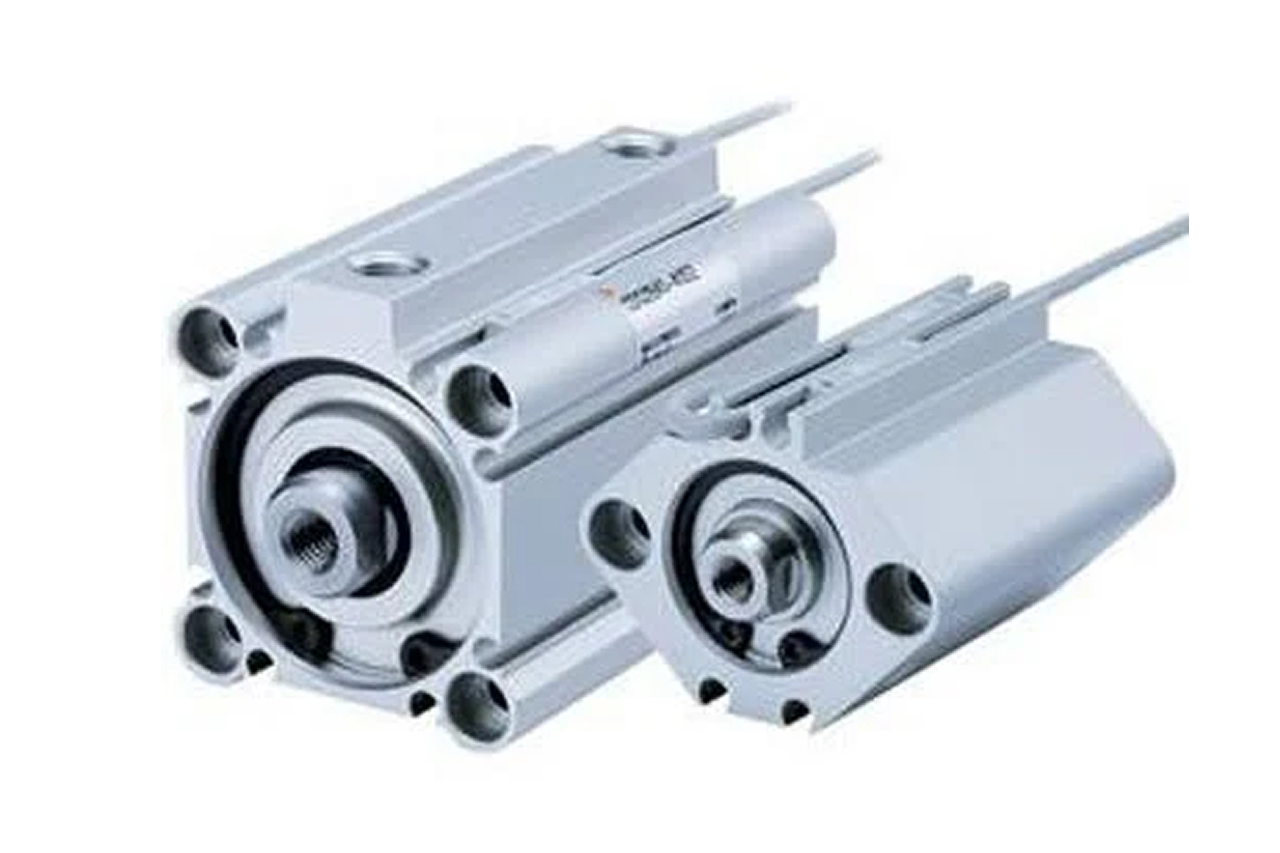
A non-rotating cylinder is a pneumatic cylinder built so the rod cannot twist about its own axis as it extends and retracts. An ordinary cylinder rod is free to rotate slightly, which is acceptable for a simple push but unacceptable when a tool, gripper, or workpiece on the rod end must keep a fixed angular orientation. The non-rotating design — typically a non-circular rod section or an internal anti-rotation feature — holds that orientation true through the full stroke. It is the right type for parts handling, pick-and-place, and any motion where the end-effector must not spin. It addresses rotation specifically; an application whose real problem is resisting side load or bending needs a guided cylinder, which adds bearing-supported guide rods rather than only constraining rotation.
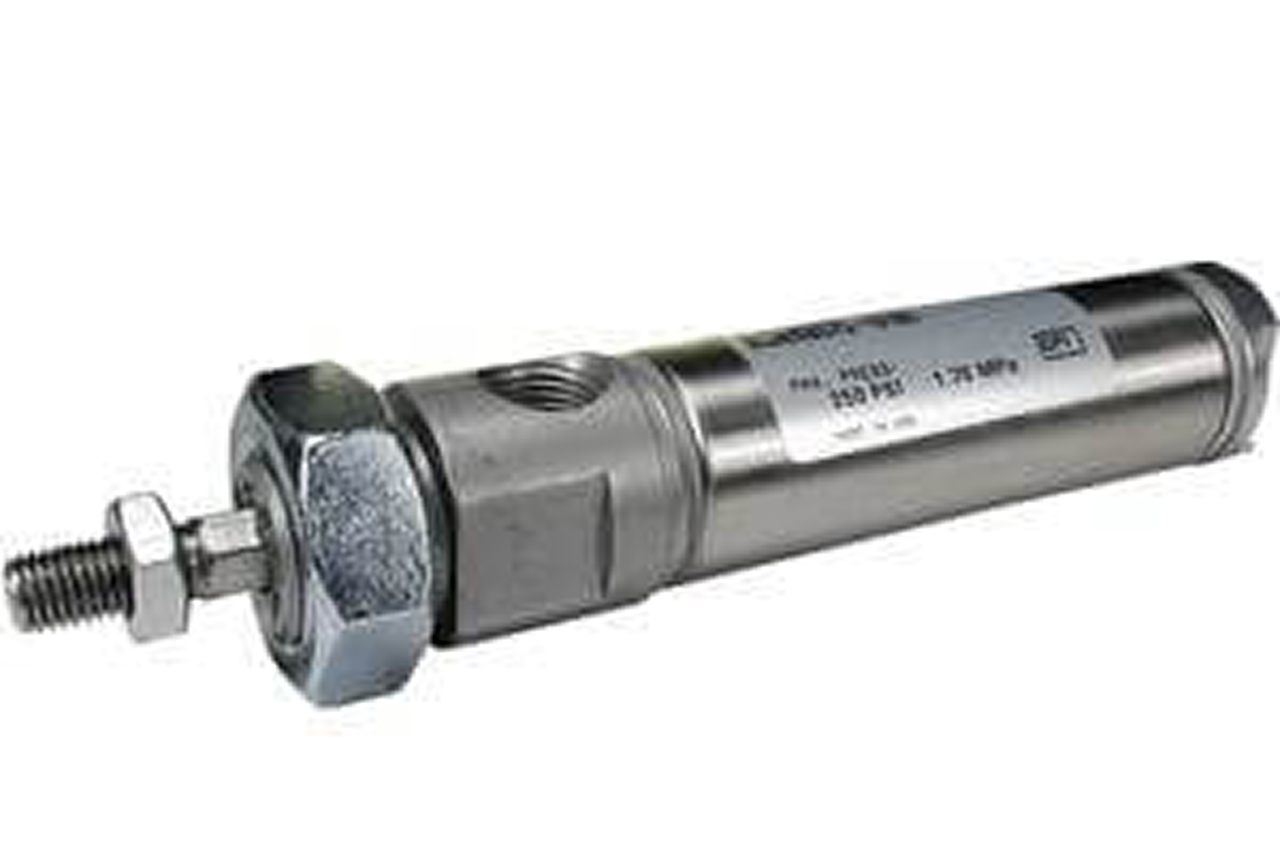
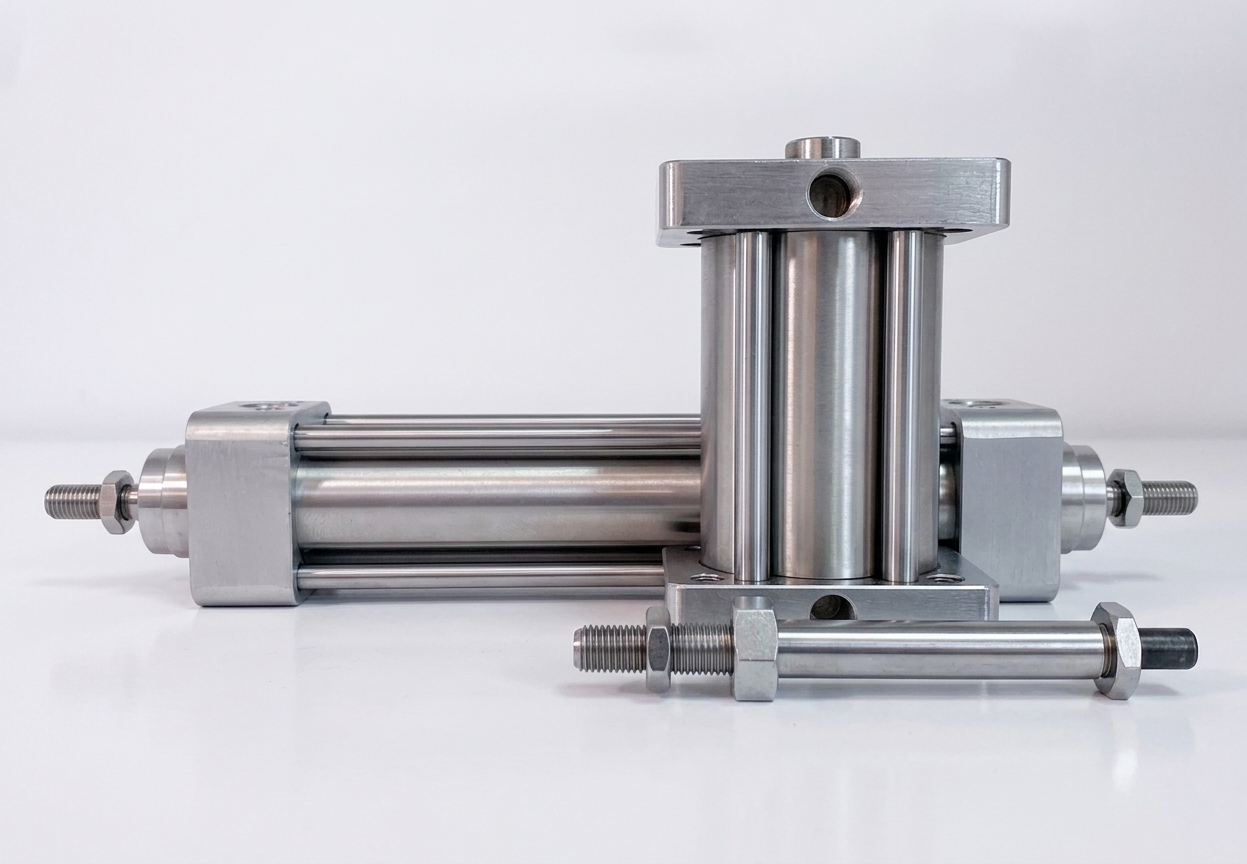
Real-world reference Representative non-rotating cylinder
Non-Rotating Cylinder — representative product photo
02Why it's needed

Why this matters.

Tips and pointers on when non-rotating is the right cylinder — and when the real answer is a guided cylinder or a standard variant. Scroll the strip →

01 · Key point
Rod holds angular orientation.

A standard cylinder rod has 1-3° of rotational play — fine for a push, fatal for a vacuum cup, sensor, or gripper that must stay aimed at the workpiece. Non-rotating locks the rod's angle through the full stroke across millions of cycles.

02 · Key point
Two mechanical designs available.

Either a non-circular rod cross-section (D-shape, square, hex) riding in a matching end-cap bore, or an internal anti-rotation key (guide pin between piston and end cap) with a circular rod. The key-type accepts standard round rod-end hardware; non-circular needs matched hardware.

03 · Key point
Available across cylinder families.

Configuration option on ISO 15552, NFPA, compact, and heavy-duty cast — plus a dedicated production-volume non-rotating series. Spec the family that matches the rest of the machine; non-rotating is an add-on, not a stand-alone universe.

04 · Pro tip
Qualify orientation vs. side load.

The #1 misapplication is confusion with the guided cylinder. Ask first: "Orientation control of the end-effector (non-rotating), or side-load resistance on the rod (guided)?" Then match anti-rotation accuracy to the application — ±0.5° for vacuum-cup pickup, ±1-3° for gripper alignment.

05 · Where not to use
Side-loaded applications.

Non-rotating constrains rotation only — rod-bearing surface is the same as a standard cylinder. Off-axis push, eccentric load, or guided motion wears the bearing within months. → Switch to a guided cylinder with external or internal bearing-supported guide rods that carry the load off the rod.

06 · Where not to use
Simple axial push, no orientation need.

Standard cylinder rotational play doesn't matter when the rod is pushing a plate or clamping a fixture — non-rotating is over-spec'd and the non-circular rod-end hardware adds cost. → Re-spec to the standard variant (ISO 15552, NFPA, or compact) at the same bore.

07 · Where not to use
Force math from nominal bore.

Non-circular rod cross-sections (D, square, hex) reduce effective piston area vs. a round rod of the same nominal bore — naive force math comes up short. → Read actual push area from the catalog for non-circular designs, or pick an internal-key variant with full standard piston area.

03Key selection criteria

What we need to spec it right.

From the machine spec sheet → to the part number. Answer what you know — leave the rest blank — and send.

01 · Input
The #1 qualifying question. Non-rotating constrains rotation only — it does NOT add side-load capacity. Side load → guided cylinder, not non-rotating.
Orientation control only (non-rotating) · Side-load resistance (switch to guided) · Both (guided + anti-rotation)
02 · Input
Pull from the load calculation; add 25-50% safety factor. Non-circular rod cross-sections reduce effective piston area — read actual push area from catalog.
Push · Pull · Both (double-acting)
03 · Input
Confirm the regulator setting at the machine drop. Push force = pressure × actual piston area.
60 PSI · 80 PSI · 100 PSI · 120 PSI
04 · Input
Derived from required force ÷ operating pressure. Anti-rotation available across dedicated non-rotating series, ISO 15552, NFPA, and compact families.
16 mm · 20 mm · 25 mm · 32 mm · 40 mm · 50 mm · 63 mm · 80 mm · 100 mm
05 · Input
Measured travel distance from retract to extend.
1-25 mm · 25-100 mm · 100-300 mm · >300 mm (specify)
06 · Input
Catalog spec is max rod play in degrees through the stroke. Match to the application precision requirement.
±0.5° (precision vacuum / sensor placement) · ±1° (general orientation) · ±3° (loose alignment / indexing)
07 · Input
Non-circular rod (D / square / hex) needs matched non-circular rod-end hardware. Internal-key designs accept standard round hardware.
Non-circular rod (D / square / hex) · Internal anti-rotation key (round rod)
08 · Input
Match to the rest of the machine standard. Non-rotating is an add-on configuration across families.
Dedicated non-rotating series · ISO 15552 · NFPA · Compact (EOAT) · Heavy-duty cast (severe service)
09 · Input
Standard mount options apply to non-rotating variants.
Foot · Flange · Pivot / clevis · Trunnion
10 · Input
Specify at quote time so it doesn't become an install-day surprise.
Male thread · Female thread · Rod-end clevis · Rod-end eye · Matched non-circular hardware
11 · Input
Position feedback per PLC design (typically 2 per cylinder). Cushion need from speed. Seal grade and IP from plant context.
Standard solid-state · IP67 washdown · High-temp 80-100°C
12 · Input
Number of cylinders for this configuration. Need different bores or strokes? Add a separate quote line per variant.
1 cylinder · 2-4 (machine set) · 5+ (production fleet)

Need different sizes, colors, or quantities? Fill the form, add to quote, then fill again — each click is one quote line.

04Choose your solution tier  ·  core differentiator

Whatever your lever — spec, value, or price — SPC has the right brand.

Most distributors sell one brand per product type. SPC's 60-brand portfolio means every Product Type page surfaces three real options matched to how your customer is buying today. Pick the tier; the quote desk handles the cross-reference.

05How to sell this  ·  distributor talk track

The tier conversation closes the deal. The cross-reference catalog wins the next one.

Non-rotating is the orientation-control cylinder, not the side-load cylinder. Qualify before quoting — customers asking for non-rotating sometimes need guided instead, and they'll be back next year with a worn-out cylinder if you skip the question.
The SPC difference · how distributors actually buy

The 30-second positioning

Open with the qualifying question. Orientation control, or side-load resistance? If pure orientation (end-effector must stay angularly fixed, no significant side load), non-rotating is correct. If side load is present, the answer is guided cylinder or external linear guide paired with a standard cylinder — non-rotating alone will fail.

Three scenarios cover most calls: (1) the customer correctly identified an orientation-control need (vacuum cup, sensor, gripper alignment), (2) the customer is replacing a standard cylinder that ended up rotating in service, (3) the customer assumed "non-rotating" means "won't bend" and actually needs guided. Distinguish the three before quoting.

Force-bore math at actual piston area. Non-circular rod cross-sections (D-shape, square, hex) reduce effective piston area vs. a circular rod of the same nominal bore — check the catalog for actual push area and add a 25-50% safety factor. Internal-anti-rotation designs (circular rod with anti-rotation key) have full standard piston area.

Specify anti-rotation accuracy. Different series carry different allowable rod play. Tight orientation tolerance (vacuum cup pickup, precision sensor placement) needs ±0.5°; general orientation (gripper alignment) accepts ±1-3°. Match to the application's precision requirement.

Match the cylinder family. Dedicated non-rotating series for production-volume non-rotating. ISO 15552 non-rotating option for ISO-standardized machines. NFPA non-rotating for North American heavy-duty. Compact non-rotating for small-footprint EOAT (end-of-arm-tooling — the gripper or vacuum head on a robot wrist).

Tier: Industry Leader tier carries a dedicated non-rotating series plus non-rotating options across all standard cylinder families. For precision orientation work (vacuum, sensor placement), stay Industry Leader tier — value-tier rod-play tolerance varies significantly. For general orientation, Emerging tier is acceptable.

Customer cue → talk move

"Vacuum cup keeps misaligning"
dedicated non-rotating series, tight anti-rotation spec, vacuum-cup mount hardware on the rod end.
"Non-rotating for a gripper"
Verify the gripper's load reaction. Pure axial pick-and-place = non-rotating. Off-axis clamping = guided.
"Cylinder rod rotating in service, workpiece drifting"
Replace with non-rotating in same bore/stroke/mount. Drift stops permanently.
"Sensor needs to stay at the right angle through stroke"
dedicated non-rotating series or ISO 15552 non-rotating option, ±0.5°-1° accuracy.
"Customer asking for non-rotating because the cylinder is bending"
Wrong product type. Side-load problem. Quote a guided cylinder, not non-rotating. Site-walk if necessary.
"ISO 15552 or NFPA non-rotating"
Same dimensional standard as standard ISO/NFPA, plus anti-rotation rod construction. Drops into existing machine envelope.
"Compact non-rotating for EOAT"
compact non-rotating in matching small bore.
"Very tight tolerance, under 0.5°"
Industry Leader tier dedicated non-rotating with precision rod-bore fit.
06Where it's used

Industries served.

Each industry below uses this product across the listed areas. Open an industry to see how it fits the rest of its system.
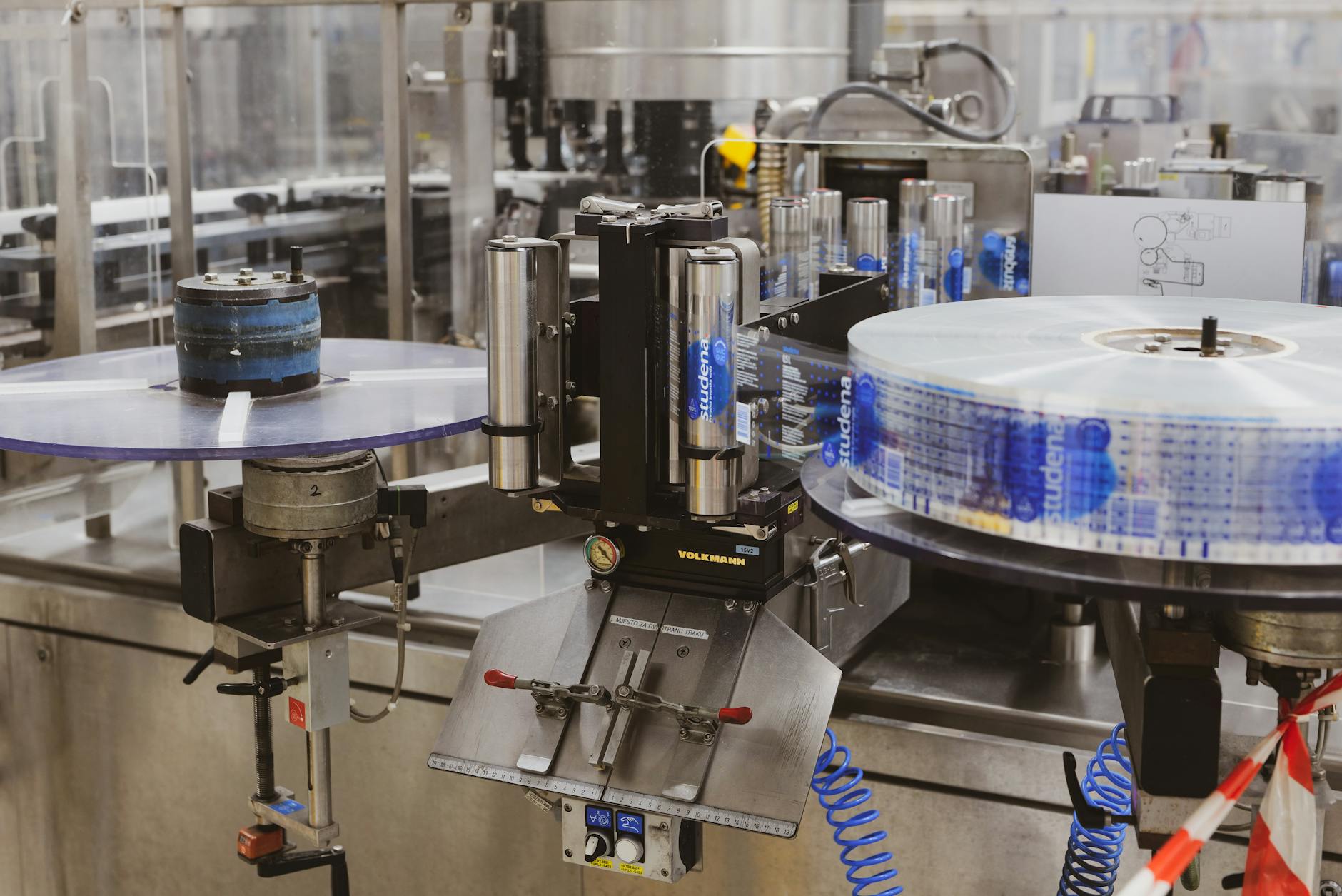
Also applies to Vacuum-cup pick-and-place · tight anti-rotation accuracy (±0.5°) mandatory · Gripper alignment in robotic pick-and-place · Sensor placement and inspection equipment · Tool changers and tool positioners · Indexing pins with shaped (non-circular) ends · Custom machine builds with orientation-sensitive end-effectors

09Install · 6 critical steps

The things that matter on the first install.

Step 02
Calculate force-bore math at actual piston area
Non-circular rod cross-sections (D-shape, square, hex) reduce effective piston area compared to a standard circular rod of nominal bore diameter. Check the catalog for actual push area on non-circular designs and recompute force. Internal-anti-rotation designs (circular rod with anti-rotation key) have full standard piston area. Add a 25-50% safety factor.
Step 03
Specify anti-rotation accuracy to match the application
Catalog spec is max rod play in degrees through the stroke (e.g., ±0.5°, ±1°, ±3°). Tight orientation (vacuum cup precision pickup, sensor placement) needs ±0.5° or better. General orientation (gripper alignment within reasonable tolerance) accepts ±1-3°. Confirm against the application's precision requirement.
Step 04
Match cylinder family and mount style to the machine standard
Dedicated non-rotating series for production-volume non-rotating. ISO 15552 non-rotating option for ISO-standardized machine builds. NFPA non-rotating option for North American heavy-duty machines. Compact non-rotating for small-footprint applications. Standard mount options (foot, flange, pivot, trunnion) apply.
Step 05
Match rod-end hardware to the rod cross-section
Non-circular rod ends require matched non-circular rod-end clevis or eye — standard round hardware doesn't fit. Internal-anti-rotation designs accept standard rod-end hardware. Specify the rod-end style at quote time so it doesn't become an install-day surprise.
Step 06
Install with rod orientation matched to the application
Non-rotating cylinders fix the rod at a specific angular position through the stroke; install with that position oriented correctly (vacuum cup facing the workpiece, gripper jaws aligned with workpiece axis, sensor face pointing at target). Verify at install — rotating the cylinder body to re-orient the rod is standard practice but easy to overlook.
Step 07
Set switches by cycling, document for service
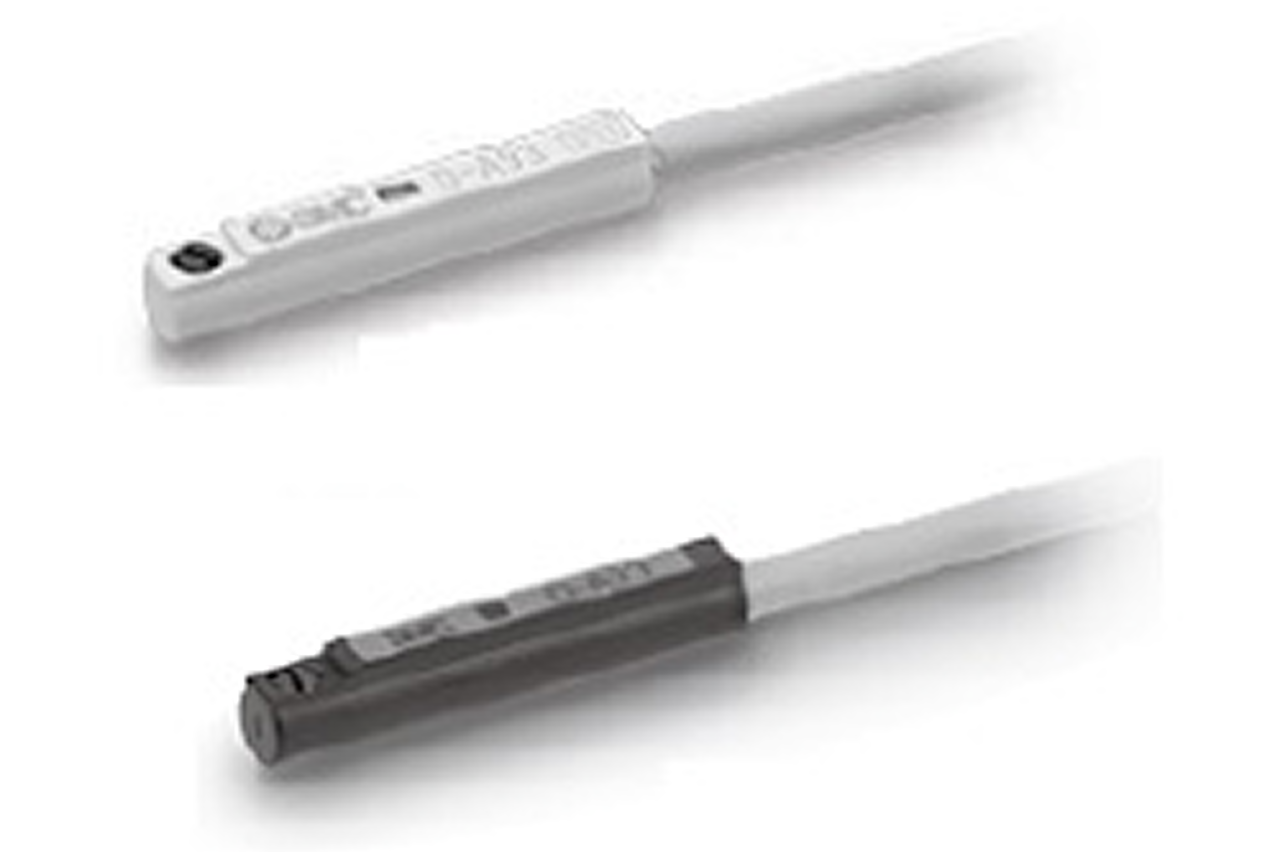
Mount magnetic switches in the cylinder family's switch geometry; set with cylinder cycling at operating speed. Record family, bore, stroke, anti-rotation accuracy, rod-end configuration, mount style. Stock the matching non-rotating rebuild kit at install — kits are NOT cross-interchangeable with standard cylinder kits of the same bore.
10Troubleshoot · top failures

Most returns trace to one of these causes.

Symptom
Most likely cause
Fix
Rod is rotating in service despite non-rotating spec
Anti-rotation mechanism worn out (after years of high-cycle service on heavy or off-axis loads), incorrect cylinder spec'd (standard cylinder installed by mistake), or anti-rotation feature damaged during a rebuild (key or non-circular rod surface scored).
Verify the part number against the catalog. If actually non-rotating and now rotating, the anti-rotation feature has worn; replace rod and anti-rotation components on rebuildable types, or replace cylinder on sealed types. If off-axis or side loads are present, the customer needs a guided cylinder, not another non-rotating.
Rod-bearing wear or rod scoring on a non-rotating cylinder
Side-load application — the customer is loading the cylinder off-axis. Non-rotating's rod-bearing surface is the same as a standard cylinder; the rod is wearing the bearing even though the anti-rotation feature is doing its job. The textbook non-rotating misapplication.
Replace the cylinder AND change the application. Switch to a guided cylinder in the same bore — external or internal guide rods on bearings take the side load. Replacing with another non-rotating produces the same failure.
End-effector orientation drift through the stroke
Anti-rotation accuracy spec inadequate (catalog ±3° is fine for general orientation but inadequate for precision vacuum cup placement), anti-rotation mechanism partially worn, or manufacturing tolerance on rod-bore fit allowing more play than spec.
Re-spec to tighter anti-rotation variant if catalog spec is the limit. If accuracy spec is adequate but drift is excessive, the mechanism is wearing — rebuild kit on rebuildable types, replacement on sealed types.
Air leak at the rod (standard rod-seal failure)
Rod seal worn — same failure mode as standard cylinders of the same family. Non-rotating doesn't change the rod-seal aging mechanism. 3-7 years on continuous duty is typical seal life.
Non-rotating-specific rebuild kit (ISO/NFPA non-rotating) or replacement (compact / MB non-rotating). NOT cross-interchangeable with standard cylinder kits — seal configurations are slightly different on non-rotating variants.
Cylinder slams hard at end of stroke
Same as standard cylinder cushion issues — cushion seal worn, cushion screw set wide, or load × velocity exceeds cushion rating. Non-rotating doesn't change cushion behavior.
Standard cushion troubleshooting — close cushion screw progressively, rebuild kit if seal worn, external heavy-duty adjustable shock absorber if load × velocity exceeds rating.
Difficulty fitting standard rod-end hardware to non-circular rod
Non-circular rod cross-section (D-shape, square, hex) doesn't accept standard round rod-end clevis or eye. Often missed at quote time and discovered at install.
Use the matched non-circular rod-end hardware from the manufacturer, OR switch to an internal-anti-rotation design (circular rod with anti-rotation key) that accepts standard rod-end hardware. Specify the rod-end style at quote time.

Get the right non-rotating cylinder on quote in 24 hours.

Send us the application — a specialist routes you to the correct tier with a configured part. Lead-times and pricing returned within one business day.

Request a quote