What it is
The ejector makes vacuum, the cup grips
A four-product pick-and-place sub-system — ejector, suction cup, spare cup, and sensor — for parts no mechanical gripper can touch.

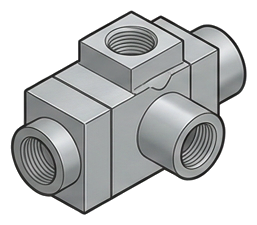
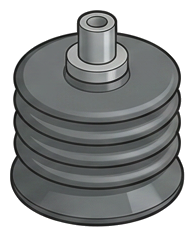
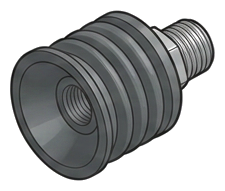
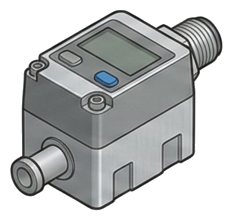
Four products, one sub-system. SMC ZH ejectors generate the vacuum with no moving parts (just a venturi nozzle and your shop air); SMC ZP suction cups grip the part; replacement cups are the consumable on every cycle; ZSE sensors close the loop so the PLC knows the pick actually happened. Spec'd together, this is the pick-and-place package for parts no mechanical gripper can hold.
Tap any type to jump to its page. The Decision Guide further down asks three questions that funnel the spec to one of these.
A four-product pick-and-place sub-system — ejector, suction cup, spare cup, and sensor — for parts no mechanical gripper can touch.
The ejector + cup + sensor is the working set. Quote them piecemeal and one of them is what takes the line down.
Flat cups for rigid sheet, deep-bellows for curved, oil-resistant compound for textured. Wrong geometry is the #1 dropped-part failure.
The ZSE sensor confirms the pick latched before the arm moves. Skip it and the robot eventually drops parts it never actually picked up.
Production duty replaces cups every 4-12 weeks. Quote a 6-month spare allowance on day one — customers always run out before the next PO.
ZH ejector at ~−84 kPa with no moving parts, ZP cup geometries, and ZSE vacuum sensor — the full sub-system from one line.
Distributor-facing reading. The trade-off column is the one that closes the loop — every type buys something and gives something up. Knowing what each type costs you is how the right one gets on the quote without a callback.
Reading the brand bench column — the bar shows how many of SPC's tier slots (Industry Leader · Emerging · Economical · adjacent) carry an option at that product type. A deep bench means a price-driven and a spec-driven option both close cleanly; a narrow bench means the available brands map closely to the technical requirements and the comparison stops being a tier choice.
Draw a line from the customer's answer at the top to the type name at the bottom. This is the page distributors screenshot and send to a customer the day before a quote call — so the customer comes prepared with the answers, and the call is about the brand and the budget, not the basics.
The decision tree picks the lead product, but the spec is always the four-product set: ejector + cup + replacement cup allowance + sensor. The cycle gating is also worth flagging: high-speed cycling above 60 picks/min wants a multi-stage ejector with a vacuum release valve for fast cup detach; holding-mode work (long hold, infrequent release) can run a single-stage ejector with no release valve and save the air. Match cup material to the surface the customer's machine is actually touching — wrong elastomer destroys the cup in days.
Vacuum is what picks the part no gripper can touch. Spec the four products together — ejector, cup, spare cup, sensor — and the cycle works. Quote them piecemeal and one of them takes the line down.
If the customer answers most of these at the first call, the second call is the quote. If they can't answer any, the vacuum end-effectors are rarely the only spec gap — flag it and push for a site walk.
Actuation is where compressed air finally becomes machine work — the dense layer the rest of the system exists to feed. Everything upstream (air prep, distribution, control) is just preparation; this is where the air pushes, twists, and grips. Three motion modalities live here and each one needs a different family of hardware: cylinders deliver linear push-pull strokes, rotary and electric actuators deliver turning and precision-positioning motion, and vacuum end-effectors pick and place parts no gripper can touch. The Motion Control layer next door tunes and protects what these actuators do — metering their speed and catching them at end of stroke. Get the motion modality wrong and the machine cycle never works the way it was drawn; get it right and the cylinder, the actuator, and the suction cup disappear into the duty cycle and do their work for the next fifteen million strokes. This is the layer the customer's machine is actually built around — every other layer is there to make this one reliable.
The linear-motion workhorse — eight cylinder types covering push, pull, clamp, eject, lift, and feed in a straight line.
→Rotary motion and the electric-actuator migration path — when the cycle needs turn-and-hold or precision positioning instead of stroke.
→Ejectors, suction cups, and vacuum sensors — the pick-and-place sub-system for parts no mechanical gripper can hold.
Adjacent Sensing & Feedback layer — the vacuum sensor / switch confirms the pick latched before the arm moves; it's quoted as the fourth piece of every end-effector set.
→Tell us the end-use, the rough flow, and what climate the unit would sit in. We'll come back with a configured quote — the right type, the right tier, and the upstream gear the warranty assumes.
—. We reply within one business day with pricing, lead-time, and configured parts.