DISTRIBUTOR-FIRST SUPPLY PARTNER · SINCE 1999 Live · Product System

SPC Company
Industry Leader · KELTEC
01What it is

Thermostatic Valve

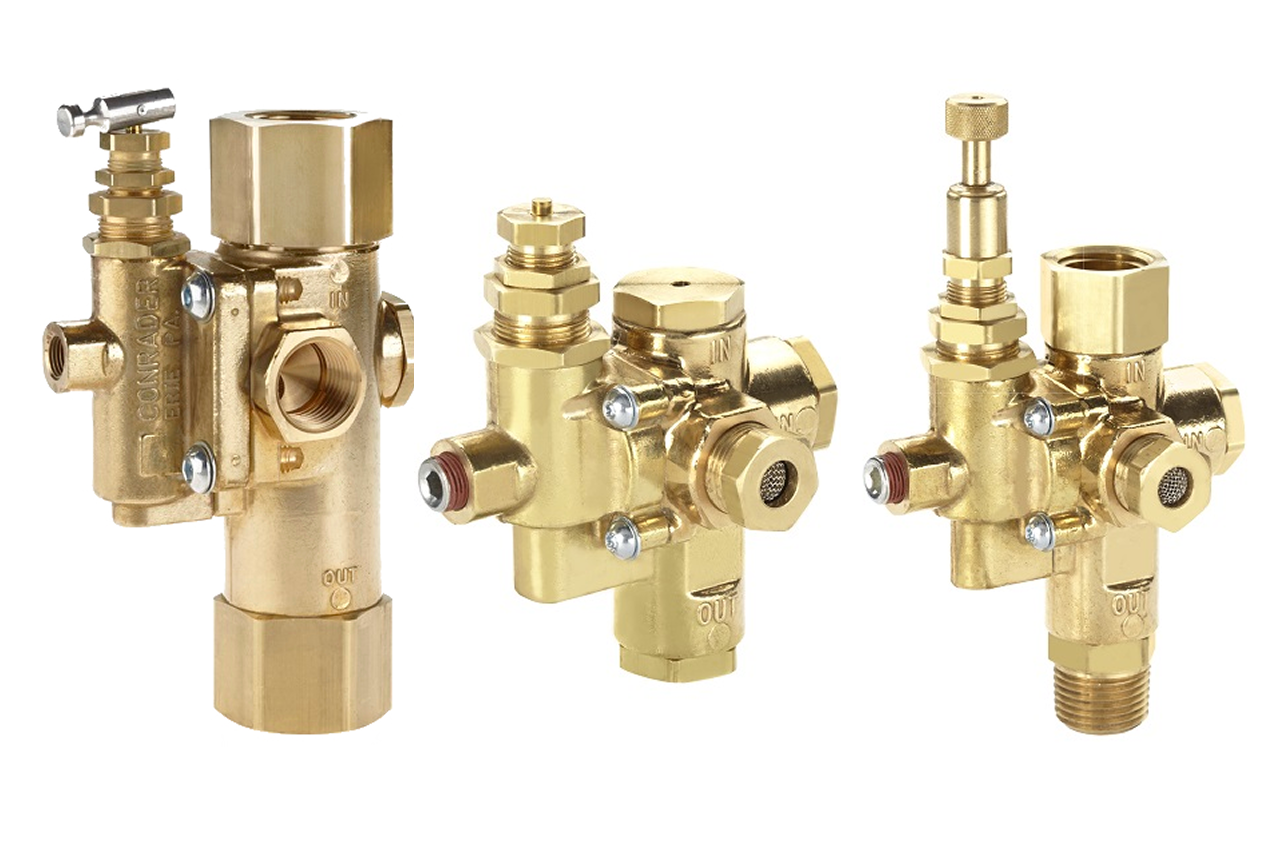
A thermostatic valve is the oil-temperature regulator inside a lubricated rotary-screw compressor — a temperature-sensing valve that routes circulating oil either through the oil cooler or around it on a bypass, blending the two streams so the air-end stays in its designed operating temperature band. The internal sensor is a wax-element or bimetal actuator that opens the cooler path as oil temperature rises and closes it as oil temperature falls. The valve is a wear part, not a scheduled consumable — replaced on failure or when temperature regulation drifts out of band, typically every 5-10+ years depending on operating temperature and oil condition. The defining variant is the setpoint temperature; a replacement must match the original setpoint exactly because the compressor was designed around its original band. It is selected by cross-referencing the OEM compressor make, model, HP, and setpoint temperature to an equivalent aftermarket part number.
Where it's used General Manufacturing
General Manufacturing application
02Why it's needed

Why this matters.

Tips and pointers on when the thermostatic valve is the right call — and when the symptom belongs to the cooler or a different control valve. Scroll the strip →

01 · Key point
It holds oil within ±10°F of setpoint.

Wax-element or bimetal actuator blends cooler-return and bypass oil to hold the air-end at its designed band — regardless of ambient, load profile, or cooler effectiveness. Sits partially open at steady-state, mixing the two streams.

02 · Key point
It prevents both ends of the failure band.

Below ~140°F water condenses into the sump and emulsifies the oil into milky-coffee; above ~210°F oil oxidizes, varnishes the air-end, and loads the separator in months. The valve sits in the middle preventing both profiles.

03 · Key point
It crosses 40-60% under OEM list.

Leading-tier aftermarket cross-references to Atlas Copco, IR, Sullair, Quincy, Kaeser, Gardner Denver, Champion with US stock. $200-$800 vs. OEM at full list and multi-week lead — typically ships inside a $1,500-$4,000 bundled major-service event.

04 · Pro tip
Match the setpoint exactly.

Setpoint is the single most important spec — a 160°F valve and a 180°F valve are different parts for the same body and don't substitute. Read the stamp off the existing body or pull from the parts manual; common setpoints are 140°F, 160°F, 170°F, 180°F, 185°F. Wrong setpoint shifts the entire operating band off-design.

05 · Where not to use
Before eliminating the cooler side.

Fouled fins, failed cooler fan, or low cooling-water supply on water-cooled machines produce the same hot-running symptom. → Re-spec to a cooler clean or fan replacement if airflow and water-side checks haven't been done.

06 · Where not to use
"Running hot" with an unverified unloader.

A stuck-closed unloader runs the machine full-load 24/7 and dumps heat into the oil — looks identical to thermostatic-stuck-bypassed at the sump temperature gauge. → Re-spec to an unloader-valve cross if the compressor never reaches unload current.

07 · Where not to use
"Adjust to a higher setpoint" customer requests.

Customers sometimes ask for a hotter setpoint to "burn off the water" — over-cooling and over-heating are both damaging and the compressor was designed around its original band. → Re-spec to the matching-setpoint cross unless an OEM service bulletin documents a change.

03Key selection criteria

What we need to spec it right.

From the machine spec sheet → to the part number. Answer what you know — leave the rest blank — and send.

01 · Input
Pull all three off the nameplate sticker — make/model is the primary cross key, serial resolves model-year variations (the original setpoint can shift over a production run).
Atlas Copco GA · Ingersoll Rand R-Series · Sullair LS · Kaeser SX / CSD · Quincy QGS · Gardner Denver VS · Champion
02 · Input
Read the motor nameplate rating — sets the body size on the cross.
5-25 HP (commercial) · 25-100 HP (mid plant) · 100-200 HP (large plant)
03 · Input
Read the setpoint stamp off the existing valve body or pull from the parts manual. The single most important spec — a 160°F valve and a 180°F valve are different parts, and the wrong setpoint shifts the entire operating band off-design. Match exactly.
140°F · 160°F · 170°F · 180°F · 185°F
04 · Input
Direction confirms the failure mode and rules out parallel suspects. Hot = stuck bypassed (no flow to cooler). Cold = stuck full-flow to cooler (bypass closed).
Running hot (above band) · Running cold (below band) · Wide temperature swings on load/unload · Water in oil at sight glass
05 · Input
Thermostatic symptoms overlap with cooler-side failures. Verify the cheaper suspects before quoting the valve.
Cooler fins / airflow verified clean · Cooler fan operation verified · Cooling-water supply verified (water-cooled) · Not yet checked
06 · Input
Read off the failed valve's casting marks or pull from the parts manual. Resolves the cross faster than serial-number lookup when available.
Casting marks · OEM parts manual · Maintenance log
07 · Input
Number of valves for this configuration. Replacement on multiple compressors? Add a separate quote line per machine.
1 valve · 2-3 valves (kit stock) · 4+ valves (multi-unit MRO)

Need different sizes, colors, or quantities? Fill the form, add to quote, then fill again — each click is one quote line.

04Choose your solution tier  ·  core differentiator

Whatever your lever — spec, value, or price — SPC has the right brand.

Most distributors sell one brand per product type. SPC's 60-brand portfolio means every Product Type page surfaces three real options matched to how your customer is buying today. Pick the tier; the quote desk handles the cross-reference.

05How to sell this  ·  distributor talk track

The tier conversation closes the deal. The cross-reference catalog wins the next one.

Thermostatic-valve failures look like cooler problems, oil problems, or compressor problems — and the customer has usually tried fixing the wrong thing first. Walking the temperature-band diagnostic is what wins this sale.
The SPC difference · how distributors actually buy

The 30-second positioning

The customer almost never identifies the thermostatic valve as the failed part themselves. The symptom is always system-level: "compressor is running hot," "we're seeing water in the oil," "the separator is loading way too fast." The diagnostic conversation is what separates the SPC quote from a generic parts retailer — knowing which symptoms point to the thermostatic valve vs. the cooler, the cooler fan, the cooling-water supply (water-cooled machines), the oil grade, or the high-temp sensor itself. Customers who've already replaced the cooler fan or had a tech "check the oil" without solving the problem are the warmest leads — they've eliminated the cheaper suspects.
Get the setpoint before quoting. This is the single most important spec for a thermostatic cross-reference. A 160°F valve and a 180°F valve are different parts, and installing the wrong setpoint shifts the entire operating band off-design. The setpoint is typically stamped on the valve body or documented in the compressor's parts manual; if neither is available, OEM serial-number lookup will resolve it.
Confirm the symptom direction to verify the failure mode. Running hot with cooler fans confirmed working = thermostatic stuck bypassed. Running cold in normal ambient with verified loaded operation = thermostatic stuck full-flow to cooler. This eliminates parallel suspects (cooler, fans, sensor) before the customer pays for a part that won't solve the problem.
Tier: Industry Leader tier is the established aftermarket specialist — wax-element or bimetal actuators built to the same setpoint and regulating-band tolerance as OEM-original equivalents, US manufacturing and stock. OEM-genuine only for compressors still under warranty. Avoid no-name imports — setpoint accuracy and regulating-band tolerance varies significantly, and a valve that's 10°F off the original shifts the compressor's entire operating profile.
Bundle the major-service set, not the thermostatic valve alone. A compressor with a failed thermostatic valve is almost always at the age where the inlet valve, unloader, and full annual service kit are also due. Single-event invoices land $1,500-$4,000 with the bundle.

Customer cue → talk move

""Compressor is running hot and we already replaced the cooler fan — still hot""
Thermostatic stuck bypassed is the leading suspect after cooler-side eliminations. Verify the cooler itself is clear (no debris or fouling on fins, water flow confirmed on water-cooled machines), then quote the thermostatic cross. Bundle the rest of the control-valve set.
""We're seeing water in the oil sump — what do we do?""
Could be thermostatic stuck full-flow to cooler (oil too cold for ambient humidity), cooler internal leak letting cooling water into the oil, or a refrigerated dryer downstream that isn't doing its job. Diagnose oil temperature first — consistently below 140°F at load points to the thermostatic valve. Quote the cross.
""Our separator is loading way faster than expected — we just changed it six months ago""
Multiple causes: compressor running hot (thermostatic fault), wrong oil grade, intake-side contamination, or water in oil from a thermostatic stuck cold. Pull oil temperature data — if running outside band in either direction, the thermostatic valve is the target. Quote the cross plus fresh separator and oil change.
""The compressor trips on high-temp every few hours""
Thermostatic stuck bypassed (no oil reaching cooler) or cooler fouled. Verify cooler airflow first, then quote the thermostatic cross. This customer is on borrowed time — quoted urgency is appropriate.
""The OEM quoted us $1,100 and a three-week lead""
Textbook cross-reference win. Capture the OEM part number AND the original setpoint temperature, look up the aftermarket at matching setpoint, quote at 40-60% with same-day stock.
""What setpoint should we use — original or higher / lower?""
Match the original setpoint exactly. The compressor was designed around it; deviating in either direction shifts the operating band and creates new problems. The only exception is a documented OEM service bulletin recommending a change.
""Compressor is running cold all winter — runs around 110°F when it should be at 170°F""
Thermostatic stuck full-flow to cooler. Quote the cross. The customer is at risk of water emulsification in the oil if they haven't already seen it; recommend an oil sample at the same service to confirm condition.
""Thermostatic plus the rest of the control-valve service""
Yes, this is the bundle. Inlet + unloader + thermostatic + separator + oil filter + intake filter + oil. One service event, full reset.
06Where it's used

Industries served.

Each industry below uses this product across the listed areas. Open an industry to see how it fits the rest of its system.

Also applies to Fixed-speed lubricated rotary-screw compressors, 25-200 HP plant range · 160-185°F · VFD (variable-frequency drive) rotary-screw compressors · Compressors in cold-ambient installations · more thermostatic failures per machine-year · Compressors with documented oil-temperature drift or high-temp trips · Compressors with water-in-oil findings on oil analysis · Compressors with accelerated separator loading · Aging installed-base machines past OEM warranty · 8-15+ years old · Multi-machine fleets on service-route agreements

09Install · 6 critical steps

The things that matter on the first install.

Step 01
Confirm the cross-reference and verify the setpoint temperature
Pull the OEM part number and the original setpoint from the parts manual or the existing valve's body markings. Cross-reference to the aftermarket at the same setpoint — typically 140°F, 160°F, 170°F, 180°F, or 185°F depending on the OEM model. Verify body dimensions, port sizes, and mounting orientation before scheduling the service. The replacement must match the original setpoint exactly.
Step 02
Depressurize fully, lock out, drain the oil sump
Stop the compressor, vent the receiver and separator tank to 0 PSI, lock and tag the electrical disconnect. The thermostatic valve sits in the oil circuit and sees hot oil under pressure during operation — opening it hot or pressurized risks burns from oil splash. Wait for sump temperature to drop below safe handling (typically below 120°F). Most thermostatic valves cannot be removed without draining the oil; capture the drained oil per the customer's waste-oil plan.
Step 03
Remove the old valve and inspect the cooler and adjacent components
Disconnect the oil lines or remove the mounting bolts; on threaded NPT (National Pipe Thread Tapered) connections use a backing wrench to avoid stressing adjacent plumbing. Inspect the wax element or bimetal actuator on the removed valve — significant discoloration or carbon buildup on the sensing element indicates the compressor has been running hot for an extended period. Inspect the oil cooler and its passages while the lines are open; if the cooler is varnished or fouled, this is the moment to clean or replace it.
Step 04
Install the new valve at the matching setpoint, with correct flow orientation
Verify the new valve's setpoint marking matches the original before installation. Use new gaskets supplied with the cross-reference valve (do not reuse old gaskets — the oil circuit sees pressure and temperature cycling). Seat the valve in the correct flow-orientation per the body arrow markings or OEM diagram; reversed installation defeats the bypass function. Torque mounting bolts or threaded connections to OEM spec.
Step 05
Refill oil, prime the circuit, restart and watch through warm-up
Refill the sump with matched-grade synthetic compressor oil per OEM spec to the operating mark. If the cooler was drained or replaced, the cooler-side oil volume may need to be primed manually per the OEM service procedure. Verify there are no air pockets in the oil circuit before restart — an air pocket through the new valve can cause an erratic temperature reading and apparent valve failure on first start. Restart and watch oil temperature climb through warm-up: expected behavior is steady rise from ambient through setpoint, then stabilization within roughly 10°F of the setpoint at steady-state load.
Step 06
Run two full load/unload cycles and document
Confirm oil temperature stays within the normal band (±10°F of setpoint) through at least two load/unload cycles. A valve that lets temperature overshoot 20-30°F past setpoint or fails to reach setpoint at all in normal ambient is a bad install or a wrong cross — diagnose before completing the service. Document install date, part number, OEM cross, setpoint temperature, oil grade and quantity, and any other parts replaced. Schedule the next bundled major service on the customer's service-route calendar.

Get the right thermostatic valve on quote in 24 hours.

Send us the application — a specialist routes you to the correct tier with a configured part. Lead-times and pricing returned within one business day.

Request a quote