DISTRIBUTOR-FIRST SUPPLY PARTNER · SINCE 1999 Live · Compressed Air System

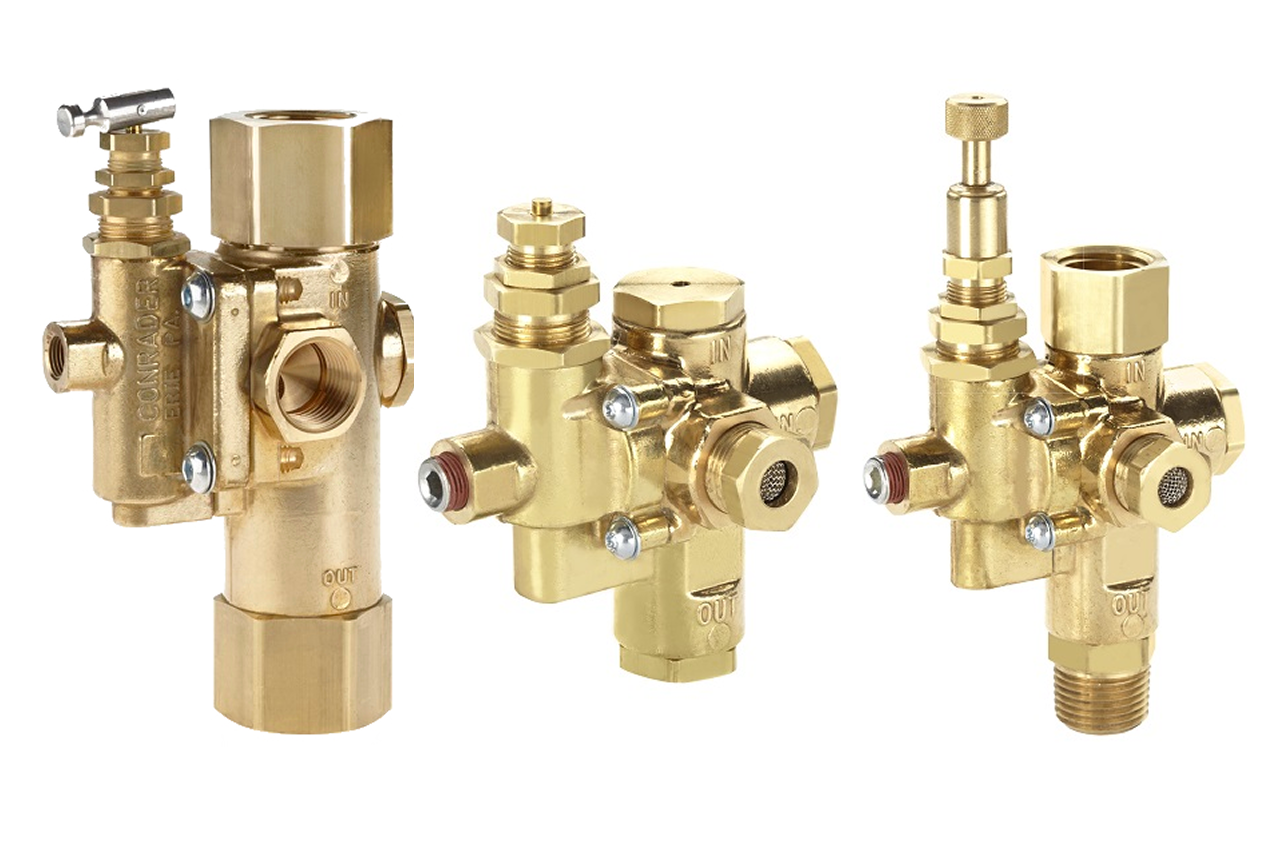
An unloader valve is a signal-actuated vent on a compressor's discharge side that opens the cylinder head or separator tank to atmosphere. On reciprocating compressors it serves the startup-bypass function: it holds the head open to atmosphere during motor start, so the motor accelerates against zero backpressure, then closes once the motor reaches operating speed. On continuous-run rotary-screw compressors it serves the load/unload capacity-control function: when the control panel commands unload, the unloader dumps the separator tank to near-zero pressure so the air-end spins against no resistance, drawing parasitic horsepower only. The unloader is one of the highest-wear parts on a compressor — actuates on every load/unload cycle, hundreds of thousands of cycles per year — and is selected by cross-referencing the OEM compressor make, model, and HP to an equivalent aftermarket part number. The defining variant choice is standalone signal-actuated vs. piloted combination unit (integrated unloader + pilot + discharge check), with piloted combination units carrying a factory-set pilot pressure band that is field-adjustable within limits.
Tips and pointers on when the unloader is the right call — and when the symptom belongs to the pilot or a different valve. Scroll the strip →
Normally-closed signal-actuated valve that dumps the separator tank or cylinder head to atmosphere on command — drops separator pressure from ~125 PSI to near-zero in seconds so the air-end keeps spinning but produces no air.
On a 100 HP fixed-speed screw, an unloaded air-end pulls only the parasitic 25-35 kW to overcome friction vs. the full ~90 kW at load. Stuck-closed unloader spikes electric bills 50-100% — the highest-payback aftermarket parts sale on a compressor.
On reciprocating compressors, holds the head open during the motor start so the rotor accelerates against atmosphere — keeps the motor inside its 6-10 starts/hour envelope. Failed startup-bypass trips the overload every cycle.
Standalone signal-actuated unloaders cross to a different part number than piloted combination units (unloader + pilot + discharge check in one body). Combination units carry a factory-set pilot band — commonly 110-135 PSI or 120-150 PSI, field-adjustable within limits. Mismatched bands shift the entire cut-in/cut-out behavior.
No exhaust attempt at the unloader vent on a commanded unload = pilot or signal failure, not the unloader body. → Re-spec to the pilot valve or solenoid — replacing a healthy unloader leaves the customer with the same symptom.
Hot-running can be a stuck-closed unloader (running full-load 24/7) or a stuck-bypassed thermostatic — different parts. → Re-spec to the thermostatic valve if the unloader cycles cleanly and motor current drops on unload command.
Partial seal failure 3-6 months in costs more in continuous blowdown losses than any savings on the part. → Re-spec to Industry Leader tier — brass-body construction, full pilot-band variants, proven cross-reference catalog.
From the machine spec sheet → to the part number. Answer what you know — leave the rest blank — and send.
Most distributors sell one brand per product type. SPC's 60-brand portfolio means every Product Type page surfaces three real options matched to how your customer is buying today. Pick the tier; the quote desk handles the cross-reference.
If the customer's electric bill jumped and the compressor seems to 'run all the time,' the unloader is the part to suspect first — and the cross-reference is a same-day fix at half the OEM price.
Each industry below uses this product across the listed areas. Open an industry to see how it fits the rest of its system.
Also applies to Fixed-speed lubricated rotary-screw compressors, 25-200 HP plant range · hundreds of thousands of cycles per year · Reciprocating compressors, small-to-mid range · 5 HP through large industrial recips · Continuous-run reciprocating compressors · Compressors using piloted combination unloader/check units · Aging installed-base compressors with high cycle counts · 10-20+ years old · Compressors with documented energy spikes or runaway run-time · immediate verifiable energy savings · Compressors with audible blowdown leaks at the cabinet vent · Multi-machine fleets on service-route agreements
Every entry is a real product on this site — linked, not just named. Quote them on the same line item.

Service-route customers running multi-machine fleets stock 2-3 unloader cross-references per common compressor model on the truck — unloaders are the highest-wear control valve and a stuck-open one stops production immediately. Combination-unit variants pre-set to the customer's pilot band ship faster than field-adjusted units.
Send us the application — a specialist routes you to the correct tier with a configured part. Lead-times and pricing returned within one business day.
—. We reply within one business day with pricing, lead-time, and configured parts.