DISTRIBUTOR-FIRST SUPPLY PARTNER · SINCE 1999 Live · Pneumatic Automation System

SPC Company
Pneumatic Automation / Distribution & Conveyance / Push-to-Connect Fittings / NSF Food-Grade Push-to-Connect Fitting
Layer 02 · Distribution & Conveyance Emerging · AIGNEP
01What it is

NSF Food-Grade Push-to-Connect Fitting

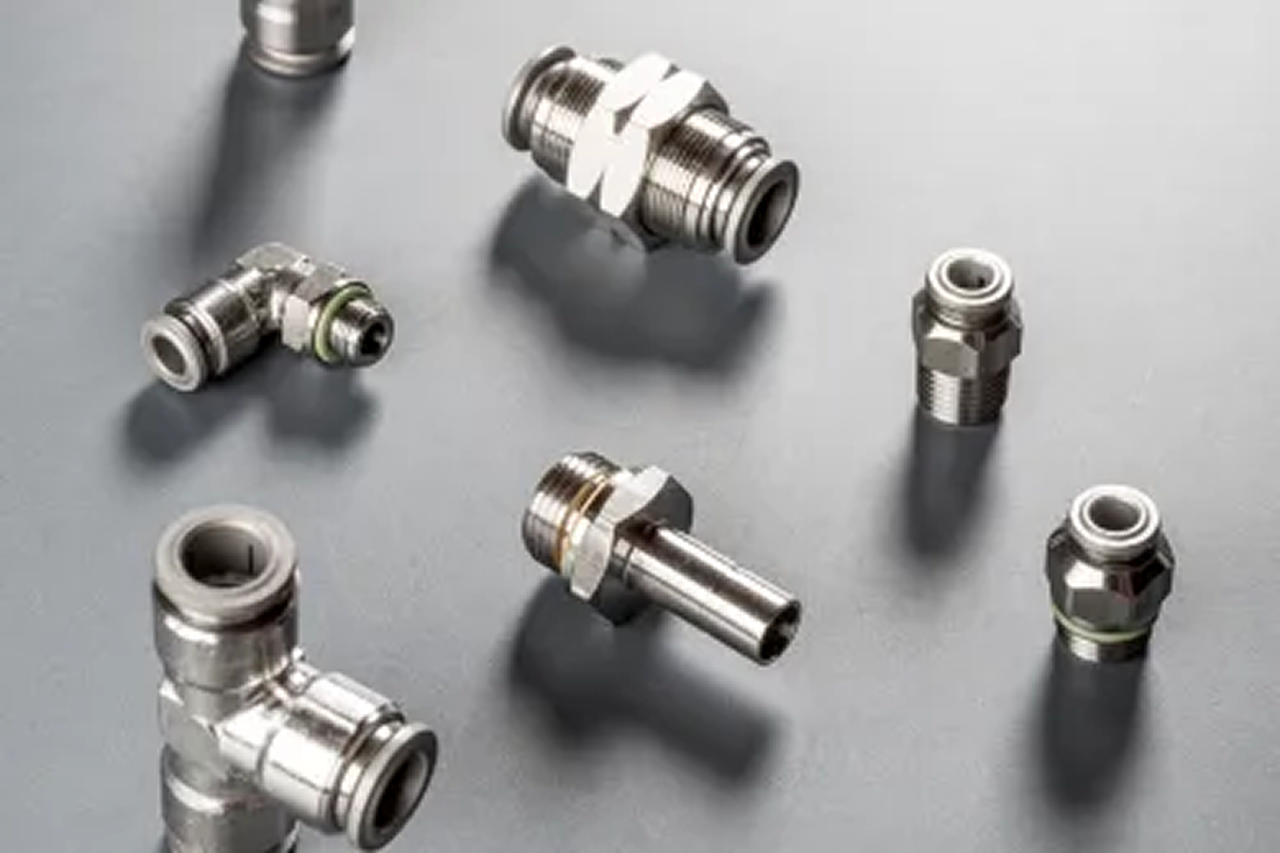
An NSF (National Sanitation Foundation) food-grade push-to-connect (PTC) fitting is a tube connector certified for food and beverage contact zones. The connect mechanism is identical to a standard composite PTC, but every material in the flow path — body, seals, grip ring — is selected and documented to food-contact standards: NSF/ANSI 169 (food equipment), often alongside NSF/ANSI 51, 61, 372 (lead-free), and EU regulation 1935/2004. Typical construction is lead-free brass body, food-grade FKM O-ring, stainless grip ring. It is the audit-pass fitting for food-adjacent and packaging-line air systems — without forcing the customer all the way to full stainless steel where the application doesn't require it. True wet, washdown, CIP/SIP, and dairy-contact zones still step up to stainless.
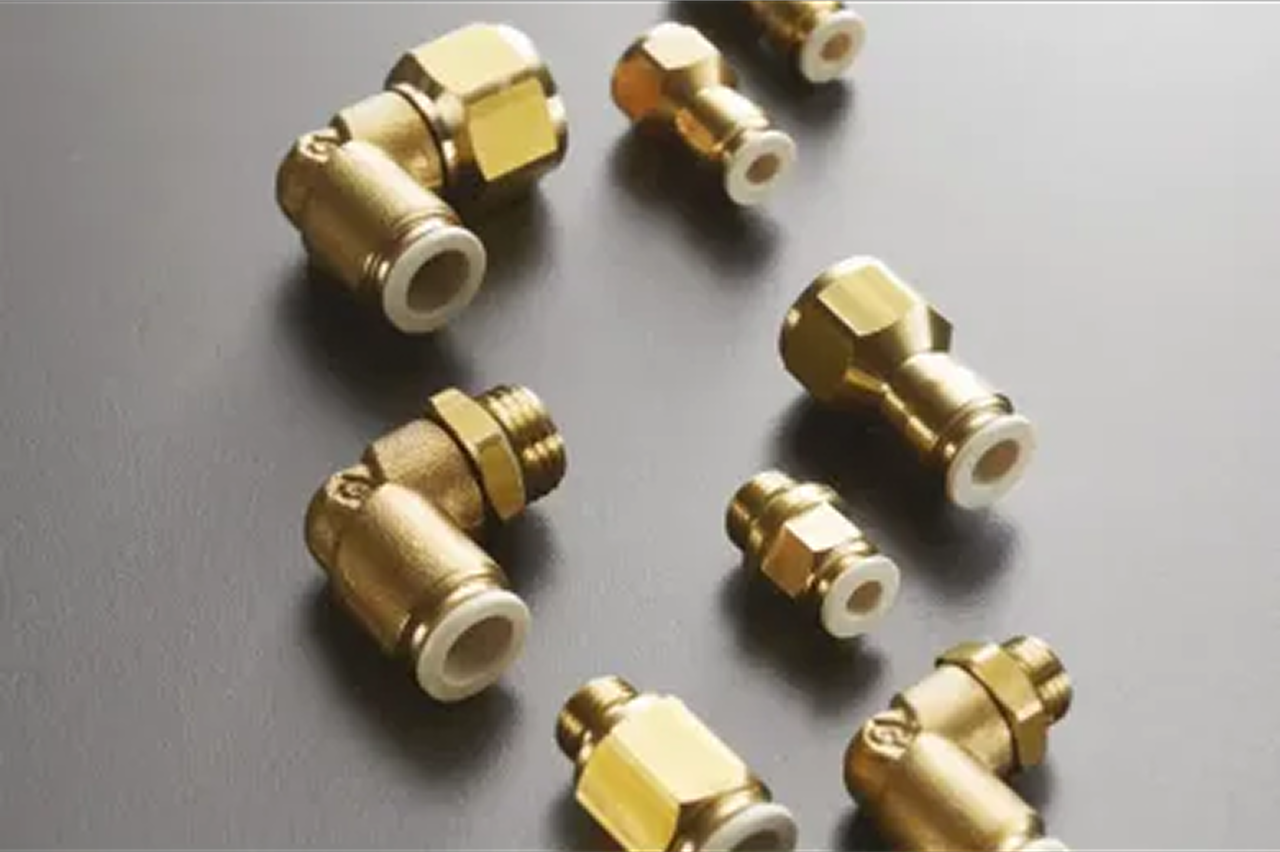
Real-world reference Representative nsf food-grade push-to-connect fitting
NSF Food-Grade Push-to-Connect Fitting — representative product photo
02Why it's needed

Why this matters.

Tips and pointers on when NSF food-grade brass PTC is the audit-pass — and when to spec something else. Scroll the strip →

01 · Key point
Documented food-contact certification.

NSF/ANSI 169 (food equipment) primary, with 51/61/372 (lead-free) and EU 1935/2004 on subsets. Lead-free brass body, food-grade FKM O-ring, stainless grip ring — certificate package available at quote.

02 · Key point
Audit-pass without going stainless.

Materially lower cost than 316L stainless on food-adjacent zones — packaging machinery, dry-zone food, cereal/snack/blending. Right-spec for the zone, not the price.

03 · Key point
Standard PTC install motion.

Same push-in collet mechanism as composite or brass — vacuum to ~150 PSI, full thread coverage (NPT, BSPT, BSPP). No new technique for the install tech.

04 · Pro tip
Bundle the food-grade tube.

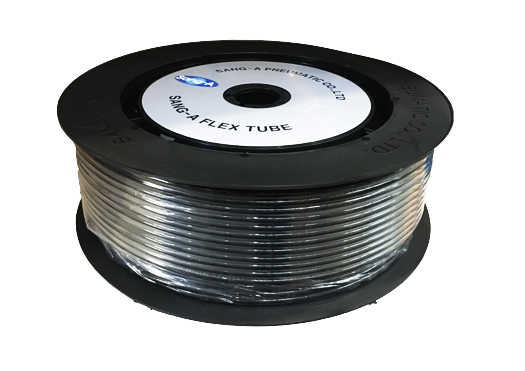
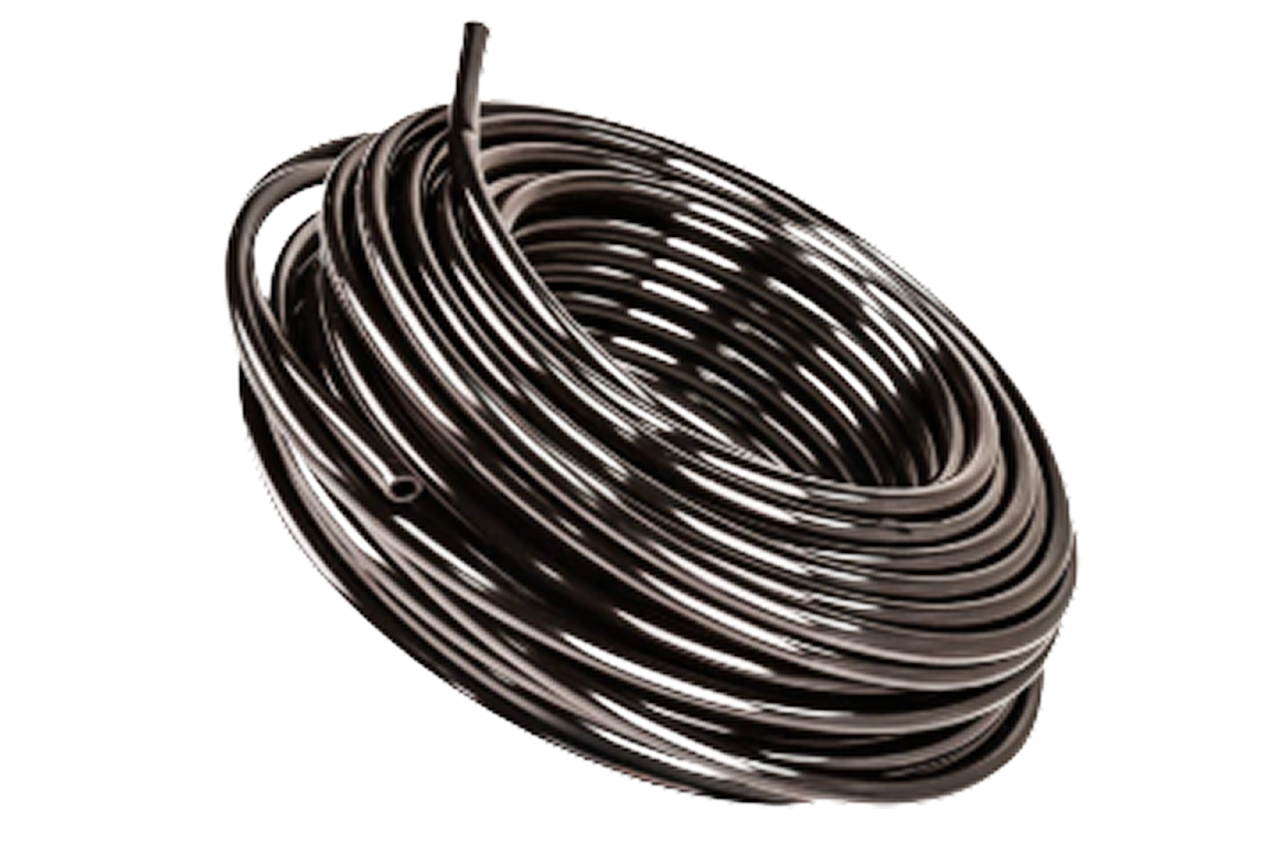
An NSF fitting on non-food-grade tube fails audit. Quote matched food-grade PA, food-grade PE per 21 CFR 177.1520, or food-grade FEP per 177.1550 — non-negotiable bundle, every NSF PTC quote.

05 · Where not to use
Dairy CIP/SIP, true wet-contact.

Caustic + acid sanitizers and 120-140°C SIP attack brass within months. → Step up to stainless-steel PTC (Industry Leader tier 316L) for dairy contact, wet-zone meat, beverage filler, pharma aseptic.

06 · Where not to use
Washdown chemistry, chloride spray.

Lead-free brass body corrodes under chlorinated washdown sanitizers and coastal humidity. → Step up to stainless PTC for any zone touched by aggressive washdown.

07 · Where not to use
Non-food drops on the same plant.

Over-spec on utility air, compressor-room drops, plant-wide air mains. → Step down to composite PTC for non-food zones; right-sizing saves 20-40% on the connection-layer total without compromising audit pass.

03Key selection criteria

What we need to spec it right.

From the machine spec sheet → to the part number. Answer what you know — leave the rest blank — and send.

01 · Input
Measure the existing tube with a caliper — the fitting must match exactly. 6mm and 1/4" are close but distinct. Metric and inch are not interchangeable.
Metric: 4mm · 6mm · 8mm · 10mm · 12mm · Inch: 1/4" · 3/8" · 1/2"
02 · Input
Non-negotiable — an NSF fitting on a non-food-grade tube fails audit. From the tubing supplier label, must be the NSF-certified extrusion of the same polymer family.
Food-grade PU · Food-grade Nylon / PA · Food-grade PE
03 · Input
Read the component port spec. NPT/BSPT seal on the threads (sealant required, must be food-grade rated); BSPP seals on a bonded washer — no thread sealant.
NPT: 1/8" · 1/4" · 3/8" · 1/2" · BSPT / BSPP: G1/8 · G1/4 · G3/8
04 · Input
Pull from the connection geometry at the install point.
Straight · Male / female straight · Elbow (90°) · Tee · Y · Cross · Reducer
05 · Input
"NSF-certified" alone is too vague — pull the citation from the customer's food-safety / audit document and request the cert package up front.
NSF/ANSI 169 (food equipment, most common) · NSF 51 (food equipment materials) · NSF 61 / 372 (drinking water / lead-free) · FDA 21 CFR · EU 1935/2004
06 · Input
From the plant zone map. True wet-contact = 316L stainless, not NSF brass. Food-adjacent, packaging, or dry-zone is where NSF brass is the correct call.
Food-adjacent / packaging · Dry zone · Wet zone (re-spec to stainless PTC)
07 · Input
Number of pieces. Multiple sizes? Add separate quote lines per size variant. Cert package quoted alongside.
1-10 pcs · 25-100 pcs (counter stock) · 500+ pcs (volume tier)

Need different sizes, colors, or quantities? Fill the form, add to quote, then fill again — each click is one quote line.

04Choose your solution tier  ·  core differentiator

Whatever your lever — spec, value, or price — SPC has the right brand.

Most distributors sell one brand per product type. SPC's 60-brand portfolio means every Product Type page surfaces three real options matched to how your customer is buying today. Pick the tier; the quote desk handles the cross-reference.

05How to sell this  ·  distributor talk track

The tier conversation closes the deal. The cross-reference catalog wins the next one.

NSF food-grade brass is the audit-pass fitting that doesn't force the customer to spend up to stainless. Spec it for food-adjacent zones — and quote the matched food-grade tube with it, because a certified fitting on a non-certified tube fails the audit the same way.
The SPC difference · how distributors actually buy

The 30-second positioning

Every NSF quote has three structural pieces. Confirm zone classification (food-adjacent / packaging / dry-zone = NSF brass; true wet-contact = stainless). Confirm the specific certification standard the audit requires (169 most common; 51, 61, 372, EU 1935 for specific cases; "NSF-certified" alone is too vague and fails audits). Quote the matched food-grade tube alongside — the connection is compliant only when fitting and tube together carry the certification.
Tier: Industry Leader tier — lead-free brass, food-grade FKM, stainless grip ring, full thread + configuration coverage, certificate package available at quote. Emerging tier: alternative European food-equipment brands worth quoting on edge-case configurations. No genuine economical tier — claimed-but-undocumented import fittings are a path to audit failure; never lead with them.

Customer cue → talk move

"Audit says NSF on packaging machinery"
Confirm NSF/ANSI 169. Industry Leader tier NSF brass + matched food-grade tube + certificate package. Don't quote stainless unless the audit specifically requires it (5-10x cost).
"Dairy CIP/SIP line"
Stop. CIP with caustic + acid sanitizers and SIP at 120-140°C = stainless territory. Re-route to stainless PTC. NSF brass fails on CIP chemistry within months.
"Beverage filler, need certified fittings"
Walk the zone. Dry-side filler stations = NSF brass; wet-zone filler = stainless. Quote both per zone.
"Customer says 'NSF-certified,' doesn't know the standard"
Pull the audit document. Vague certifications fail audits; the specific standard determines the right product. Typically 169 + 372 at minimum.
"Shipping to Europe"
EU 1935/2004 declaration of compliance required. Industry Leader tier provides on the NSF line. Confirm market-specific extras (German BfR, French testing) at quote stage.
"Cheaper imports at half price"
Almost always claimed-but-undocumented. Customer fails audit on first walk-through; loses far more than the install savings. If price is the constraint, re-evaluate whether every drop actually needs food-grade.
09Install · 8 critical steps

The things that matter on the first install.

Step 01
Confirm audit zone classification BEFORE installing
NSF brass is for food-adjacent / packaging / dry-zone machinery, NOT true wet-contact. If the install zone is wet-contact or CIP/SIP, stop and re-route to stainless PTC.
Step 02
Verify both the fitting AND the matched food-grade tubing certifications
An NSF fitting on a non-food-grade tube fails audit. Pull both certificates and file them in the install documentation.
Step 03
Cut the tube square and clean per food-process protocol
Fresh tube cutter blade — a worn blade leaves microscopic burrs that can shed into the food stream. Deburr. Clean the tube end with food-grade sanitizer or 70% IPA (isopropanol) per the customer's validated cleaning protocol.
Step 04
Insert to full insertion depth (14-20mm) and verify grip-ring engagement
Push straight until firm bottom-stop. Tug-test — NSF lines use stainless grip rings (not plastic collets), both for grip and for the no-shedding requirement of food-grade construction.
Step 05
Apply correct sealant on the threaded port end
NPT/BSPT (tapered): food-grade PTFE tape (NSF-certified) or food-grade thread paste (NSF H1-rated). Standard plumbing thread paste is NOT food-grade. BSPP (parallel) on the Industry Leader tier NSF line uses an integral sealing gasket at the shoulder — no thread sealant.
Step 06
Torque to spec with food-process awareness
Lead-free brass is slightly softer than standard plated brass — torque carefully, don't over-torque. Use a torque wrench on machine builds.
Step 07
Leak-test with food-process-compatible solution
Standard plumbing soap can leave residues. Use NSF-rated leak-detection solution OR diluted food-grade sanitizer + water, wiped down after detection. Stage up pressure gradually.
Step 08
Document for the food audit
Record fitting + tubing part numbers, NSF certification standards, certificate numbers, install date, operator initials, sanitization procedures. File certificates of compliance in the machine's validation document.
10Troubleshoot · top failures

Most returns trace to one of these causes.

Symptom
Most likely cause
Fix
Audit failure on materials documentation.
Certificate not on file, wrong standard cited (auditor required 372 lead-free; install documented only 169), or certificate from a different production lot than installed.
Source lot-specific certificates from the manufacturer or SPC authorized distribution. File in audit document package. Request the certificate package at PO time, not retroactively.
Slow leak at the collet on a newly-installed NSF fitting.
Angled or burred tube cut, wrong tube OD, tube not bottomed, OR — specific to food installs — residue from over-aggressive tube-cleaning contaminating the O-ring seat.
Depressurize, release tube, inspect. Square + deburr. Clean O-ring seat with food-grade sanitizer wipe. Re-insert and tug-test.
O-ring degradation within months on a food-grade install.
Wrong elastomer for the chemistry — food-grade FKM degrades in some sanitizers; EPDM may be required for caustic CIP if the install creeps into CIP territory.
Confirm elastomer against actual process + cleaning chemistry. Industry Leader tier offers EPDM upgrades on specific configurations. If chemistry is past food-grade FKM, step up to stainless PTC.
Visible discoloration or corrosion on the brass body.
Chemistry past brass envelope — chloride from washdown sanitizer, acid sanitizers above brass-tolerant levels, oxidizing chemistry like peroxide. Or counterfeit fitting with off-spec alloy.
Verify install zone is actually food-adjacent (not wet-contact). If washdown reaches the fitting, re-route that drop to stainless. Verify fitting is from authorized distribution — counterfeits often substitute non-spec alloy.
NSF certificate doesn't match auditor's requirement.
Customer cited "NSF-certified" at quote without specifying the standard; auditor required a different standard (169 vs. 61 for drinking-water-adjacent); or jurisdiction-specific requirement (state-level food code in addition to federal NSF).
Confirm auditor's specific standard with customer + auditor. Provide matched certificate if the installed fitting covers it. If not, re-spec affected drops + replace before next walk-through.
BSPP sealing gasket leaks on initial install.
Integral gasket damaged in shipping/handling, gasket not seated properly (rotated or pinched), or BSPP port shoulder not flat (machining defect on the customer's component).
Back out, inspect. Replace gasket from the manufacturer's replacement kit if damaged. If port shoulder isn't flat, file or machine flat.
Customer mistakenly installs NSF brass in a non-food zone.
Procurement standardized on NSF across the whole plant to simplify ordering, paying the premium where it's not needed.
Walk the customer through zone analysis. Right-sizing saves 20-40% on the connection-layer total without compromising audit pass.

Get the right nsf food-grade push-to-connect fitting on quote in 24 hours.

Send us the application — a specialist routes you to the correct tier with a configured part. Lead-times and pricing returned within one business day.

Request a quote