DISTRIBUTOR-FIRST SUPPLY PARTNER · SINCE 1999 Live · Pneumatic Automation System

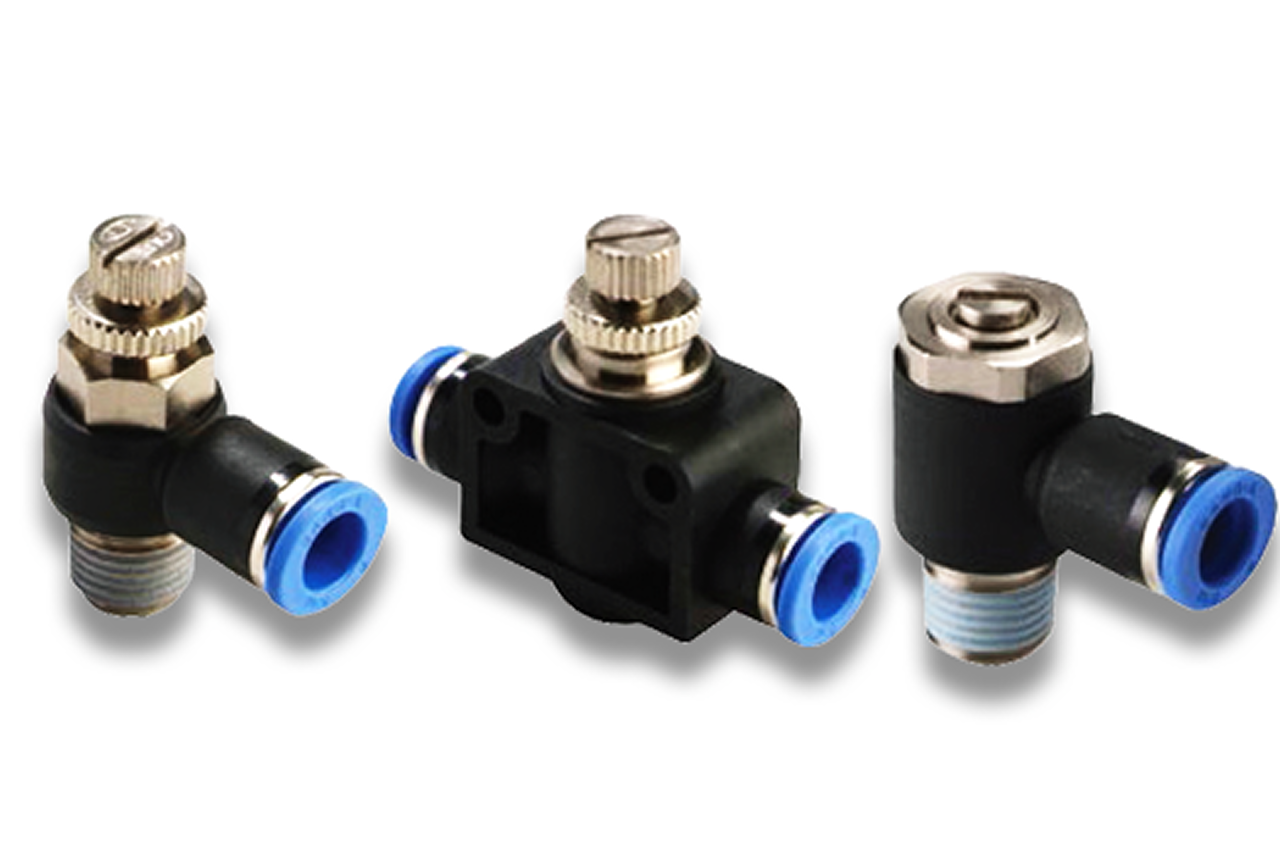
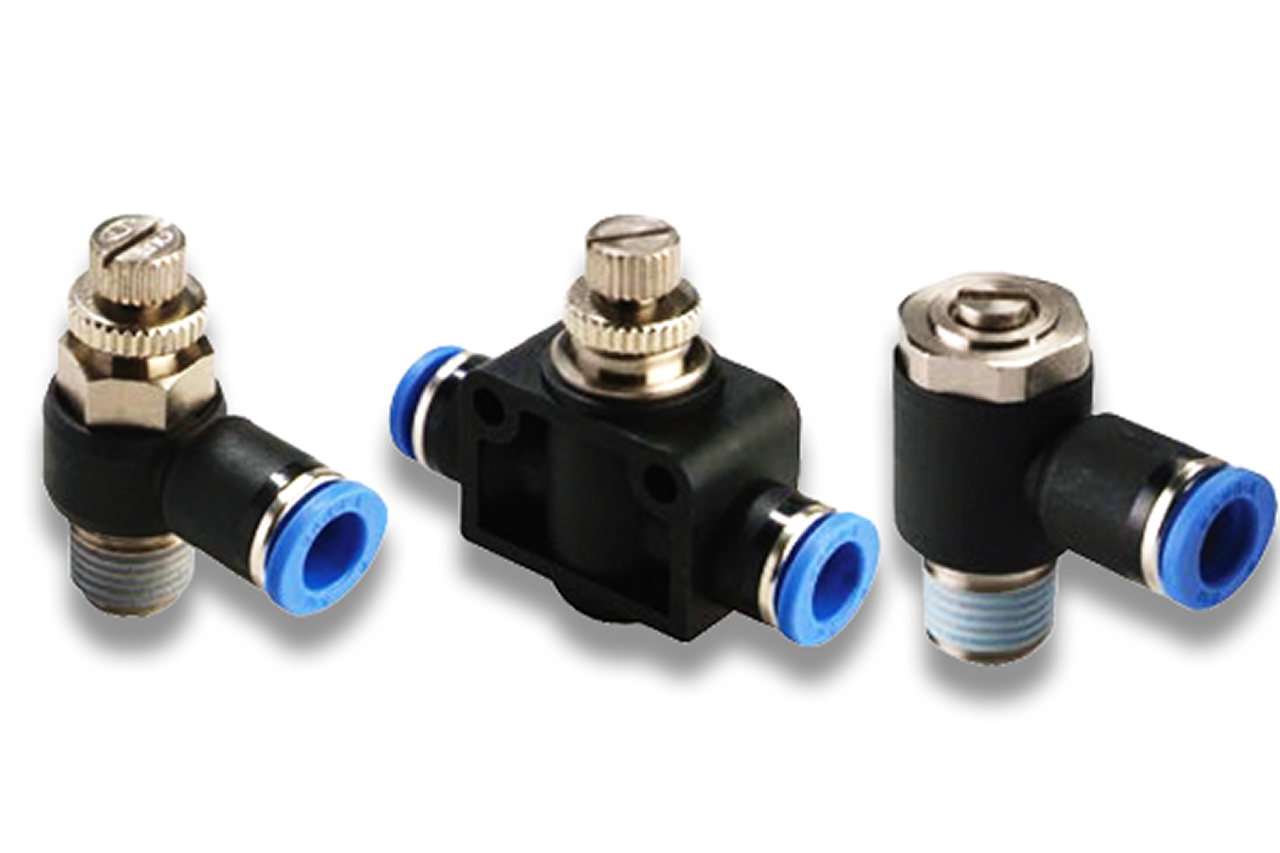
A flow control valve is an inline needle valve that meters air flow in a pneumatic line in BOTH directions equally. Turning the knurled knob advances or retracts a metering needle, narrowing or widening the flow path. Unlike a speed controller it has no integral check valve — that single difference is the entire spec conversation. The flow control is the right tool for line-level jobs: balancing a branch so two parallel circuits draw their fair share, slowing a pilot signal so a sequenced motion doesn't fire too early, trimming the feed to a sub-circuit that doesn't need the full system flow. It is the WRONG tool for cylinder speed (which needs one-direction throttling — see speed-controller). It installs in series in the line and is sized to the same tube OD as the machine's push-to-connect fittings.
Tips and pointers on when the flow control valve is the right call — and when to spec something else. Scroll the strip →
A knurled-knob needle valve in series with the line — open for more flow, close for less, change is immediate. The most-used adjustment device in a pneumatic shop after the regulator. Tunes flow without re-piping.
That single difference from a speed controller is the entire spec conversation. The flow control meters BOTH directions equally — right for line balancing, pilot signal timing, and sub-circuit trimming; wrong for cylinder speed.
Line balancing on parallel circuits. Pilot signal timing for soft-start or sequenced motions. Sub-circuit trimming on shared supplies. General line restriction on test stands. A few per machine, scattered across the schematic.
Operational flow should fall in the middle of the needle's usable travel. Oversized = "barely cracked" — small adjustments produce huge flow changes, fine-tuning impossible. Undersized = full open and still restricting. After tuning, engage the lock and paint-pen the position so drift is visible.
About a third of "I need a flow control" calls are speed-controller calls in disguise. Bidirectional metering doubles cylinder cycle time and creates jerky load-dependent motion. → Re-spec to speed controller at the cylinder port — integral check delivers one-direction throttling, which is what cylinder speed actually needs.
A flow control throttles but never blocks reverse flow. → Re-spec to check valve when the job is full one-way blocking — load holding on a cylinder, backflow prevention on a shared supply, or pneumatic-only logic.
A flow control is always at least partly open — it can't be locked off for OSHA lockout-tagout. → Re-spec to quarter-turn shutoff valve when the job is manual full isolation. Different mechanism, different job.
From the machine spec sheet → to the part number. Answer what you know — leave the rest blank — and send.
Most distributors sell one brand per product type. SPC's 60-brand portfolio means every Product Type page surfaces three real options matched to how your customer is buying today. Pick the tier; the quote desk handles the cross-reference.
A third of flow-control RFQs are really speed-controller RFQs in disguise. Ask whether it's for a cylinder. If yes, pivot the quote — the customer wanted one-direction metering and used the more generic term.
Each industry below uses this product across the listed areas. Open an industry to see how it fits the rest of its system.
Also applies to Line balancing on multi-branch pneumatic circuits · Pilot signal timing on sequenced machines · Sub-circuit feed restriction · Pneumatic logic and timing circuits · Test stand flow tuning · Tool-line throttling
Every entry is a real product on this site — linked, not just named. Quote them on the same line item.
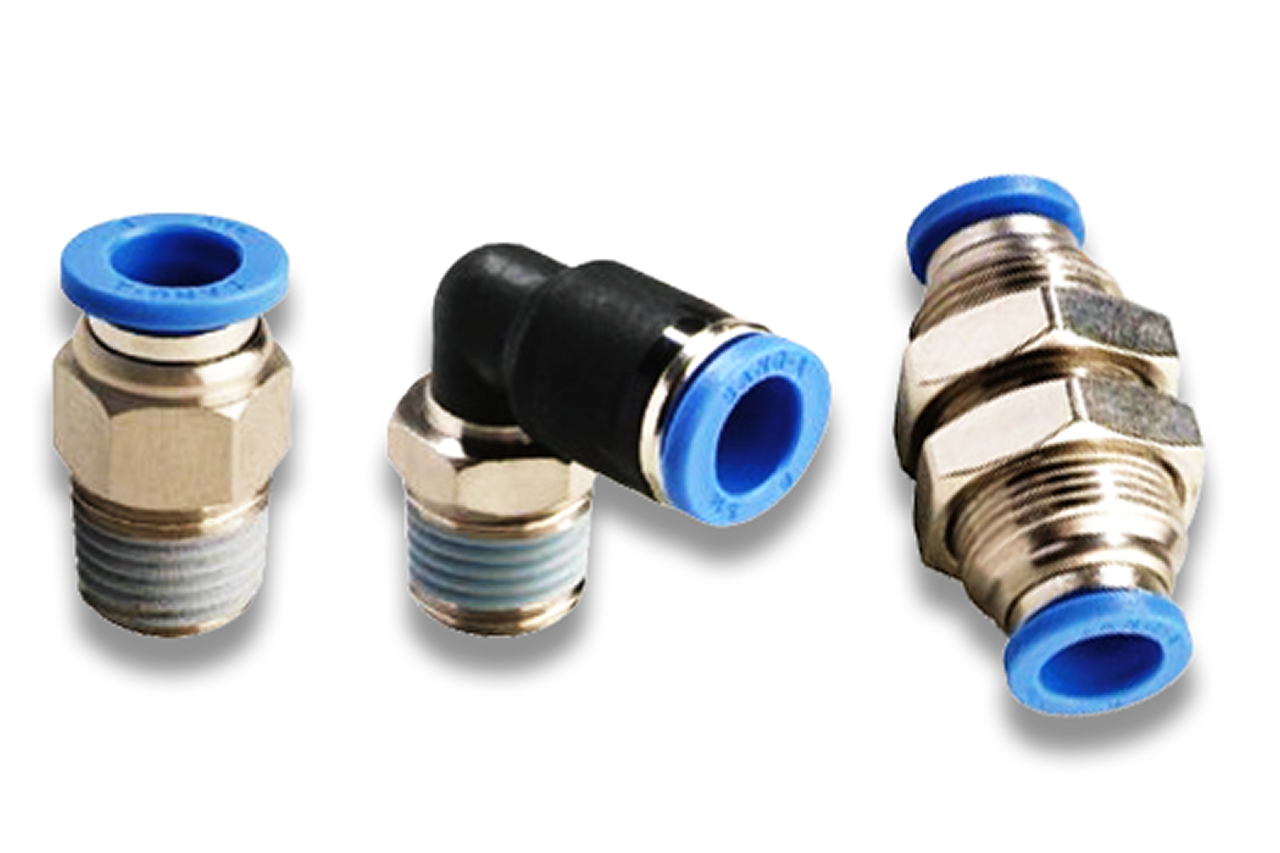
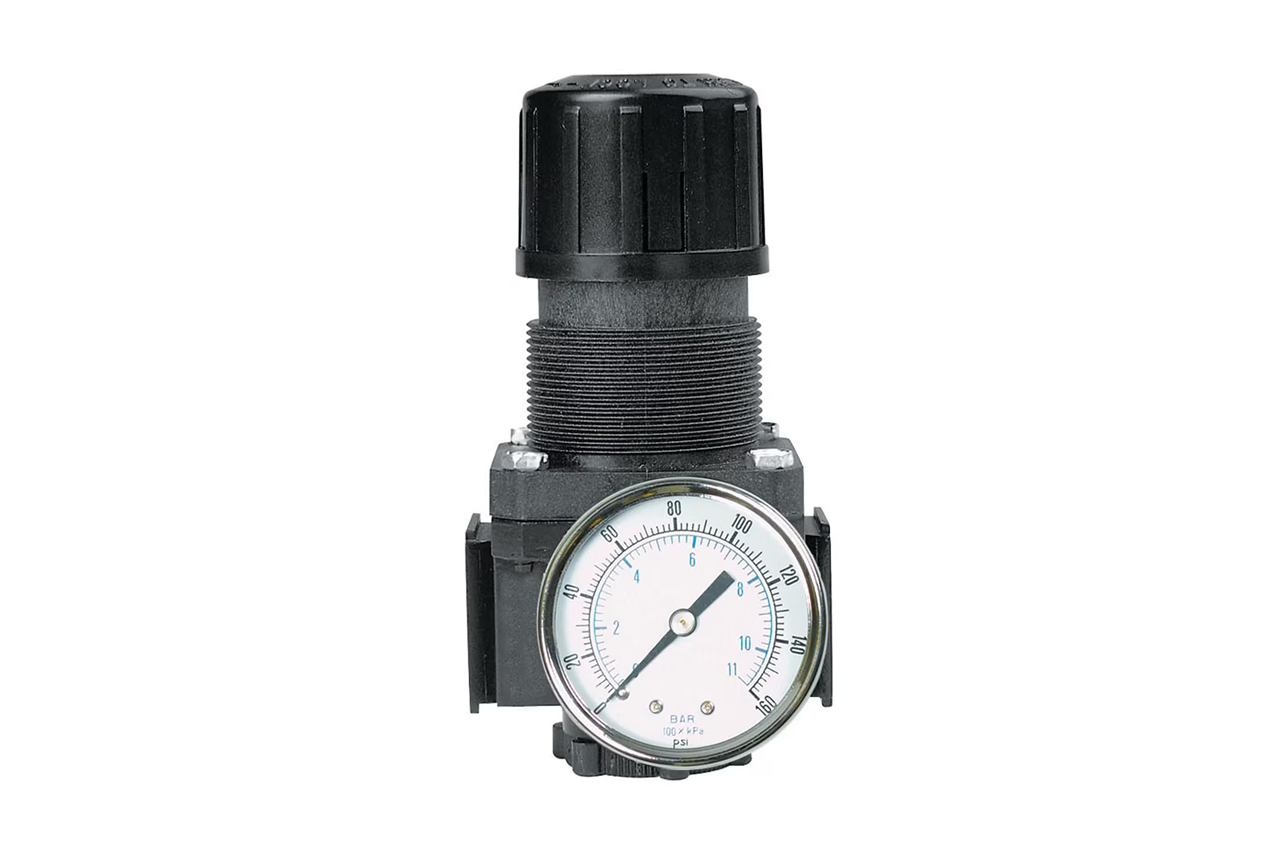
Stock flow controls in 25- or 50-count cases on the maintenance cart for bulk-replacement refreshes — a machine with a few scattered flow controls usually has all of them replaced together on a major service. Economical tier volume pricing is competitive at the case break.
Send us the application — a specialist routes you to the correct tier with a configured part. Lead-times and pricing returned within one business day.
—. We reply within one business day with pricing, lead-time, and configured parts.