DISTRIBUTOR-FIRST SUPPLY PARTNER · SINCE 1999 Live · Compressed Air System
SPC Company
Compressed Air / Treatment / Condensate Management
System · Compressed Air Layer 2 · Treatment 3 product types

Condensate Management

Drains and one separator — that's it. The aftercooler and dryer pull gallons of oily water out of the air every day; this category is the three products that move that liquid out of the system legally and without wasting compressed air doing it. Comparison first, decision tree second, the EPA-fine math third.

The Condensate Management family 3 types · Treatment

Tap any type to jump to its page. The Decision Guide further down asks three questions that funnel the spec to one of these.

01What this category is

Condensate Management is the back-of-house plumbing that decides whether the customer is in compliance — or in violation.

What it is
The back-of-house plumbing for oily water

Three products — timer drains, zero-air-loss drains, and an oil-water separator — that move what the dryer and aftercooler pull out, legally.

Two decisions
How it leaves, and where it goes

The drain choice is energy economics (timer vs. zero-air-loss); the separator choice is regulatory (raw condensate runs ~300 ppm oil).

Default architecture
Zero-air-loss at every point, one OWS

Zero-air-loss drain at every condensate point, all manifolded to a single separator sized to combined HP — 1.5x de-rated for humid climates.

Why it matters
A floor drain is a discharge violation

Routing oily condensate to a floor drain carries $25K-50K/day EPA fines. Any oil-injected compressor needs an OWS without exception.

The drain math
Timer drains bleed paid-for air

A miscalibrated timer on a 50 HP system wastes $500-2,000/year; zero-air- loss opens only on liquid and pays back the premium in 12-24 months.

Watch out
OWS media is a consumable

Adsorption media loads over 6-12 months and must be swapped before breakthrough — once saturated, the customer is out of compliance unaware.

02The 3 types · side-by-side

Best-for, key trade-off, capacity, price band, and how deep the brand bench runs.

Download PDF

Distributor-facing reading. The trade-off column is the one that closes the loop — every type buys something and gives something up. Knowing what each type costs you is how the right one gets on the quote without a callback.

Product type
Best for
Key trade-off
Typical capacity
Price band
Brands SPC carries
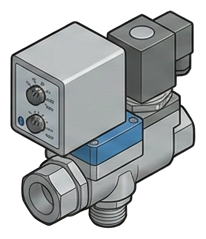
Electronic / Timer Drain Fixed-schedule solenoid · vents air with every cycle
Lowest cost to buy, simple to wire. Small-system installs where upfront cost is the binding constraint, or low-condensate points (small particulate-filter sumps) where the air-loss math doesn't justify upgrading. Most factory-shipped compressor packages include one at the receiver.
Wastes paid-for compressed air Solenoid opens on schedule whether liquid is present or not. A 5-second/ 5-minute setting on a 50 HP compressor bleeds roughly 1-3 SCFM continuously — $500-2,000/year per drain at typical electricity rates. Field-tunable, but customers always set them long to avoid under-draining.
Sized to compressor HP + ambient humidity
24V DC · 115V AC
$
2 / 5 · Beko + JORC
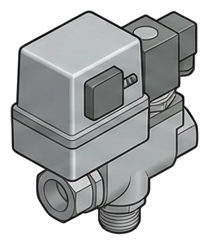
Zero-Air-Loss Electronic level-sensed or magnetic-float · no air loss
Every high-volume point in the system. Refrigerated dryer outlets (highest condensate volume), aftercooler discharges, large receivers. Electronic level-sensed (BEKOMAT, JORC) where power is available; magnetic-float (JORC MAG-11, KELTEC) where there's no electrical service or the install is outdoor/remote.
Higher upfront · pays back in 12-24 months $400-800 vs. $80-200 for a timer drain. Electronic gets an alarm output for failure detection; magnetic-float runs on zero power but gives no alarm. Both eliminate the per-cycle air-loss bleed entirely. Both can freeze — outdoor installs need heated housings.
Sized to compressor HP + ambient humidity
electronic · magnetic-float
$$
3 / 5 · good
Oil-Water Separator Pressure-relief + gravity + coalescing + carbon adsorption
Mandatory on every oil-injected compressor install. Single unit sized to combined compressor HP with all condensate drains manifolded to one inlet. Brings outlet water to under 10 ppm oil — well below the 40 ppm federal benchmark and most local POTW limits. Captures waste oil as a discrete handleable volume for standard used-oil recycling.
Media replacement on a 6-12 month cycle Adsorption media (activated carbon or oil-binding polymer) is a consumable — loads with oil over months and must be replaced before breakthrough. Stock the first replacement at install. Oversize one model step for humid climates and seasonal swing.
Sized to total compressor HP + 1.5x climate de-rating
cartridge media · loose media
$$ – $$$
4 / 5 · solid

Reading the brand bench column — the bar shows how many of SPC's tier slots (Industry Leader · Emerging · Economical · adjacent) carry an option at that product type. A deep bench means a price-driven and a spec-driven option both close cleanly; a narrow bench means the available brands map closely to the technical requirements and the comparison stops being a tier choice.

03Decision guide

3 questions “Funnel the Spec” to one product type.

Download PDF

Draw a line from the customer's answer at the top to the type name at the bottom. This is the page distributors screenshot and send to a customer the day before a quote call — so the customer comes prepared with the answers, and the call is about the brand and the budget, not the basics.

Use this Download the PDF above, print it, drop it in an email to the end customer, or screenshot the tree below. The questions and the type recommendations are designed to stand on their own without the rest of the page.
START AT THE TOP  ·  FOLLOW THE PATH DOWN  ·  END ON THE PRODUCT TYPE
Question 1
What's the customer trying to solve at this point in the system?
Discharge legally to a sewer
Recommend
Oil-Water Separator
Mandatory on every oil-injected compressor install. Brings outlet water under the 40 ppm federal limit; captures waste oil for standard recycling. Size to combined HP with 1.5x humid-climate de-rating.
See product type →
Get liquid out of a trap with reliable, hands-off operation
Question 2b
Is there electrical service at the drain point, and does the customer want an alarm output?
If Yes · power available + alarm wanted
Recommend
Zero-Air-Loss Drain (Electronic)
BEKOMAT or JORC level-sensed. Opens only on actual liquid, wastes zero compressed air, signals fault if discharge stops. Default spec for every high-volume drain point.
See product type →
If No power · outdoor / remote / generator package
Recommend
Zero-Air-Loss Drain (Magnetic-Float)
JORC MAG-11 or KELTEC. Float-and-latch mechanism, no electronics, no power required. Same zero-air-loss result without the alarm output.
See product type →
Cheapest possible drain, low condensate, cost is binding
Recommend
Timer Drain
BEKOMAT or JORC timer. Lowest upfront cost but vents compressed air with every cycle — only the right answer where the air-loss math is small (small filter sumps, light-duty installs).
See product type →

The math that decides between timer and zero-air-loss: a single miscalibrated timer drain on a 50 HP system wastes $500-2,000/year in compressed air, and most plants have 3-6 drain points. Across a typical industrial system, upgrading from timer to zero-air-loss returns $1,000-5,000/year with 12-24 month payback. The OWS isn't a choice — it's a regulatory requirement for any oil-injected install.

The drain decision is energy economics, the separator decision is regulatory. Both are paid for in the first audit or the first electricity bill.
SPC distributor playbook Condensate Management · drain math + EPA math
04Questions to ask the customer · before you quote

10 inputs determine the right condensate management.

Download PDF

If the customer answers most of these at the first call, the second call is the quote. If they can't answer any, the condensate management are rarely the only spec gap — flag it and push for a site walk.

01
Where does the compressor condensate discharge to today — floor drain, sanitary sewer, or oil-water separator?
If the answer is "floor drain" or "sanitary sewer" on an oil-injected compressor, the customer is out of compliance. EPA fines for oily-discharge violations run $25K-50K per day per violation. Lead with the OWS conversation; it's a five-figure-exposure fix that's typically a four-figure quote.
02
How many condensate points does the system have — and what's the current drain at each one?
Walk the compressor room. Photo each drain. Aftercooler, receiver, dryer outlet, every coalescing filter, every particulate filter — each needs its own drain. Manual drains in industrial service are almost universally non-functional (operator forgets); customers often think one drain at the receiver is enough.
03
What's the compressor HP, the operating hours per week, and the climate?
Sizes both the drains and the OWS. Humid-climate installs (Gulf Coast, Southeast, eastern summer) need a 1.5x de-rating on the OWS and zero-air-loss drains at every high-volume point. Peak summer condensate is what defines "right-sized," not nominal flow.
04
How long do the existing timer drains stay open, and how often?
Most customers don't know — and the timer is almost certainly running longer than needed because no one wants to under-drain. A 5-second/ 5-minute timer wastes 1-3 SCFM continuously; on a 50 HP system at $0.12/kWh, that's $400-800/year per drain in compressed-air bleed. Quote the upgrade with the math.
05
Is the compressor oil-injected, oil-free, or mixed?
Oil-injected compressors need an OWS without exception. Oil-free compressors don't produce oily condensate and can typically discharge to floor drain — verify against local rules. Mixed sites with any oil-injected machine on the shared discharge still need the OWS sized to the oil-injected portion.
06
Is there electrical service at every drain point, especially outdoor or remote ones?
Decides the drain type. Electronic zero-air-loss (BEKOMAT, JORC level-sensed) needs 24V DC or 115V AC; magnetic-float (JORC MAG-11, KELTEC) runs on zero power. Outdoor installs without power almost always end up on magnetic-float — and need freeze protection.
07
What does the local POTW (publicly owned treatment works) cite as the oil discharge limit?
The federal benchmark is 40 ppm; many local POTWs are stricter (10 ppm, sometimes 5 ppm). Pull the local sewer-use ordinance before sizing the OWS. Audit-failure exposure is set by the local limit, not the federal one.
08
When was the OWS adsorption media last replaced?
Media loads with oil over 6-12 months and must be replaced before breakthrough. Once it saturates, the OWS stops capturing oil and the customer is out of compliance without knowing it. If the customer can't tell you the last replacement date, the media is probably past due — quote a media kit with every visit.
09
Has the compressor capacity been added to since the existing OWS was sized?
Common compliance trap. Customer installed an OWS when they had two 25 HP compressors; they're now running three 50 HP units on the same OWS. The OWS is now undersized for actual flow and effluent is over limit at peak. Sum the current nameplate HP and re-size.
10
Is the install outdoor, generator-package, or in any unheated space that goes below freezing?
Both drains and OWS housings can freeze. Frozen discharge = blocked drain = upstream component floods. Quote heated-housing variants or insulated enclosures for any sub-freezing exposure — most OWS units are not rated for outdoor freezing service.
05Where this category lives

Compressed air leaves the compressor hot, oily, and saturated with water vapor. Without the Treatment layer, that condition gets piped straight to every machine, valve, sensor, and finished surface downstream — and pneumatic equipment isn't built to tolerate it. Treatment is the four-stage conditioning train that turns plant air into the supply each piece of equipment was actually engineered for: pull the heat out, drop the bulk water, condition the dew point to the use-case spec, then polish out the remaining oil and particulate. Get this layer wrong and the customer feels it everywhere — rust in receivers, ice in winter lines, fouled instruments, ruined finish. Get it right once and it disappears.

Categories in this layer

Not sure which type? Send us the use case.

Tell us the end-use, the rough flow, and what climate the unit would sit in. We'll come back with a configured quote — the right type, the right tier, and the upstream gear the warranty assumes.