DISTRIBUTOR-FIRST SUPPLY PARTNER · SINCE 1999 Live · Pneumatic Automation System

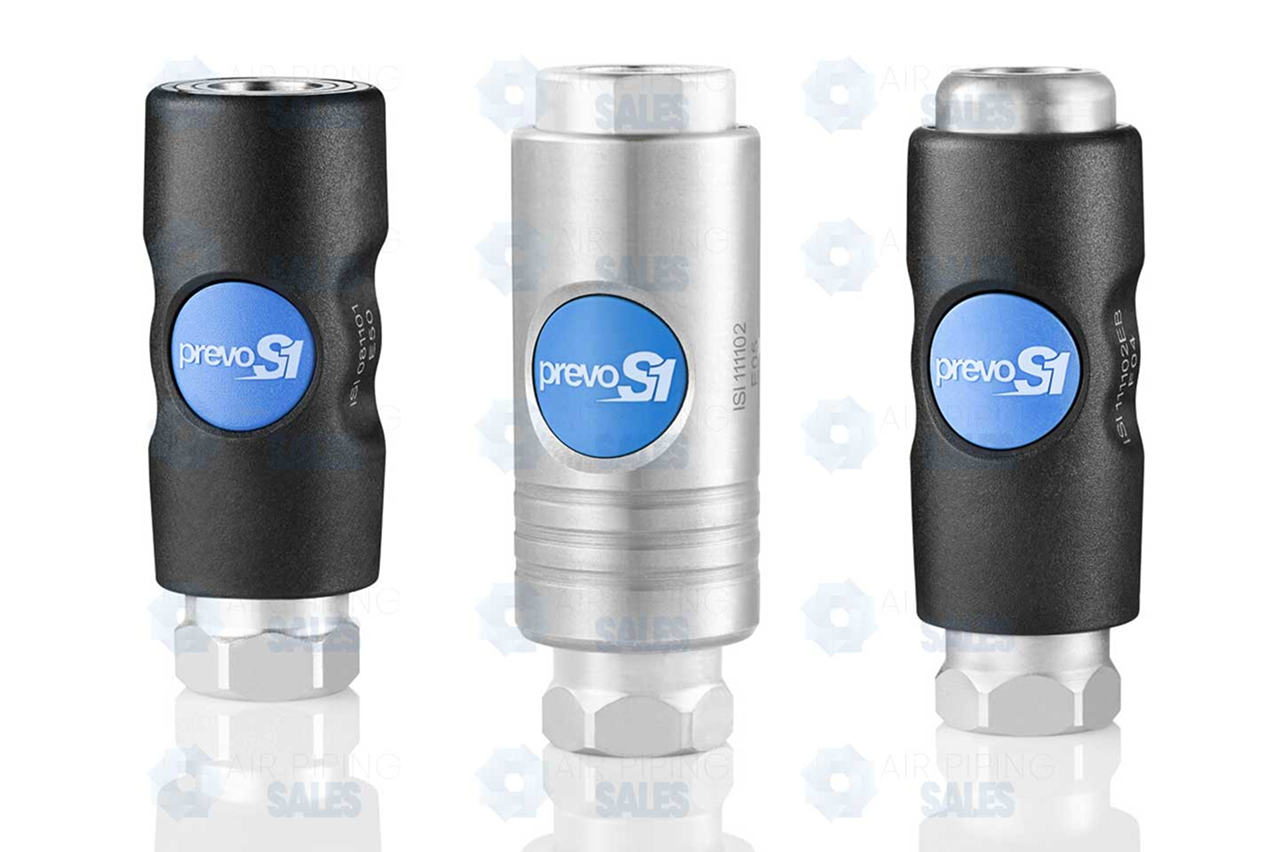
A quick coupler engineered to eliminate the hose-whip hazard. On a standard coupler, full line pressure stays trapped in the hose until disconnect — pulling the sleeve back releases the plug while that pressure is still present, and the residual air ejects the plug and snaps the hose. That whip is the specific condition OSHA 29 CFR 1910.242(b) addresses, and the pneumatic-safety guidance in ISO 4414 and ANSI/ASME B30.1 is built to prevent. A safety coupler defeats the hazard with a two-stage disconnect: pulling the sleeve to its first position opens an internal vent valve that bleeds downstream pressure to atmosphere; only on the second stage does the socket release the plug — now with no pressure behind it and no whip energy. The connect action is unchanged. Because the safety function lives in the socket body, a safety coupler is selected as the socket; the plug is a standard plug of the matching profile. It is best understood as an OSHA / ISO 4414 compliance product, not a hardware upgrade, and is the recommended default socket for any plant — most directly so where there is an audit history, an active safety program, or an open hose-whip citation.
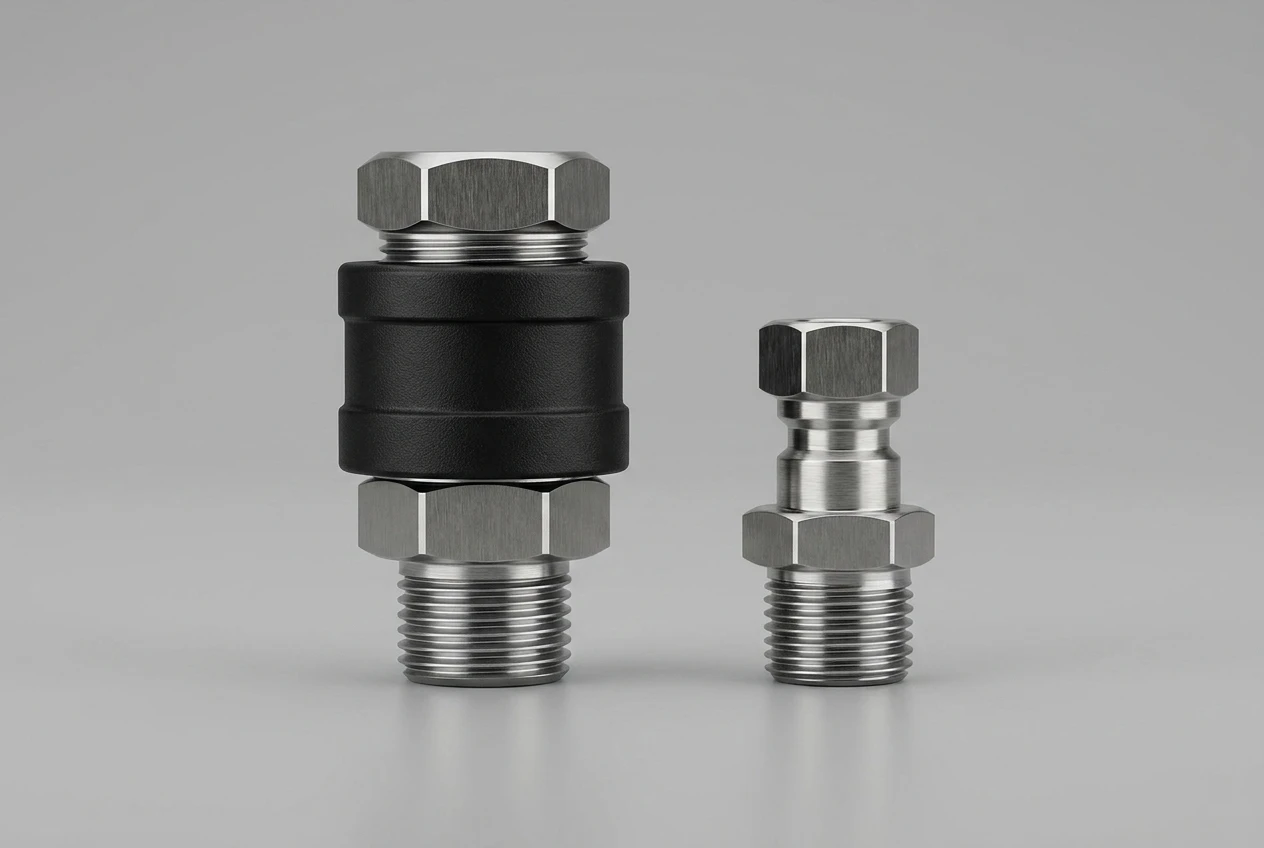
Tips and pointers on when safety-vented sockets are required — and when standard is enough. Scroll the strip →
Pull sleeve to first detent = internal vent valve bleeds downstream pressure. Pull to second detent = plug releases with no pressure behind it. Engineering control that makes hose-whip mechanically impossible.
Addresses the specific hose-whip hazard of OSHA 29 CFR 1910.242(b), ISO 4414, ANSI/ASME B30.1. The documentation-ready answer for any pneumatic-safety audit.
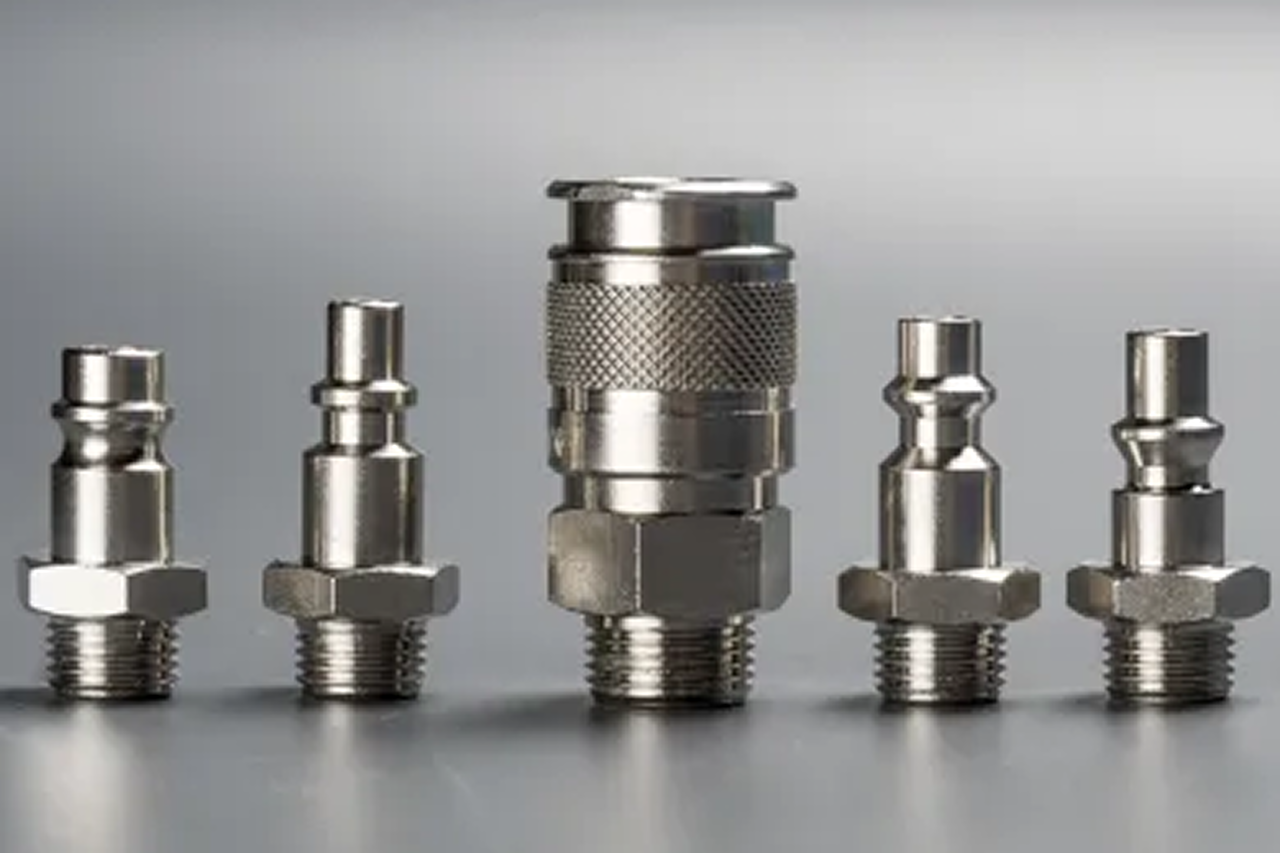
Safety function lives in the socket — standard plugs of the matching profile work in safety sockets. Conversion is socket-only; the plug crib carries over without replacement.
Composite (default — non-marring, abrasion-resistant). Stainless for food / wash-down / NSF. Flow class: standard ~15-25 SCFM or high-flow ~30-60 SCFM for large impacts, die grinders, sandblast.
Budget-constrained, hobbyist, small-shop, or legacy installs being maintained as-is. → Quote industrial quick coupler for non-OSHA-audited facilities; document the deferred safety decision in the quote text.
Safety socket still requires profile match — Industrial / Type A / ISO 6150B is typical US-spec; plug profile must match exactly. → Verify profile from existing plug inventory before quoting the conversion.
Air-brake systems are FMVSS-regulated and use DOT-certified fittings, not industrial couplers — even safety-vented ones. → Use DOT air-brake fitting on tractor, trailer, bus brake circuits.
From the machine spec sheet → to the part number. Answer what you know — leave the rest blank — and send.
Most distributors sell one brand per product type. SPC's 60-brand portfolio means every Product Type page surfaces three real options matched to how your customer is buying today. Pick the tier; the quote desk handles the cross-reference.
The hose-whip injury is documented in OSHA's history, the citation pattern is established, and the engineering control is a $20 socket. The conversation isn't whether the customer should convert; it's whether they convert now in a planned project or after the next OSHA inspection finding.
Each industry below uses this product across the listed areas. Open an industry to see how it fits the rest of its system.
 Automotive Manufacturing →
  Food & Beverage Processing →
  Pharmaceutical, Medical Device & Laboratory →
  Construction & Infrastructure →
 Also applies to OSHA-compliant facilities and EHS-driven manufacturing plants · Conversion projects in this segment are 20-200 sockets per facility. · High-pressure tool drops (impact wrenches, large pneumatic equipment) · Safety couplers mandatory in any installation above 125 PSI · Food plants combine OSHA hose-whip compliance with FSMA / sanitary-design requirements · End-user operators are not trained on the rental fleet's equipment · Any facility with a recent hose-whip near-miss or incident · Post-incident remediation is the most reliable conversion trigger · OEM-driven mandate cascades to the supplier base.
Every entry is a real product on this site — linked, not just named. Quote them on the same line item.
Bundle the OSHA-compliance documentation package with every conversion: OSHA 29 CFR 1910.242(b) citation reference, ISO 4414 pneumatic-safety overview, ANSI/ASME B30.1 reference, product datasheet, two-step disconnect training script, operator training sign-off sheet, post-installation verification log. Customers buying safety couplers are buying compliance, and compliance requires documentation.
Send us the application — a specialist routes you to the correct tier with a configured part. Lead-times and pricing returned within one business day.
—. We reply within one business day with pricing, lead-time, and configured parts.
