DISTRIBUTOR-FIRST SUPPLY PARTNER · SINCE 1999 Live · Compressed Air System
SPC Company
Compressed Air / Service / MRO / Service Parts
System · Compressed Air Layer 8 · Service / MRO 6 product types

Service Parts

Six wear items, one cross-reference catalog. What's the OEM make / model / HP, what's failing or what's coming due, and what's the operating-hours interval since last service? This page walks the symptom-to-part flow from "the customer just sent a PO with an OEM part number on it" to the right aftermarket equivalent on the quote — comparison first, decision tree second, questions to ask third.

The Service Parts family 6 types · Service / MRO

Tap any type to jump to its page. The Decision Guide further down asks three questions that funnel the spec to one of these.

01What this category is

Service Parts is the cross-reference business — OEM part numbers in, aftermarket equivalents out, at 40-60% of OEM list.

What it is
The line that recurs every quarter

Oils, filters, separators, and service valves — the wear items every compressor consumes on a predictable schedule for as long as it runs.

The decision
OEM part numbers in, aftermarket equivalents out

The cross-reference catalog matches the OEM make / model / HP to a functionally identical part at 40-60% of OEM list with same-day ship.

Rule of thumb
Never quote a single wear item

Oil, oil filter, separator, and intake element change in the same window — bundle the annual service kit, not the lone line.

Why it matters
The most defensible recurring revenue in the catalog

Sell the cross once and the maintenance department defaults to it on every change after. Miss a service and they call a competitor.

Watch out
An audit makes food-grade H1 non-negotiable

HACCP, SQF, BRC, FSSC 22000 — once the audit names H1, it's a compliance line, not a value engineer. Route to quality, don't guess.

The anchor
Conrader, KELTEC, Mann-Filter, AMSOIL, Solberg

Valves on Conrader, filters on KELTEC + Mann-Filter, lubricants on AMSOIL, intake housings on Solberg — one consolidated cross per family.

02The 6 types · side-by-side

Best-for, key trade-off, capacity, price band, and how deep the brand bench runs.

Download PDF

Distributor-facing reading. The trade-off column is the one that closes the loop — every type buys something and gives something up. Knowing what each type costs you is how the right one gets on the quote without a callback.

Product type
Best for
Key trade-off
Typical capacity
Price band
Brands SPC carries
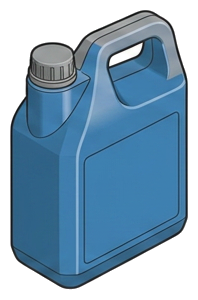
Synthetic Compressor Oil PAO / ester base · ~8,000-hour drain
The TCO conversion — mineral out, synthetic in. Every rotary-screw running mineral oil at 2,000-4,000-hour intervals. Crosses to Atlas Copco Roto-Xtend Duty, Quincy QuinSyn, Sullair Sullube, Ingersoll Rand Ultra Coolant. ISO 32 / 46 / 68 / 100 grades matched to the OEM spec.
Sticker price · sells on TCO Higher cost per gallon than conventional. The case is total cost of ownership — 8,000-hour synthetic interval vs. 2,000-4,000-hour mineral cuts 1-2 oil changes per year per compressor, and the labor + downtime savings dominate the math at any duty above ~30 hours per week.
~8,000 service hours per fill
PAO · ester · polyglycol base stocks
$$ · 30-50% under OEM
2 / 5 · AMSOIL + KELTEC
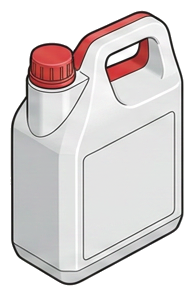
Food-Grade Compressor Oil NSF H1 registered · audit-driven spec
Audit compliance — not a performance upgrade. Food, beverage, pharma, nutraceutical, cosmetics — any plant whose HACCP, SQF, BRC, FSSC 22000, or customer audit demands an NSF H1 fluid. Crosses to Atlas Copco Roto-Foodgrade, Sullair Sullube FG, Quincy QuinSyn FG, Ingersoll Rand Ultra FG Coolant.
Shorter drain · ~6,000 hours H1-cleared additive chemistry is more constrained than standard synthetic, so drain intervals run ~6,000 hours instead of ~8,000. Still 2-3x the conventional interval, and the audit doesn't give the customer a choice — H1 is a compliance line, not a value engineer.
~6,000 service hours per fill
ISO 32 / 46 / 68 · H1-registered
$$ – $$$ · 25-40% under OEM
2 / 5 · AMSOIL + KELTEC
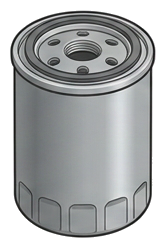
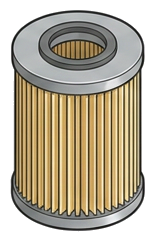
Compressor Oil Filter · Aftermarket Cross-reference by OEM make / model / HP
Anchor of the annual service kit. Every lubricated rotary-screw consumes one at every oil change. KELTEC leads the US-OEM cross-reference catalog; Mann-Filter covers European OEMs and large industrial. Quote as part of the annual kit, never on its own.
Spec sheet IS the cross-reference No micron-rating or bypass-setting evaluation by the customer — the cross-reference catalog validates fit, filtration, and bypass against OEM spec. Photo the OEM nameplate + the existing filter part number; catalog resolves the equivalent in one lookup.
Replaced every ~2,000 hours
spin-on · cartridge format
$ · 30-50% under OEM
2 / 5 · KELTEC + Mann-Filter
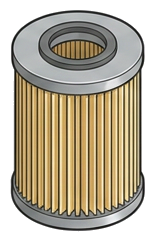
Compressor Intake Filter · Aftermarket Cross-reference replacement element
Third leg of the annual kit. Every rotary-screw and most industrial recips consume one annually (clean indoor) or quarterly (foundry, cement, grain, woodshop, dusty industrial). KELTEC for US-OEM cross, Mann-Filter for European OEMs. Bundle with oil + oil filter + separator.
Environment sets the cadence Standard 12-month interval in clean indoor air; 3-6 months in dusty environments. Customers in heavy-particulate plants buy 2-4 per year per compressor at standing-order pricing — confirm environment at the quote stage, not after the first early replacement.
12 mo clean · 3-6 mo dusty
panel · cartridge element
$ · 30-50% under OEM
2 / 5 · KELTEC + Mann-Filter
Compressor Intake Filter · Housing + Element Solberg own-brand · housing upgrade path
When the OEM housing is the limit, not the element. Compressor whose intake element chronically lasts weeks because the OEM housing is undersized or wrong media grade for the environment. Solberg F-series (direct-mount), FT-series (remote-mount), panel-mount for enclosed packages — sized 25-50% over nameplate SCFM for sustained duty.
Housing upgrade, not just a part swap Higher first-cost than an aftermarket-element-only replacement, and the housing replacement is a service job, not a 60-second swap. Pays back through longer element life, lower inlet restriction (~1% output per PSI of restriction), and the energy savings of an under-loaded filter on sustained duty.
Sized to compressor FAD + 25-50%
cellulose · polyester · synthetic
$ – $$ · housing upgrade premium
1 / 5 · Solberg only
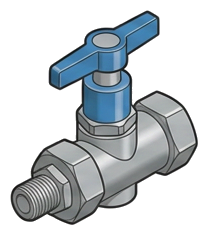
Service Valve · Replacement Unloader · inlet · check · safety relief
Failure-driven · same-day-need. The customer is calling, not browsing — the compressor is down. Symptom maps to part in one question: hard-start → unloader, won't cycle off → inlet control, pressure drops overnight → check valve, weeping at operating pressure → safety relief. Conrader crosses to Atlas Copco, Quincy, Sullair, Ingersoll Rand, Chicago Pneumatic, ABAC, Kaishan.
Downtime cost dominates price Customer is comparing your speed-to-cross-reference and same-day-ship against their downtime cost-per-hour ($500-2,000/hr), not your unit price against a catalog. After closing the emergency replacement, sell the spare-on-the-shelf kit — a maintenance department that's been burned once pre-stocks willingly.
Replaced at failure · ~3-5 yr life
20-250 PSI · 20-60 SCFM body sizes
$ – $$ · 30-50% under OEM
1 / 5 · Conrader only

Reading the brand bench column — the bar shows how many of SPC's tier slots (Industry Leader · Emerging · Economical · adjacent) carry an option at that product type. A deep bench means a price-driven and a spec-driven option both close cleanly; a narrow bench means the available brands map closely to the technical requirements and the comparison stops being a tier choice. Service Parts benches run narrow by design — each product type is a single cross-reference catalog, and consolidating to one or two aftermarket vendors per family IS the value.

03Decision guide

3 questions “Funnel the Spec” to one product type.

Download PDF

Draw a line from the customer's answer at the top to the type name at the bottom. This is the page distributors screenshot and send to a customer the day before a quote call — so the customer comes prepared with the answers, and the call is about the brand and the budget, not the basics.

Use this Download the PDF above, print it, drop it in an email to the end customer, or screenshot the tree below. The questions and the type recommendations are designed to stand on their own without the rest of the page.
START AT THE TOP  ·  FOLLOW THE PATH DOWN  ·  END ON THE PRODUCT TYPE
Question 1
What's failing or what's coming due in the PM cycle?
Oil change due — or a lubricant problem on the unit
Question 2a
Does the plant's audit require NSF H1 (food, beverage, pharma, cosmetics)?
If No · general industrial
Recommend
Synthetic Compressor Oil
Cross-reference to OEM factory-fill at the matching ISO grade. 8,000-hour drain vs. 2,000-4,000 on mineral — TCO math justifies the conversion at any duty above ~30 hours per week.
See product type →
If Yes · H1 audit-driven
Recommend
Food-Grade Compressor Oil
NSF H1 cross-reference to the OEM food-grade factory-fill. Audit document ships with the fluid; the registration IS the deliverable. Shorter 6,000-hour interval is the compliance cost.
See product type →
Filter change due — oil filter or intake element
Question 2b
Replacement element only, or is the OEM housing the limit?
If Oil filter · scheduled replacement
Recommend
Compressor Oil Filter · Aftermarket
KELTEC cross first; Mann-Filter if KELTEC doesn't cover. Anchor of the annual service kit — quote with oil + separator + intake element on one PO, never on its own.
See product type →
If Intake element · aftermarket cross to OEM housing
Recommend
Compressor Intake Filter · Aftermarket
Cross-reference by OEM make / model / HP. Standard 12-month interval in clean indoor air; 3-6 months in dusty plants. Confirm environment at the quote stage.
See product type →
If Intake housing chronically undersized · upgrade
Recommend
Compressor Intake Filter · Solberg
When element life is chronically short because the OEM housing is wrong-spec or undersized, the element catalog can't fix that — only a bigger housing can. Solberg F / FT-series sized 25-50% over nameplate FAD.
See product type →
Valve failure — compressor down or behaving incorrectly
Question 2c
What's the symptom?
If Hard-start · won't cycle · pressure-creep · weeping
Recommend
Service Valve · Replacement
Conrader cross-references the four families (unloader, inlet control, check, safety relief) by OEM make / model / HP. Symptom-to-part diagnostic resolves which one in one question; same-day ship is the deliverable.
See product type →

Two things to keep in mind on every service-parts quote. First — the cross-reference catalog IS the spec sheet for aftermarket items. Oil filters, intake elements, separators, and service valves don't have customer-facing engineering datasheets; the OEM make / model / HP (sometimes serial) resolves to one aftermarket part number through KELTEC, Mann-Filter, or Conrader's catalog. Photo the nameplate + photo the failed part = both inputs the catalog needs. Second — the customer rarely calls for a single item. An oil quote is also an oil-filter quote, an intake-filter quote, and a separator quote — all four wear items change in the same service window. Bundle as the annual service kit at 5-10% discount; the bundle is the recurring-revenue mechanic, not the individual line.

Service Parts isn't transactional — it's the layer customers come back for. Sell the cross-reference once, sell the annual kit every year after.
SPC distributor playbook Service Parts · how to win the recurring PO
04Questions to ask the customer · before you quote

9 inputs determine the right service part.

Download PDF

If the customer answers most of these at the first call, the second call is the quote. If they can't answer any, the service parts are rarely the only spec gap — flag it and push for a site walk.

01
What's the compressor make, model, and HP — and do you have a serial number?
This is the cross-reference input. Photo the nameplate is the fastest capture. Make + model + HP resolves 95% of cross-references cleanly; the serial number resolves the remaining 5% (model-year variations on filters, valves, and oil specs). Without these four data points, no aftermarket catalog can return an equivalent.
02
What's the operating-hours interval since the last service — and what's the cycle duty?
Rotary-screw on synthetic = 8,000-hour cycle; on mineral = 2,000-4,000; on food-grade H1 = 6,000. Continuous-duty 24/7 vs. shift-only changes both the interval and the recommended product line. The maintenance log tells you where the customer is in the cycle and whether this call is a scheduled change, an early failure, or a missed service catching up.
03
Is the current oil synthetic, food-grade, or mineral — and what ISO grade?
Determines product fit and conversion scope. Mineral → synthetic conversion needs a flush charge for any compressor with accumulated varnish (1-4 hours under light load before refill). PAO / ester / mineral are intermixable; polyglycol is NOT — full flush required. ISO grade is OEM-spec and not negotiable; substitute viscosity = oil-film thickness change = accelerated wear.
04
Does the plant have an audit requirement driving food-grade H1?
HACCP, SQF, BRC, FSSC 22000, or direct customer audits — any of these makes H1 a compliance line, not a value engineer. If the customer isn't sure, route to their quality team — don't guess on their behalf. Once H1 is named, the conversation moves from price to compliance, and compliance customers don't switch suppliers casually.
05
What's the operating environment around the compressor intake?
Clean indoor assembly = 12-month intake element; light industrial = 6 months; foundry / cement / grain / woodshop = 3 months or less. Environment determines whether the customer needs the aftermarket element on annual or quarterly cadence — and whether the OEM housing is the limit (route to Solberg housing upgrade) or just the element (aftermarket cross).
06
For valve failures — what's the symptom?
Symptom-to-part in one question. Hard-start / motor strain → unloader stuck closed. Won't cycle off → inlet control valve stuck open (rotary screw) or unloader stuck open (recip). Pressure drops overnight → discharge check valve leaking backward. Safety valve weeping at operating pressure → safety relief aged or wrong-rated (should be ~25 PSI above max operating). Diagnose before asking for a part number.
07
Does the customer want a stocking program — spares on the shelf for the next failure?
Compressor downtime runs $500-2,000 per hour; a $300-500 spare-valve kit + $200-400 service-parts bundle on the shelf is cheaper than one hour of unplanned downtime. Quote the stocking program AFTER closing the emergency replacement — the customer just lived through the downtime and is receptive. Stocking-program customers become multi-year MRO accounts.
08
Is this a single compressor, or a multi-unit fleet across mixed OEM brands?
Mixed-fleet plants (Atlas Copco + Sullair + Quincy + IR in one building) consolidate to single-vendor aftermarket cross-reference for procurement simplicity. One PO to KELTEC + Conrader + AMSOIL covers filters, valves, and oil across 10+ OEM brands. The consolidation conversation is where multi-unit accounts get locked.
09
When's the next scheduled service window — and is it in the customer's MRO calendar?
Service Parts is the recurring-revenue layer; the MRO calendar IS the recurring contract. Set the next-change reminder at the time of the current order — 30 days out for lead time. Customers who don't have a calendar reminder rediscover the maintenance from a different vendor; customers who do default to the same supplier on every change.
05Where this category lives

Service / MRO is the recurring layer — the items that show up on the PO every quarter, not once at the spec. Every layer above it gets specified once and installed once; this one gets re-quoted on a 2,000-hour, 6-month, or annual cycle for as long as the compressor runs. That makes Service Parts the line customers come back for — and the line they're easiest to lose to a bargain catalog if no one is calling them ahead of the next change. For SPC it is also the aftermarket-cross opportunity: every OEM-branded oil, filter, and valve in the field has a Conrader, KELTEC, Mann-Filter, AMSOIL, or Solberg equivalent that cross-references against OEM make / model / HP at 40-60% of OEM list pricing with same-day shipping. Sell the cross-reference once and the customer's maintenance department defaults to it on every change after. Get this layer wrong — miss a separator service, ship the wrong oil grade, fail to cross a valve — and the customer is on the phone to a competitor with a downed compressor. Get it right and it becomes the most defensible recurring-revenue line in the catalog.

Categories in this layer
You are here
Service Parts

The recurring layer — oils, filters, valves, and the OEM cross-reference catalog that wins the PO every quarter. This is the layer customers come back for; every other layer is specified once, this one is re-quoted on the maintenance calendar for as long as the compressor runs.

Not sure which type? Send us the use case.

Tell us the end-use, the rough flow, and what climate the unit would sit in. We'll come back with a configured quote — the right type, the right tier, and the upstream gear the warranty assumes.