DISTRIBUTOR-FIRST SUPPLY PARTNER · SINCE 1999 Live · Pneumatic Automation System

A stop fitting is a push-to-connect (PTC) fitting with an integral shutoff valve built into the body. The moment the tube is disconnected at the fitting, an internal poppet seats and air flow stops automatically at the port — the branch does not have to be bled or depressurized first. It is the right part wherever pneumatic connections are changed frequently: test benches, tooling stations, modular fixtures, and any drop where a tube gets pulled and re-seated as part of the daily work. A standard PTC fitting leaves the line live and venting the instant the tube comes out; the stop fitting closes the port instead, so a line can be broken on a charged branch without an air-down. It installs and sizes exactly like an ordinary PTC fitting — same tube OD, same thread, same push-in motion — and is sold as a separate SKU, not bundled into the tubing or the standard fitting.
Tips and pointers on when the stop fitting is the right call — and when to spec something else. Scroll the strip →
An internal poppet seats the instant the tube is pulled — air stops at the port, automatically. No separate inline valve, no walking back to a branch shutoff. The right call when the shutoff has to be where the disconnect happens.
Disconnect on a charged, pressurized branch with no air-down first. For stations where tubes are pulled and re-seated as daily work — test benches, modular fixtures, tool swaps — it removes the depressurize-then-reconnect cycle entirely.
Same push-in motion, same tube OD, same thread as an ordinary push-to-connect fitting — the shutoff is built into the body. No extra plumbing, no separate valve to mount. Sized 5/32"–1/2" (4–12 mm) tube OD; available straight, elbow, union, and bulkhead.
NPT (inch) in North American plants, R / BSPT taper or G / BSPP parallel on imported equipment. Tube must be PU (polyurethane) or PA (nylon) — same as the run it replaces. Photo the existing fitting and tube; verbal "quarter inch" hides three different specs.
The fitting seals the PORT — but the disconnected tube can still be charged and whip when it is pulled. Bleed or restrain the tube end, keep it clear of faces and eyes, and brief the operator. This is the one hazard the stop fitting introduces; flag it on every quote.
A stop fitting closes when the tube leaves — it is not a lockable, manual isolation point and takes no LOTO padlock. → Re-spec to quarter-turn shutoff valve when the job is deliberate, lockout-tagout branch isolation rather than auto-shutoff at a frequent disconnect.
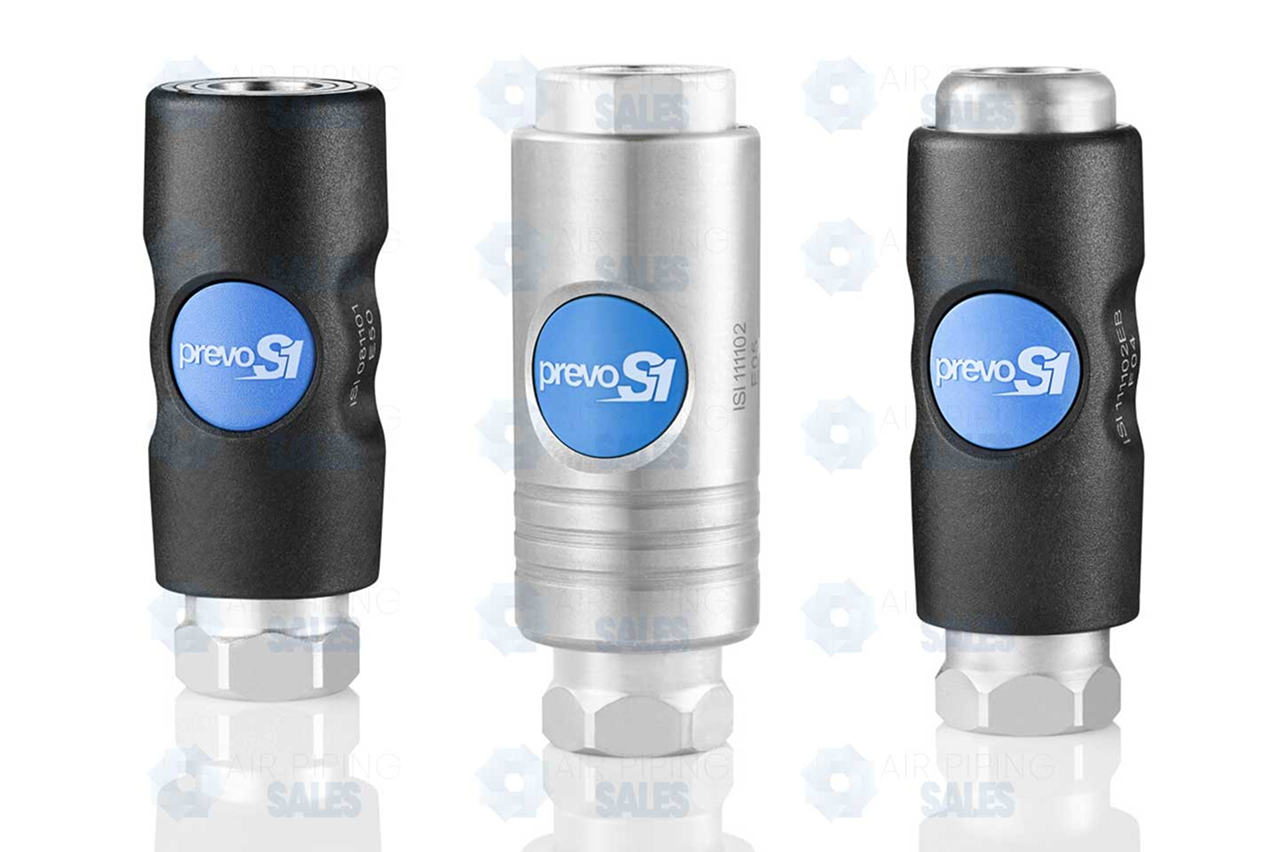
If the whole tool must come off and go back on in seconds — air tools, blow guns, portable rigs — that is a coupler job, not a fitting job. → Re-spec to quick coupler when the need is fast, repeated full-tool connect/disconnect with a self-sealing socket.
Air only, 0–150 psi (0–1034 kPa), down to −14.5 psi (−100 kPa) on vacuum-assist lines, 32–140°F (0–60°C). NBR O-ring, Teflon-treated threads. Outside this envelope — vacuum-critical, hot, or non-air media — verify before quoting.
From the machine spec sheet → to the part number. Answer what you know — leave the rest blank — and send.
Most distributors sell one brand per product type. SPC's 60-brand portfolio means every Product Type page surfaces three real options matched to how your customer is buying today. Pick the tier; the quote desk handles the cross-reference.
A stop fitting is what you sell the customer who keeps telling you they have to air-down the whole branch just to move one tube. The shutoff lives at the connection — that is the whole pitch.
Each industry below uses this product across the listed areas. Open an industry to see how it fits the rest of its system.
Also applies to Test benches and QC stations · Modular tooling and quick-change fixtures · Frequently reconfigured machine drops · Instrument and gauge hookups
Every entry is a real product on this site — linked, not just named. Quote them on the same line item.
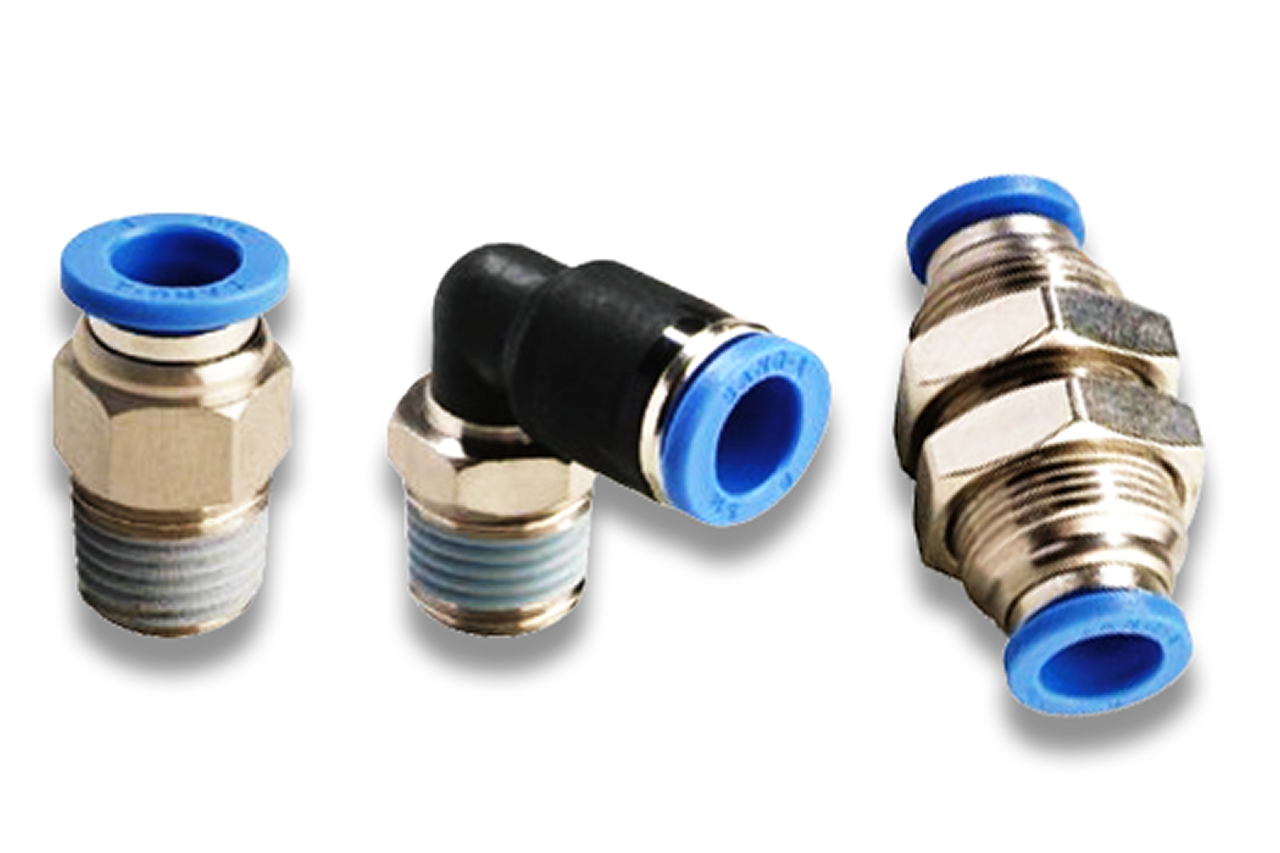
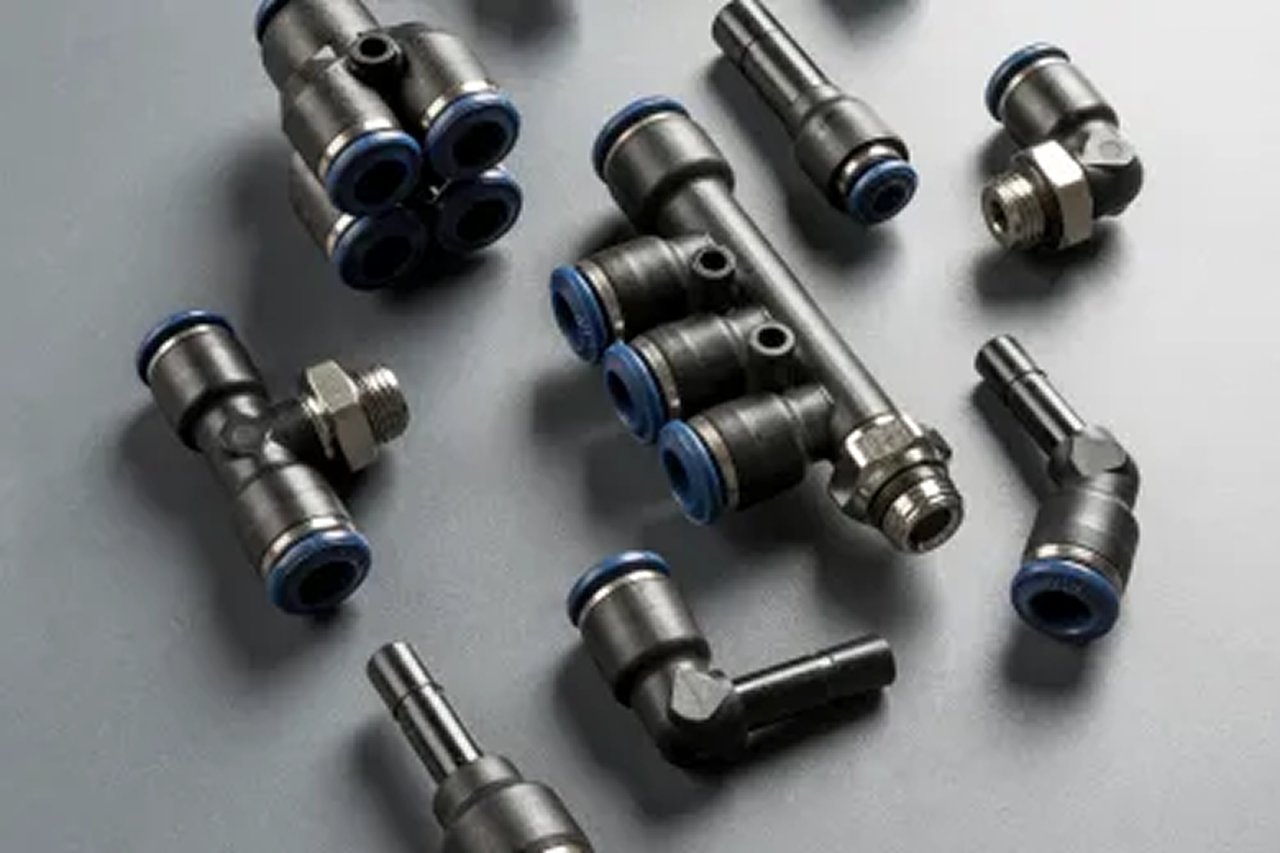
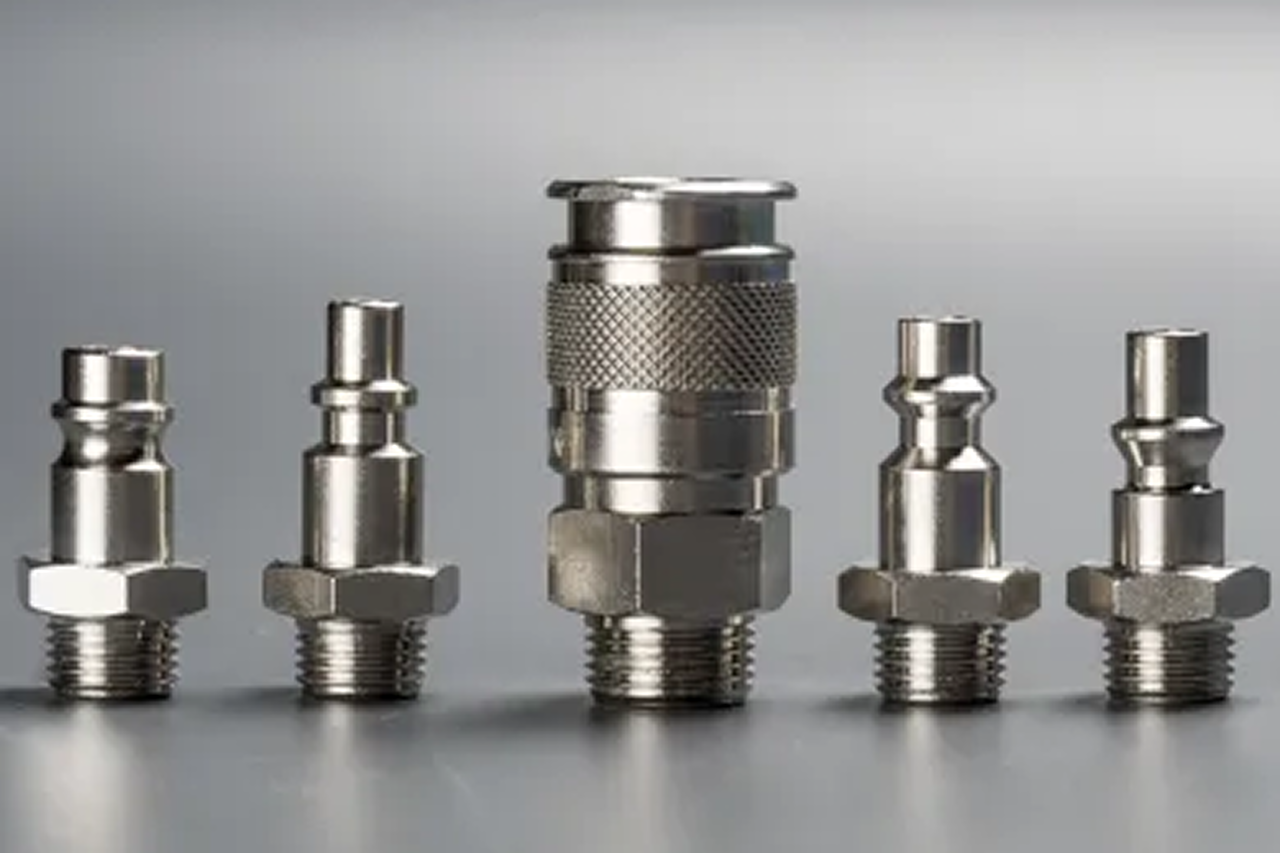
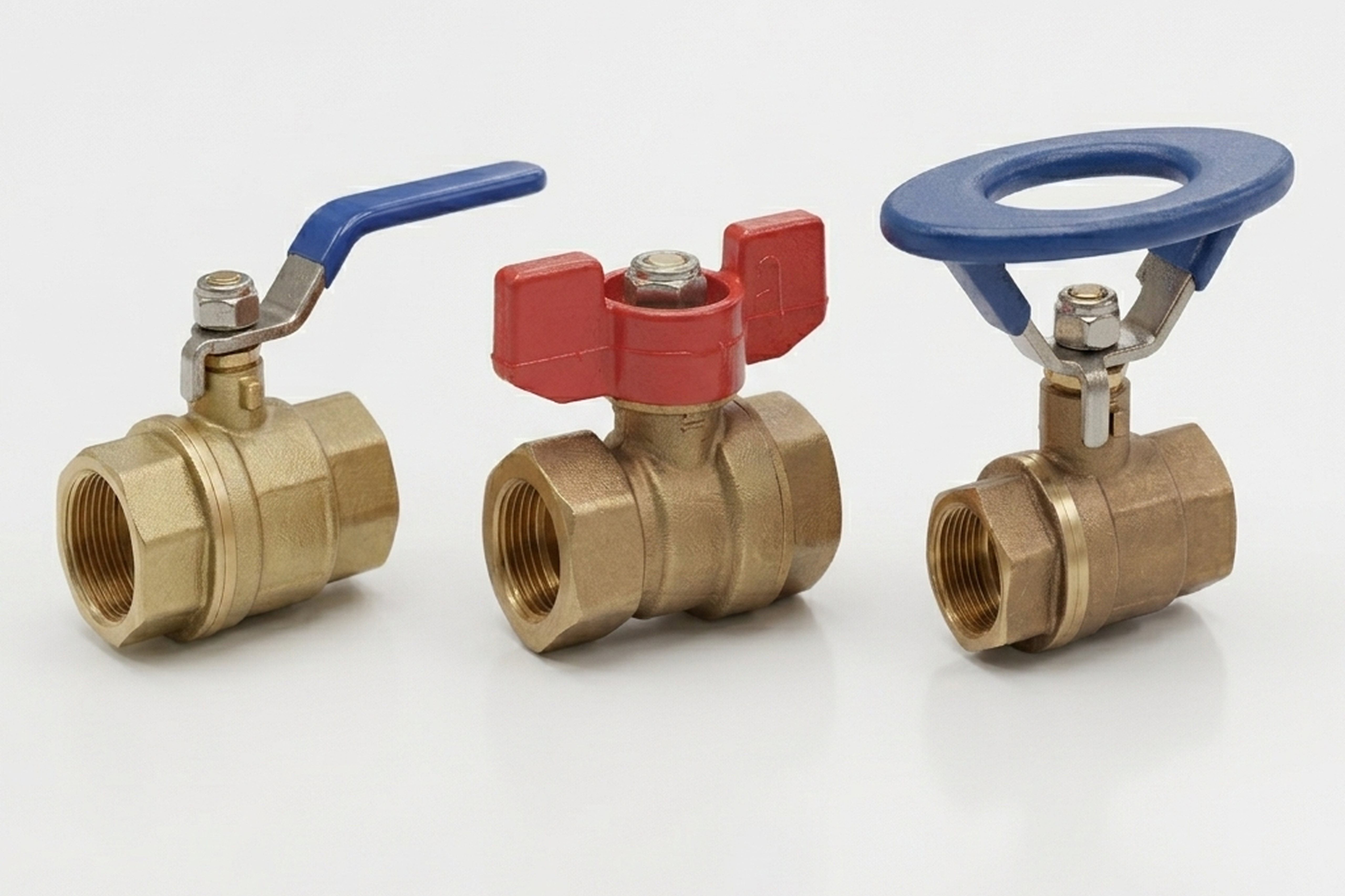
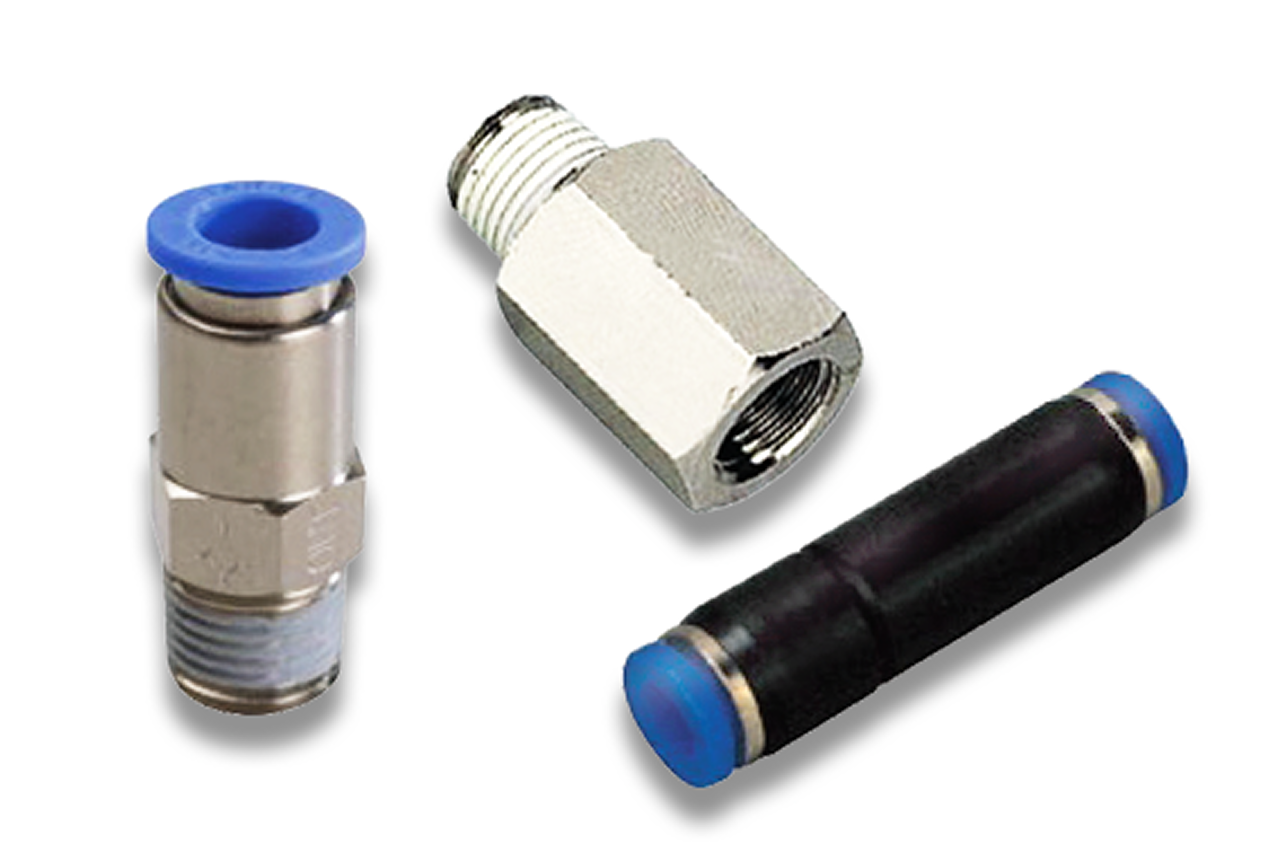
Stock stop fittings in box quantities of 25 or 50 at the manufacturer's volume break, organized by configuration (SPC straight / SPL elbow / SPU union / SPUM bulkhead) and tube OD. A test bench or modular-fixture build consumes them at every change-out port; keep them separate from standard PTC fittings — they're different SKUs and the disconnect-frequency call decides which one a given port gets.
Send us the application — a specialist routes you to the correct tier with a configured part. Lead-times and pricing returned within one business day.
—. We reply within one business day with pricing, lead-time, and configured parts.